

Running a small business keeps you busy. You serve customers, pay bills, and solve problems all day. So when it comes to ads, you want ideas that are simple and that work. This guide covers the top small business advertising strategies for 2026. We kept it easy to read, and every tip is based on real news and research from this year.
Advertising has changed a lot lately. Computers powered by artificial intelligence (AI) now help write ads, pick who sees them, and even answer shoppers’ questions. That sounds big, but here is the good news: the basics still matter most. Being easy to find, having happy reviews, and making a clear offer still win customers.
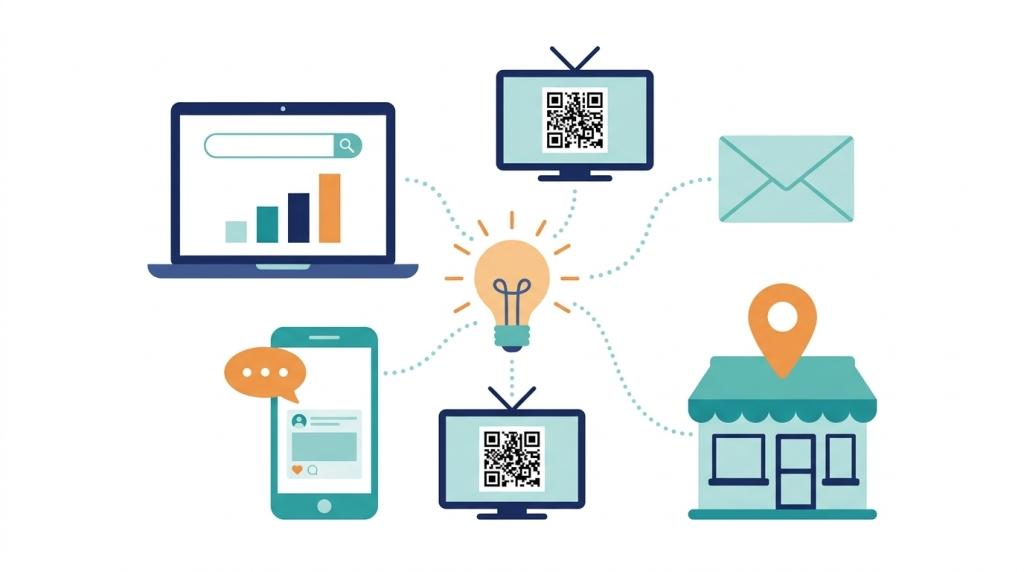
The Top Small Business Advertising Strategies at a Glance
Here is a quick look at the nine ideas in this guide:
- Make your Google Business Profile complete and up to date.
- Collect honest reviews from real customers.
- Show up on Google when people are ready to buy.
- Let AI tools help, but give them good information.
- Test the new ads inside ChatGPT.
- Use local targeting on social media.
- Try streaming TV ads in your neighborhood.
- Keep customers coming back with email.
- Track every dollar you spend.
Let’s walk through each one.
1. Make Your Google Business Profile Shine
Your Google Business Profile is the box that pops up when someone looks up your business on Google Search or Google Maps. It shows your hours, phone number, photos, and reviews. It is free, and it may be the most important ad you will ever have.
Why does it matter so much now? Google’s AI answers often sit at the top of search results. To build those answers, the AI pulls facts from your profile, your website, your reviews, and other sites that mention you. If your profile is missing details, the AI may skip you.
Here is how to make your profile strong:
- Fill in every section, including your services and service area.
- Pick the main category that matches what you really sell.
- Add fresh photos of your work, your team, and your shop.
- Keep your hours correct, especially on holidays.
- Make sure your name, address, and phone number match everywhere online.
That last tip is easy to forget. An old phone number on a directory site can confuse search engines and AI tools. Search your business name once in a while and fix anything that is wrong.
2. Collect Honest Reviews From Real Customers
Reviews are like word of mouth that never stops talking. They also help AI tools decide which businesses to recommend. One 2026 study by Insites found that businesses recommended by AI had about 133 Google reviews on average. Businesses the AI ignored had only about 11.
So how do you get more reviews the right way?
- Ask every happy customer. A simple text or email with a direct link to your review page works well.
- Ask often. A steady flow of new reviews looks better than a big pile from two years ago.
- Reply to every review. Thank people for kind words. Answer complaints calmly and kindly.
- Never pay for reviews. Google has made its rules stricter. It is cracking down on reviews that are bought, rewarded with gifts, or gathered in big group campaigns.
Bonus tip: read your reviews closely. The words customers use to praise you are often the best words to put in your ads.
3. Show Up on Google When People Are Ready to Buy
Think about someone typing “emergency plumber near me” at 10 p.m. That person needs help right now. Google Search ads let you appear at that exact moment. This is why search ads are a favorite. In a LocaliQ survey of more than 300 small businesses, owners rated search advertising among the tactics they were most happy with.
Google Ads works like an auction, but money is not the only thing that counts. Google also looks at how useful your ad is. That means a small business with a focused, helpful ad can sometimes beat a bigger company that bids more.
A few tips to avoid wasting money:
- Start with “phrase match” and “exact match” keywords. They keep your ad away from searches that don’t fit.
- Send people to a page about the exact service they searched for, not just your home page.
- Check your results every week and cut the keywords that don’t bring customers.
Paid ads and free listings work best together. A strong plan for search engine marketing for small business covers both, so you show up in the ads and in the regular results. If managing bids and keywords feels like too much, expert PPC management for small business can help you spend less and get more calls.
4. Let AI Tools Help, But Stay the Boss
Big ad platforms are now run by AI. In December 2025, Meta (the company behind Facebook and Instagram) made its AI tool, called Advantage+, the default for all new ad campaigns. Meta’s goal is to let a business type in its website and budget and have AI handle the rest by the end of 2026. Google is moving the same way with tools like Performance Max and AI Max.
This can save you lots of time. But AI is like a new employee. It only does a good job if you train it well. Experts say many owners switch on these tools without setting them up correctly. Also, smaller budgets give the AI less data to learn from, so it may learn more slowly.
Here’s how to help the AI help you:
- Track real results. Set up tracking for calls, form fills, and sales so the AI knows what a “win” looks like. Meta’s Conversions API is one tool for this.
- Feed it your real story. Give it true photos, your best offers, and the words your customers use.
- Check its work. Look over AI-made ads before they run. Make sure they sound like you and say only true things.
5. Test the New Ads Inside ChatGPT
This is the newest channel on the list. Many people now ask AI chatbots for advice, like “What’s a good bakery for a birthday cake?” In 2026, ads arrived inside ChatGPT.
Here are the facts. Ads started showing in ChatGPT in February 2026. On May 5, 2026, OpenAI opened a self-serve Ads Manager to US advertisers and removed the minimum spend. You can read the details in OpenAI’s announcement about buying ChatGPT ads. The ads appear for adult users on the Free and Go plans. Instead of keywords, ads are matched to what the person is chatting about. OpenAI says ads do not change ChatGPT’s answers.
Should you jump in? Think of it as a small test. Use a modest budget, send clicks to a page that matches the topic, and watch what happens. Treat your first months as learning, not as a quick money maker.
Google is testing ads in its AI search, too. It showed new ad types for AI Mode at its big marketing event in May 2026. These run through Google’s Performance Max and AI Max campaigns, so you may not need to set them up separately.
6. Use Local Targeting on Social Media
Social media ads on Facebook, Instagram, and TikTok are still a big part of the top small business advertising strategies. The trick for 2026 is to think local. You can choose to show ads only to people in certain zip codes. For example, a lawn care company can target neighborhoods with lots of single-family homes. That way, you don’t pay to reach people who could never become customers.
What about TikTok? For years, owners worried it might be banned in the US. That worry has calmed down. In January 2026, a new company that is mostly owned by Americans took over TikTok in the US. This makes a shutdown much less likely. The app’s system for picking videos is being retrained on US data, so keep an eye on how your results change.
One more tip: be real. Plain stock photos of smiling people in suits are not working as well as they used to. Show your actual team, your actual work, and your actual town.
7. Try Streaming TV Ads in Your Neighborhood
TV ads used to be only for big brands. Not anymore. Streaming TV (also called connected TV or CTV) lets you show ads on apps people watch on their smart TVs. Many platforms now let you buy these ads yourself and target by zip code, just like big political campaigns do.
Want to know if your TV ad works? Add a QR code or a special web address that you use only in that ad. Then you can count how many people came from TV. If your monthly budget is a few thousand dollars, a small streaming TV test may be worth a try.
8. Keep Customers Coming Back With Email
Getting a new customer costs money. Keeping one costs much less. That makes email one of the smartest tools you have. The people on your list already know you. They bought from you, visited your site, or filled out a form.
Many owners underrate email. In one survey, 41% of small business owners expected email to be their most powerful channel in 2026, while 58% picked social media. Yet the email company behind that survey found email gives the steadiest, most reliable engagement. With 41% of owners worried about rising prices, keeping loyal customers happy is a safe bet.
Keep it simple. Send helpful tips, early access to sales, and thank-you offers. Once or twice a month is plenty for most businesses.
9. Track Every Dollar You Spend
Budgets are tight for many owners this year. Experts expect businesses to spend carefully and focus on ads they can measure. So before you spend, decide what success looks like. Is it phone calls? Booked jobs? Online sales?
Then check your numbers often. Ask new customers, “How did you hear about us?” Keep what works. Stop what doesn’t. This one habit can save you more money than any single ad trick.
Get Ready for the 2026 Holiday Season
The holidays are a busy time for ads, and bigger companies are spending more this year. A Yahoo DSP study found that 55% of advertisers plan to raise their holiday budgets in 2026, up from 44% last year. Social media, streaming TV, and video are where they plan to spend more.
You can still shine. Small Business Saturday falls on November 28, 2026. Try a special offer just for local shoppers, like free in-store pickup or a thank-you deal for neighbors. And before the rush, update your Google Business Profile with holiday hours and fresh photos.
Frequently Asked Questions
What is the best advertising strategy for a small business?
There is no single best one. For most local businesses, a strong Google Business Profile, steady reviews, and Google Search ads make a great starting team.
Do I need a big budget to advertise?
No. Your Google Business Profile and reviews are free. Many ad platforms, including ChatGPT’s Ads Manager, now have no minimum spend. Start small, measure, and grow what works.
Should I let AI create my ads?
AI can save time, but you should stay in charge. Give it good photos, true facts, and clear goals. Always review the ads before they go live.
Final Thoughts
The tools keep changing, but the heart of good advertising stays the same. Be easy to find. Earn real trust. Make a clear offer. Measure your results. These top small business advertising strategies give you a simple plan you can start this week. Pick one or two ideas, try them out, and build from there. Your next loyal customer might be searching for you right now.