
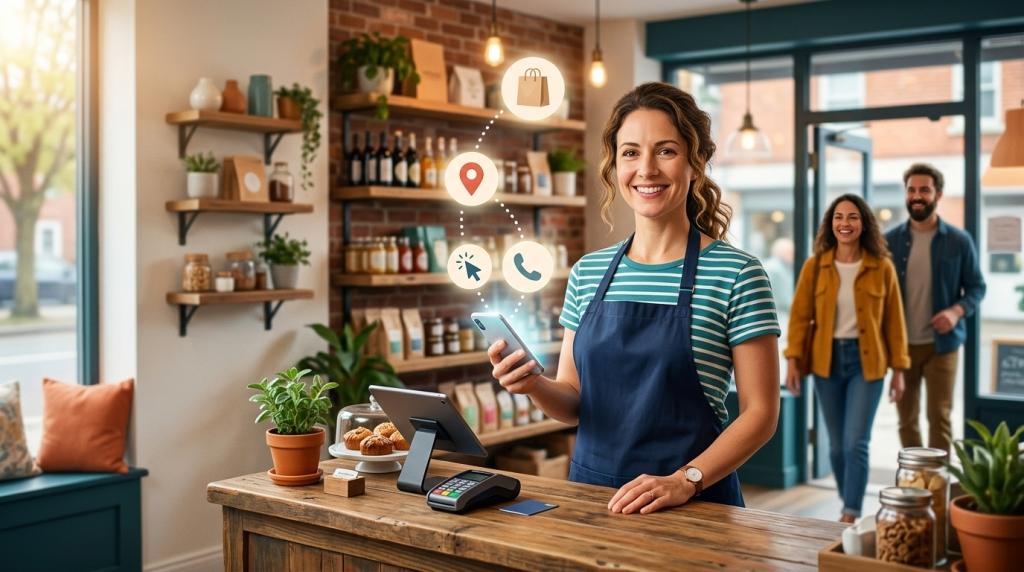
PPC for Small Business – Picture this. A customer grabs their phone and types “plumber near me” into Google. In a blink, they see a list of businesses. The ones at the very top are often ads. That is pay-per-click advertising at work. PPC for small business is one of the fastest ways to put your name in front of people who are ready to buy right now.
In this guide, we will explain how PPC works, what it costs in 2026, what is new this year, and simple steps to help you get more customers without wasting money.
What Is PPC?
PPC stands for “pay-per-click.” You make an ad, and you only pay when someone clicks on it. If 1,000 people see your ad and 30 of them click, you pay for those 30 clicks. The people who just looked at it cost you nothing.
Most PPC ads show up on Google. They can also appear on Bing, Facebook, Instagram, and now even inside ChatGPT.
Here is the neat part. Every time someone searches, Google runs a quick auction. It looks at how much you are willing to pay for a click. It also looks at how helpful your ad is to the person searching. That means a small shop with a clear, useful ad can beat a big company that spends more. If you are brand new to this, start with our guide to PPC basics for small businesses.
Why PPC for Small Business Works
PPC is a great fit for small businesses for a few simple reasons:
- It is fast. Your ads can start showing the same day. Ranking on Google for free (called SEO) can take months.
- You control the budget. You pick how much to spend each day. You can raise it, lower it, or pause it any time.
- You reach ready buyers. People searching for “roof repair” usually need a roof fixed soon.
- You can stay local. You can show ads only to people in your town or service area.
- You can see the results. You know how many people clicked, called, or filled out a form.
PPC works best as one part of a bigger plan. Smart search engine marketing for small business mixes paid ads with free search traffic, so customers find you in more than one place.
How Much Does PPC Cost in 2026?
The honest answer is: it depends on your industry and your town. Still, it helps to know the averages.
WordStream studied more than 13,000 search ad campaigns across 23 industries. In its 2026 Google Ads benchmarks report, the average cost per click was $5.42. The average cost to get one lead was $66.69. There is good news, too. For the first time in five years, the average cost per lead actually went down.
Some industries cost a lot more. Lawyers and insurance companies can pay $50 or more for a single click. That is because one new client is worth a lot of money to them.
So do not just compare yourself to averages. Instead, ask: “What is a new customer worth to me?” Here is a quick example. Say a new customer is worth $500 to you. Each lead costs $70, and you win 1 out of every 3 leads. That means each new customer costs you about $210. You spend $210 to earn $500. That is a good deal!
What’s New in PPC This Year
Online ads change fast. Here are the 2026 updates small business owners should know about.
AI Is Doing More of the Work
Google’s new tool, called AI Max, can find new searches for your ads, write headlines, and pick the best page on your website to send people to. Google now lets you preview up to 10 AI-written headlines and descriptions before you turn this on. That way, you can make sure the words sound like your business.
Ads Now Show Up in AI Answers
When Google shows an AI summary at the top of the page (called an AI Overview), ads can appear above it, below it, and sometimes inside it. Google is also showing ads in its chat-style AI Mode. You cannot pick these spots on purpose, and you cannot turn them off. Google decides based on how well your ad matches the search.
More Control Over Where Your Money Goes
In October 2026, Google announced new “channel priority” controls that will roll out over the coming months. You can tell Google to spend on Google Search first. You can also limit how much of your daily budget goes to other places, like partner websites. Google says it will try to follow your limit, but it is not a hard cap.
Big Changes Coming in February 2027
- Call-only ads are going away. They will stop showing in February 2027. Google wants you to use regular search ads with a phone number added instead.
- Dynamic Search Ads are moving to AI Max. Google will switch them over automatically in February 2027.
- Display settings are changing. If your search ads also show on Google’s display network, the way that budget is split will change.
Do not wait until the last minute. Make these changes early so you can test them while your old ads still run.
Local Services Ads Are Moving
Local Services Ads are the ads with the “Google Guaranteed” style badges for plumbers, electricians, cleaners, and more. They are moving into the main Google Ads account. This started in August 2026 with some U.S. home service businesses, and more will follow. Old reports do not carry over, so download yours before your switch date.
New Places to Advertise
U.S. businesses can now buy ads in ChatGPT on their own, with no minimum budget. It is very new, so there is not much data yet on how well it works. Treat it as a small test, not your main plan. Microsoft Advertising (Bing) is another option. It often has less competition than Google and can be a smart second choice.
7 Simple Tips to Win With PPC
- Track what really matters. Count phone calls, form fills, and sales. Clicks alone do not pay the bills. Google’s AI learns from what you track, so track the right things.
- Start small and focused. Pick one main service and one area. Get that working well before you grow.
- Block the wrong searches. Use “negative keywords” to stop ads from showing for searches you do not want, like “free” or “jobs.”
- Match your page to your ad. If your ad says “Same-Day AC Repair,” the page should talk about same-day AC repair. A clear page helps people say yes.
- Give people a reason to pick you. Share what makes you special, like family-owned, 5-star reviews, or free estimates.
- Watch where your money goes. Use Google’s new channel controls to keep most of your budget on Google Search.
- Check in every week. Look at your results, cut what is not working, and test one new idea at a time.
Should You Get Help With Your Ads?
You can run PPC on your own. But with AI tools, new ad spots, and deadlines on the way, it is easy to fall behind. A small mistake, like a missing negative keyword, can quietly eat your budget. That is why many owners choose expert PPC management for small business. A good partner sets up tracking, watches your spending, and keeps your ads up to date, so you can focus on running your business.
The Bottom Line
PPC for small business still works great in 2026. It puts you in front of people who are ready to buy, and you only pay when they click. The secret is not spending the most money. It is being clear, being helpful, and tracking what really brings in customers.
Start small, learn as you go, and get ready for the changes coming. Do that, and your ads can become one of the best tools for growing your business.