
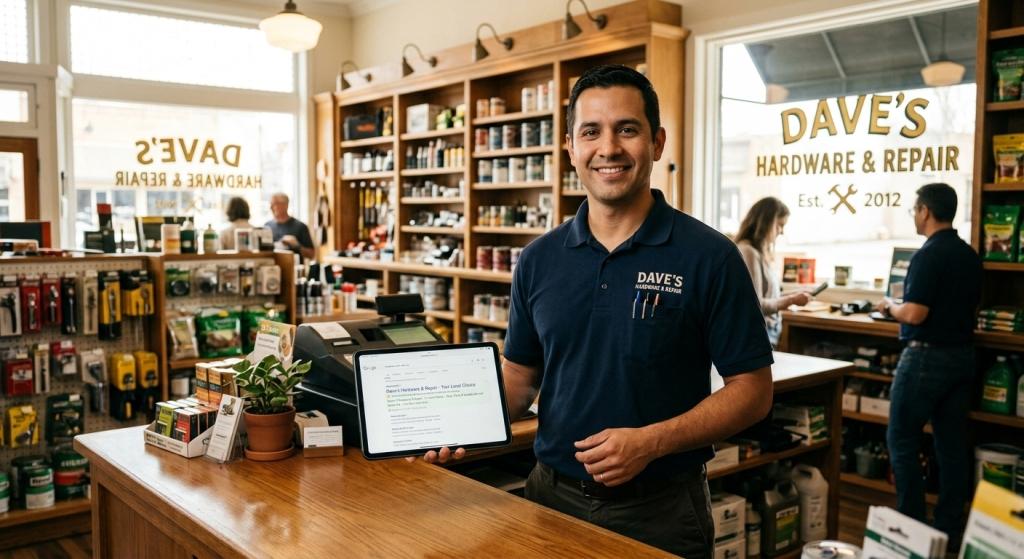
PPC for Local Business – Running a small business is hard work. You’re juggling customers, managing your team, keeping the lights on — and somewhere in between all of that, you’re supposed to figure out how to market your business online too. It can feel like a lot.
But here’s some good news: PPC for local business is one of the most beginner-friendly, budget-flexible, and fast-acting tools in all of digital marketing. And once you understand how it works, it starts to feel a whole lot less overwhelming.
This guide will walk you through everything — what PPC is, how it works, what it costs, and the smartest strategies to make it work for your specific business. Simple language. Real facts. No fluff. Let’s get into it.
What Is PPC for Local Business?
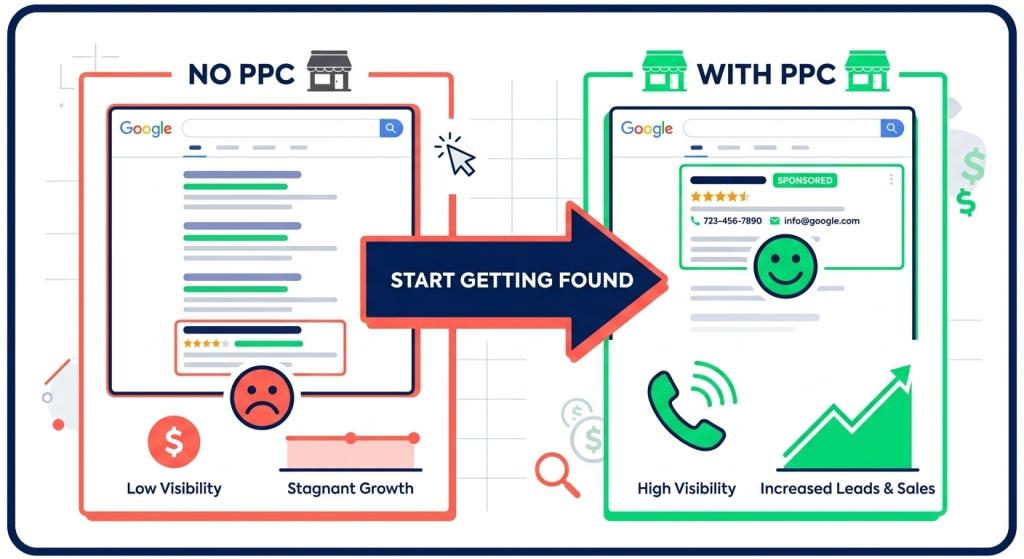
PPC stands for Pay-Per-Click. It’s a type of online advertising where your business shows up at the top of Google search results — and you only pay when someone actually clicks on your ad. If people see your ad but don’t click, you pay nothing at all.
You’ve seen these ads before. The next time you search something on Google, look at the very top of the page. The first few results with a small “Sponsored” label? Those are PPC ads. The businesses behind them are paying a small fee each time a real person clicks and visits their website.
PPC for local business is part of a broader approach called search engine marketing for small business — a strategy that uses paid ads, keyword targeting, and smart audience settings to help smaller companies compete online and get found by the right customers at exactly the right moment.
Google reports that businesses earn an average of $2 for every $1 they spend on Google Ads. That means a well-run PPC campaign doesn’t just cost money — it makes money.
Why PPC Works So Well for Small Businesses
Big companies have big marketing budgets. So how does a small business compete? This is where PPC actually gives small businesses a real advantage. Here’s why:
⚡ It Delivers Results the Same Day
Getting your website to show up in Google’s free search results through SEO takes months — sometimes over a year. PPC is the opposite. Your ad can appear at the top of Google the same day you turn it on. A brand new business can start reaching real customers within hours of launching their first campaign.
💰 You’re Always in Control of Your Budget
With PPC for local business, you set the rules. You decide how much to spend per day, and Google will never charge you more than that limit. If you need to pause your campaign for a week, you can do that instantly — with no penalties and no contracts. This level of control is something traditional advertising like print or radio simply can’t offer.
🎯 You Only Reach People Who Are Already Interested
Unlike a billboard or a TV commercial that reaches everyone whether they care or not, PPC targets people who are actively searching for what you offer. Someone who types “custom birthday cake bakery near me” into Google is already a warm lead. They’re not just scrolling by — they want what you sell. That’s why PPC conversion rates are consistently higher than almost any other form of advertising.
📊 Every Dollar Is Trackable
PPC gives you real data in real time. You can see exactly how many people saw your ad, how many clicked, and how many turned into paying customers. This makes it easy to know what’s working, what isn’t, and where to put more of your budget. No guessing. No wasted spend on things that don’t perform.
How PPC for Local Business Actually Works
Every time someone searches on Google, a fast, invisible auction happens behind the scenes — in less than a second. Here’s how your small business fits into that process:
- You choose keywords — These are the words and phrases your ideal customers type into Google when they need what you offer. A landscaping company might target “lawn care service near me” or “spring yard cleanup [city name].”
- You write an ad — A short, compelling message with a clear headline, a brief description, and a call to action like “Call Now” or “Get a Free Quote.”
- You set your bid and budget — You decide the most you’re willing to pay per click and how much you want to spend each day.
- Google runs the auction — Google combines your bid with your ad’s Quality Score (a rating of how relevant and useful your ad is) to decide who wins the top spots. A great ad can beat a bigger competitor who spends more money.
- Your ad appears at the top — If your ad wins, it shows up at the top of the search results page with a “Sponsored” tag.
- You pay only when someone clicks — That’s the beauty of PPC. No clicks, no charge.
PPC for Local Business: Key Terms Made Simple
Here are the most important PPC terms you’ll encounter — explained in plain English:
- Keyword: The word or phrase someone types into Google that triggers your ad to appear.
- CPC (Cost Per Click): The amount you pay each time someone clicks your ad. The 2026 average across all industries is $5.42.
- Quality Score: Google’s 1–10 rating of how relevant your ad, keywords, and landing page are to what someone searched. Higher scores mean better placement at lower cost.
- CTR (Click-Through Rate): The percentage of people who see your ad and click it. A strong Google Search CTR is 3–5%, and great ads can hit 10% or more.
- Conversion: When someone clicks your ad and then takes the action you wanted — calling, buying, or booking.
- Landing Page: The specific page on your website visitors arrive at after clicking your ad. It must be fast, clear, and focused on one action.
- Negative Keyword: A word you tell Google to not show your ad for — protecting your budget from irrelevant clicks.
- ROAS (Return on Ad Spend): How much revenue you earn for every dollar spent on ads. A ROAS of 4 means you made $4 for every $1 spent.
How Much Does PPC for Local Business Cost?
There’s no single answer — it depends on your industry, location, and competition. But here’s a realistic starting point for most small businesses:
Most small businesses start with $5 to $10 per day, or around $150 to $300 per month, to test and learn what works. As your confidence grows and your data builds up, you can gradually increase your budget. Most established small business PPC campaigns run between $1,000 and $10,000 per month — but you don’t need to start anywhere near that level.
The most important rule: never spend more than you can track. Setting up conversion tracking before your first ad goes live is non-negotiable. Without it, you have no way of knowing which keywords and ads are actually bringing in customers — and you’ll be making decisions based on guesswork instead of data.
Top PPC Strategies That Work for Small Businesses in 2026
1. Target Locally First
Most small businesses serve a specific area — a city, a county, or a service radius. Use geographic targeting to make sure your ads only show up for people in that area. Showing your ad to someone 100 miles away who will never visit or hire you is a fast way to drain your budget. Start tight, prove the ROI, then expand. If your business serves a specific neighborhood or town, check out our deeper guide on local business PPC for strategies built specifically around geographic targeting, call tracking, and Local Services Ads.
2. Use High-Intent Keywords
Skip the broad, vague keywords. Instead, focus on phrases that signal someone is ready to take action right now. Words like “near me,” “open now,” “get a quote,” “book today,” and “emergency” all suggest high purchase intent. These keywords cost more per click — but they convert far better and bring in customers who are ready to spend money today.
3. Build Your Negative Keyword List
From your very first day, add negative keywords to your campaign. These are words that should never trigger your ad. A wedding photographer would add “stock photos,” “free images,” and “photography courses” as negative keywords. Without a solid negative keyword list, your budget quietly disappears on clicks from people who will never become your customers.
4. Write Ads That Speak Directly to Your Customer
Your headline is the most powerful part of your ad. Mirror the exact language your customer used in their search. If they searched “affordable roof repair [city],” your headline should speak directly to affordable roof repair in that city. Use all available ad extensions — call buttons, sitelinks, and location information — because Google rewards ads that take up more space with better placement and lower costs.
5. Create Dedicated Landing Pages
Never send PPC traffic to your homepage. Build a specific landing page for each campaign that delivers exactly what your ad promised. It should load fast on mobile, have one clear call to action, and make it effortless for visitors to call, buy, or book. Every mismatch between your ad and your landing page is a paid click walking straight out the door.
6. Let AI Help — But Keep Watching
Google’s Smart Bidding uses artificial intelligence to automatically adjust your bids in real time — based on the searcher’s location, device, time of day, and likelihood of converting. For small businesses, this is a powerful tool once you have enough data. Start with “Maximize Clicks” to build your conversion history, then move to “Maximize Conversions” once you’re hitting at least 30 conversions per month. And always check your campaigns weekly — AI is a great helper, but it still needs a human keeping watch.
Mistakes Small Businesses Make With PPC — And How to Avoid Them
- ❌ Skipping conversion tracking — You can’t improve what you can’t measure. Set it up before day one.
- ❌ Using only Broad Match keywords — Without negatives, irrelevant searches drain your budget silently.
- ❌ Sending all traffic to the homepage — Build dedicated landing pages for every campaign.
- ❌ Testing only one ad version — Always run two or three variations and let the data tell you which one wins.
- ❌ Giving up before the data comes in — Give every campaign at least two full weeks before making major changes.
- ❌ Ignoring Quality Score — A low score means you pay more for worse results. Fix your ad relevance and landing page to bring it up.
You’re More Ready Than You Think
PPC for local business is not just for big companies with massive marketing teams. It’s for the local bakery, the independent plumber, the family-owned dental office, and every small business in between that wants to grow faster and smarter online.
Start with a clear goal. Pick focused, high-intent keywords. Build a great landing page. Set up your tracking. Launch with a small daily budget. Learn from the data. And keep improving every week.
For a deeper look at the core foundations of paid advertising, our full guide on PPC basics for small businesses is a great next step — covering everything from how the Google auction works to budgeting tips and keyword research strategies explained in simple, friendly terms.
You can also build your Google Ads knowledge for free through Google Skillshop — Google’s official free training platform where you can learn at your own pace and even earn certifications.
And when you’re ready to bring in a team of experts to manage your campaigns, maximize your budget, and deliver real, measurable results, professional PPC Management For Small Business is here to help you grow with confidence — one smart click at a time.