
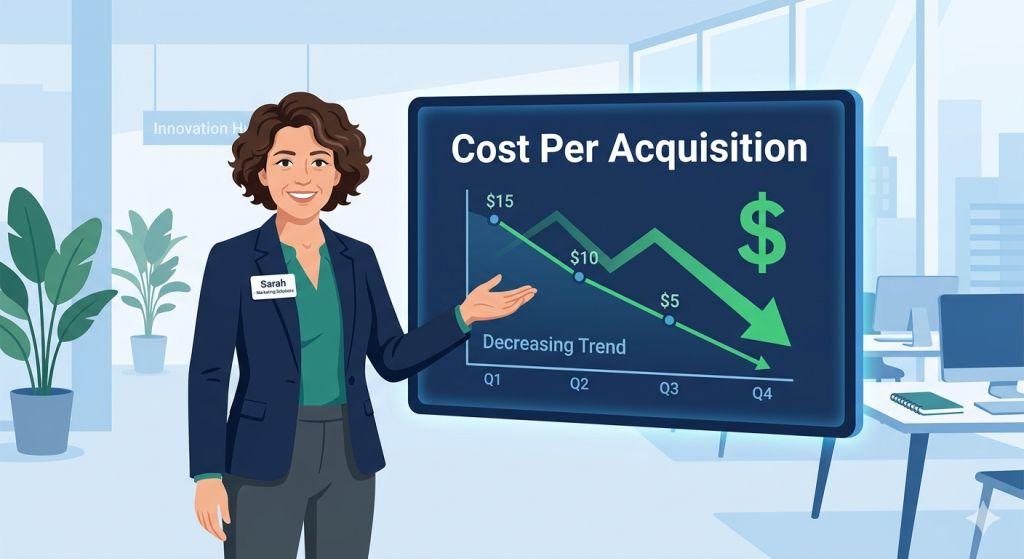
Cost Per Acquisition Google Ads – Imagine spending $500 on Google ads and getting 10 new customers. Now imagine spending that same $500 and getting only 2. The difference between those two outcomes comes down to one very important number — your cost per acquisition Google Ads. And in 2026, knowing this number isn’t just helpful. It’s essential.
Whether you’re a small business owner running your first ad campaign or someone who’s been advertising on Google for years, this guide will break down everything you need to know about cost per acquisition in simple, easy-to-understand language. No confusing jargon. No complicated math. Just clear, helpful information that can make a real difference in how your ads perform.
What Is Cost Per Acquisition Google Ads?
Cost per acquisition — also called CPA — is the average amount of money you spend on Google Ads to get one customer or one important action, like a phone call, a form submission, or a purchase. Here’s the simple formula behind it:
CPA = Total Ad Spend ÷ Number of Conversions
So if you spend $200 on ads and get 4 people to fill out your contact form, your CPA is $50. That means each new lead cost you $50 to acquire.
CPA is one of the most powerful numbers in advertising because it answers the most important question any business owner can ask: “Am I actually getting my money’s worth from these ads?” Clicks and impressions are nice, but what really matters is how much it costs to turn a stranger into a customer. That’s exactly what CPA tells you — and it’s a key part of measuring overall Google Ads performance.
CPA doesn’t stand alone, though. To get the full picture of your campaign health, it’s important to look at it alongside your click-through rate — because a drop in CTR is often the first warning sign that your CPA is about to climb. Our small business guide to Google Ads KPIs puts CPA in context with all your other key numbers so you always know which lever to pull first.
What Is a Good CPA for Google Ads in 2026?
This is one of the first questions business owners ask — and the honest answer is: it depends on your industry and what a customer is worth to you.
Here’s a look at real 2026 benchmark data across different industries:
- Technology companies: Average CPA of $133.52 — high because of long sales cycles and complex decisions
- B2B Services: Average CPA of $116.13 — also high due to longer buying journeys
- Consumer Services: Average CPA of $90.70
- Legal Services: Over $130 per acquisition on Google Search
- eCommerce: CPAs between $15 and $45 are common
- Automotive: Average CPA of just $33.52 — one of the most efficient industries
- Pets and Animals: Around $25.15 — and actually getting cheaper year over year
The overall median CPA across all industries in 2026 is $23.74, up about 12% from last year. But here’s the most important thing to understand: there is no universal “good” CPA. A $200 CPA might be completely fine for a law firm where each client is worth $50,000. But that same $200 CPA would be a disaster for a shop selling $25 candles.
The right CPA for your business is one where you’re making more money from each customer than you spent to get them. That’s it. Always compare your CPA to the value of your customer — not just to an industry average.
Why Is CPA Rising in 2026?
If you’ve noticed your advertising costs going up lately, you’re not imagining things. CPA has been climbing across most industries, and there are some clear reasons why.
First, cost-per-click (CPC) — the price you pay each time someone clicks your ad — went up in 87% of industries in 2026, with increases ranging from 10% to 25%. More businesses are using Google Ads, which means more competition for the same clicks. When more people are bidding on the same keywords, prices go up — just like an auction.
Second, conversion rates dropped nearly 9.3% across most industries this year. That means even though more people are clicking on ads, fewer of them are actually completing a purchase or filling out a form. When clicks get more expensive AND fewer of them turn into customers, your CPA goes up fast.
Third, Google’s AI Overviews — those big AI-generated answer boxes at the top of search results — are now appearing on more searches. This has reduced organic (free) search traffic by 8–12% in many categories, pushing businesses to rely more on paid ads to stay visible. More demand for paid traffic means higher competition and higher costs.
The good news? Understanding why costs are rising is the first step toward doing something about it. And there’s a lot you can do.
Breaking News: Google Is Changing How Target CPA Works in 2026
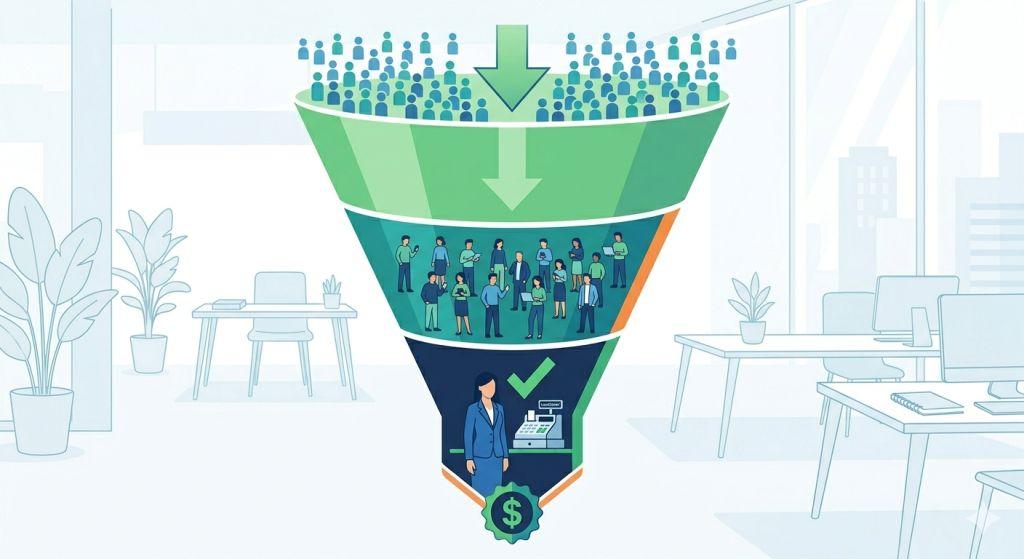
If you run Google Ads, there are some very important changes happening right now that you need to know about — especially if you use automated bidding.
New Name, Same Strategy (June 2026)
Starting in June 2026, Google renamed some of its bidding options to make them simpler. “Maximize conversions with a Target CPA” is now just called Target CPA. Nothing about how it works has changed — only the label. So don’t panic if you log in and things look slightly different.
Big Bidding System Update: August 17, 2026 — Action Required
This one is really important. Starting August 17, 2026, Google is changing how its bidding system works for campaigns that use Target CPA or Target ROAS (return on ad spend). Here’s what that means in plain English:
Right now, some campaigns have been secretly performing better than the CPA target you set. For example, maybe you told Google your target CPA was $10, but Google was actually getting you leads for $5. That’s great — but Google is changing things so that campaigns will now stick much more closely to the exact target you set.
So if your campaign has been outperforming your target, you need to update your target before August 17 to reflect your actual recent performance — otherwise your results could get worse automatically. Google is releasing a helpful Bid Target Adjustment Tool on July 6, 2026 to help you review your settings and make the right changes before the deadline.
New Promotion Mode (June 2026)
Google also launched a new Promotion Mode in beta for Search and Performance Max campaigns. This tool lets you schedule temporary budget boosts and adjust your targets during peak selling periods — like Black Friday, back-to-school season, or a big sale. This is great news for small businesses that have predictable busy seasons.
How Target CPA Bidding Actually Works
When you use Target CPA bidding in Google Ads, you’re telling Google: “I want to get as many customers as possible, but I don’t want to spend more than X dollars for each one.” Google’s AI then uses signals like the person’s location, device, time of day, and search history to decide how much to bid for each individual auction — all automatically, in real time.
Think of it like having a really smart assistant who knows exactly when to raise your hand and when to stay quiet at an auction, depending on how likely the item is to be worth it.
One important tip: don’t set your target too low right away. Google’s AI needs time to learn what works for your business. If your current CPA is $50 and you set a target of $20 on day one, you’re telling the system to aim for something nearly impossible — and performance will suffer. Start with a target close to your current real CPA, then gradually lower it as the system learns and improves. Increase your budget in steps of 20–30% at a time, then wait a week or two before making more changes.
5 Proven Ways to Lower Your Cost Per Acquisition Google Ads
Ready to spend less money to get each new customer? Here are five strategies that actually work in 2026:
1. Fix Your Landing Pages
This is the single biggest lever most businesses can pull. Remember — CPA is a combination of how much clicks cost AND how well your website turns those clicks into customers. If your landing page is slow, confusing, or doesn’t match what your ad promised, people will leave without converting — and your CPA will skyrocket.
Make sure your page loads in under 2 seconds, matches the exact message in your ad, has one clear call-to-action, and works perfectly on phones. Research shows that a two-second delay in page load time can push bounce rates up by over 100%. In 2026, Google even updated how it evaluates landing page quality, placing more weight on page speed than ever before.
2. Improve Your Quality Score
Google grades your ads with a score from 1 to 10 called a Quality Score. The higher your score, the less you pay per click — which directly lowers your CPA. A Quality Score of 1 to 3 can cost you up to 400% more per click than a mid-range score. A perfect score of 10 can give you up to a 50% discount on each click. The average advertiser scores between 5 and 6, so getting to a 7 or above puts you ahead of most competitors.
3. Use High-Intent Keywords
Broad, general keywords attract a lot of clicks from people who aren’t ready to buy. High-intent keywords — more specific phrases that show someone is actively looking for your product or service — cost more per click but convert much better. The result? Lower CPA. Focus on what your best customers are actually typing when they’re ready to make a decision.
4. Don’t Change Strategies Too Often
Google’s AI bidding systems need time to learn. Every time you make a big change — switching bid strategies, dramatically changing your budget, or adding a lot of new keywords — the system has to start learning again. This learning period can last one to three weeks. Advertisers who constantly tinker with their campaigns may never let the AI reach full performance. Make changes thoughtfully and give the system time to adjust before judging the results.
5. Let Professionals Help
Managing CPA effectively in 2026 requires keeping up with constant platform changes, understanding bidding strategy nuances, optimizing landing pages, and interpreting data — all at the same time. For many small business owners, partnering with a team that specializes in search engine marketing for small business is the smartest move they can make. The right experts can identify where your budget is leaking and fix it fast.
CPA vs. Other Metrics: What Really Matters
It’s easy to get distracted by other numbers — clicks, impressions, CTR — but none of them pay the bills. Cost per acquisition Google Ads is the metric that connects your advertising directly to your business results. A campaign with a low CTR but a low CPA is more valuable than one with a sky-high CTR that never converts.
CPA and ROAS are closely related but measure different things. While CPA tells you how much you paid to get a customer, ROAS in Google Ads tells you how much revenue that customer brought back in. For product-based businesses especially, both numbers together give you a much fuller picture of whether your campaigns are truly profitable.
Always look at the full picture. How much did it cost to get a customer? How much is that customer worth to your business over time? Those two numbers together tell you everything you need to know about whether your ads are truly working.
For a deeper look at how industry benchmarks and trends are shaping paid search in 2026, WordStream’s 2026 Google Ads Benchmarks report is one of the most comprehensive and up-to-date resources available.
Ready to Get More Customers for Less?
Understanding your cost per acquisition Google Ads is one of the smartest things you can do for your business. When you know this number, you can make better decisions about your budget, your bidding strategy, your landing pages, and your overall marketing plan.
At Sheaf Media Group, we help small businesses take control of their ad spending and get real results. From setting up Target CPA campaigns to optimizing every step of the customer journey, our PPC Management For Small Business services are built to lower your CPA and grow your business — without wasting a single dollar of your budget.
Big changes are coming to Google Ads bidding in August 2026. Don’t wait to review your campaigns. Whether you need help understanding your current numbers or a full-scale campaign overhaul, we’re here to help you navigate every update and come out ahead. Get in touch with our team today and let’s start turning your ad spend into real growth.