
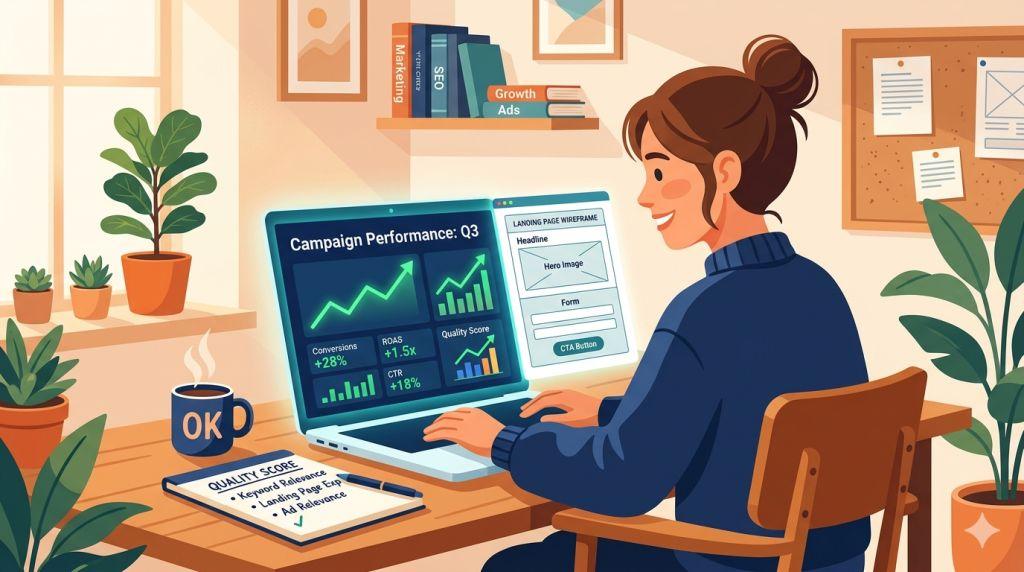
Think of your Google Ads landing page like a store window. Your ad gets people to stop and look — but your landing page is what gets them to walk inside and buy something.
If you’ve ever run a Google Ad, you know the feeling. You spend money. People click. And then… nothing. No calls. No sales. No sign-ups. It can feel like throwing money into the wind.
Here’s a secret that a lot of advertisers don’t know: the ad is only half the battle. The real magic — or the real problem — lives on your Google Ads landing page. That’s the page someone sees right after they click your ad.
In this guide, we’re going to break down everything you need to know about them. We’ll keep it simple, friendly, and packed with real facts so you can start making smarter choices for your business today. If you want the broader picture first — what a landing page is in digital marketing generally, beyond just Google Ads — that’s worth a quick read before diving into the specifics here.
What Is a Google Ads Landing Page?
A Google Ads landing page is the webpage a person visits right after clicking on your Google Ad. It could be your homepage, a product listing, or something built specifically for that ad. This is really just a specific application of a broader concept — see our guide on what a landing page is in digital marketing if you want the fundamentals before getting into the Google Ads-specific rules below.
The goal of a landing page is simple: turn a visitor into a customer. That might mean they fill out a form, call your business, buy a product, or sign up for something.
But here’s the thing — Google actually grades your landing page. It gives it a score called a Quality Score. This score affects how often your ad is shown AND how much you pay for every click. A better score means lower costs and more visibility; a worse one means higher costs and fewer people even seeing your ad.
Those numbers below are real, and they matter a lot — especially for small businesses where every dollar counts:
- Poor landing page experience = 47% higher cost-per-click
- “Above Average” landing page score = 36% lower cost-per-click
- Pages loading in 1 second convert 3× better than pages loading in 5 seconds
Why Google Cares So Much About Your Landing Page
Google’s whole job is to make people happy. When someone searches for something and clicks an ad, Google wants that person to find exactly what they were looking for. If your landing page is slow, confusing, or doesn’t match what your ad promised, the person leaves frustrated. Google notices that — and penalizes you for it.
In 2025, Google made this system even smarter. They rolled out a new AI-powered quality prediction model. This means Google’s system now tries to predict whether someone will have a good experience on your page — before it even shows your ad. If it thinks your page will disappoint people, it may not show your ad at all.
Google also started applying the same standards to paid ads that it uses for regular search results. This is called E-E-A-T — which stands for Experience, Expertise, Authoritativeness, and Trustworthiness. In simple words: your landing page needs to feel real, helpful, and trustworthy.
💡 Good to Know: A February 2025 Google update added new checks for navigation clarity and unexpected destinations. If your ad promises one thing but your page delivers something different, Google will now catch that faster than ever — and your ad will suffer for it.
The 5 Things Every Great Google Ads Landing Page Must Have
Whether you’re a plumber, a bakery, or a law firm, these five things are non-negotiable for a landing page that works.
- Fast Load Speed — Your page must load in under 2 seconds. Ideally under 1 second. Pages that load in 1 second convert 3 times better than pages that take 5 seconds. Use tools like Google PageSpeed Insights to check yours.
- Mobile-First Design — Most people clicking your ad are on their phones. Google looks at the mobile version of your page first. If it looks like a mess on a phone, you’re losing customers and your ad ranking at the same time.
- Message Match — If your ad says “50% Off Lawn Care This Month,” your landing page headline needs to say something very similar. If someone clicks expecting a deal and lands on a confusing homepage, they leave immediately.
- One Clear Call to Action (CTA) — Your page should ask visitors to do ONE thing. Call now. Get a free quote. Buy today. Don’t give them five different choices. One focused button works better every time.
- Trust Signals — Reviews, star ratings, certifications, and photos of real customers all help visitors feel safe. People buy from businesses they trust. Show them why you’re trustworthy.
Reading a checklist is one thing — seeing it done well is another. Our roundup of real Google Ads landing page examples shows how different businesses put these five elements into practice, side by side.
The Newest Change: Google’s AI Now Reads Your Landing Page
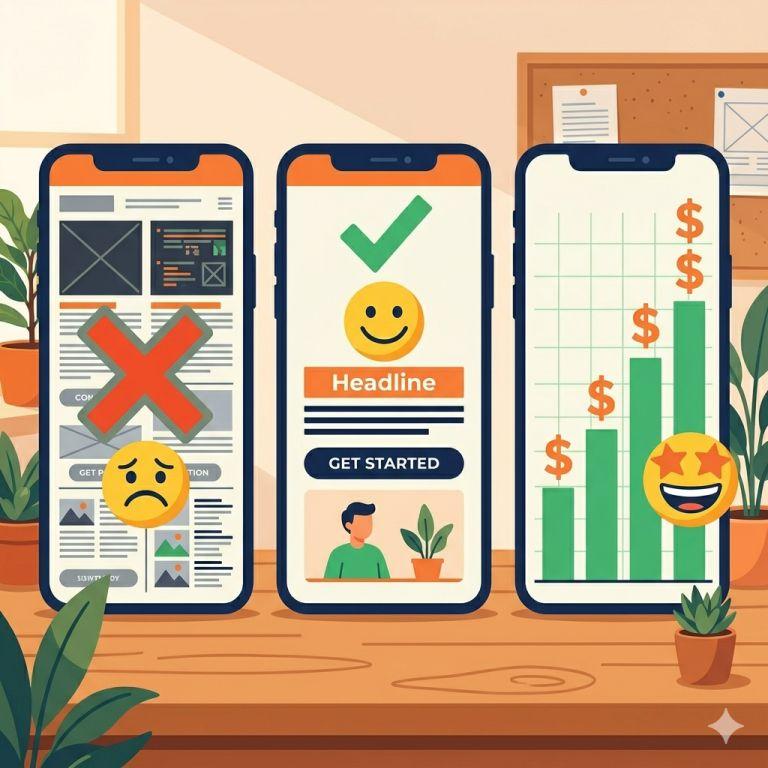
This is one of the biggest updates in Google Ads in years — and most people haven’t heard about it yet.
Google launched a product called AI Max for Search in May 2025. It’s now one of the fastest-growing advertising features Google has ever created. Here’s why it changes everything for your landing page:
Google’s AI now reads and understands your landing page content to decide which searches should trigger your ad. It literally reads your page, figures out what you offer, and then matches your ad to relevant searches — even ones that don’t include your exact keywords.
What does this mean for you? A thin or boring landing page limits how often your ads get shown. A rich, detailed, helpful landing page gives the AI more to work with — and your ads get matched to more customers.
AI Max also uses something called Final URL Expansion. This means Google might automatically send visitors to different pages on your website based on what they searched for — choosing the page that’s most likely to be helpful to them. This is why every page on your website matters, not just your homepage.
✅ Real Results: Businesses using AI Max with strong landing page experience signals saw an average 14% increase in conversions at a similar cost per acquisition. That’s a meaningful win without spending more money.
What Happens When Your Landing Page Is Bad?
Let’s be honest about what poor landing page experience actually costs you. It’s not just a lower score in some report — it hits your wallet directly.
When Google decides your landing page experience is “Below Average,” you end up paying between 30% to 70% more per click compared to advertisers with “Above Average” scores. You’re spending more to get the same traffic — or even less traffic — because Google also shows your ads less often.
A 2026 navigation update made things stricter: Google now tracks whether visitors can find what they need within just a few clicks of landing on your page. Pages that confuse visitors or send them somewhere unexpected now face tougher penalties.
The good news? These problems are fixable. In fact, most accounts can move from “Below Average” to “Above Average” within 4 to 6 weeks by focusing on the right improvements — our step-by-step guide on how to improve landing page experience in Google Ads walks through exactly where to start. Want help making that happen? PPC management for small businesses is one of the best investments you can make in your digital advertising — and having experts handle your landing page strategy can make a massive difference.
One Page Per Campaign: A Simple Strategy That Works
Here’s a mistake tons of small business advertisers make: they send all of their ad traffic to the same page, no matter what the ad says or who’s clicking.
The smarter approach? Create a dedicated landing page for each ad group. Group your ads by what the customer is looking for, and build a page that speaks directly to that need.
For example, if you’re a pest control company running ads for “ant removal,” “roach extermination,” and “termite inspection,” each of those groups deserves its own landing page — not the same general homepage. The page for ant removal should talk about ants. The termite page should talk about termites. It sounds like extra work, but it’s the kind of thing that can cut your advertising costs while boosting your results at the same time.
To learn more about how to build smart campaigns around great landing pages, Google’s own landing page experience guide is a great starting point.
Quick Tips to Improve Your Google Ads Landing Page Today
You don’t have to overhaul your entire website overnight. Here are small changes that can make a big difference fast:
- Check your page speed right now — Go to pagespeed.web.dev and type in your URL. If your score is below 70, start there. Compress your images to WebP format — it alone can cut file sizes by 25–35%.
- Match your headline to your ad — Open your Google Ad, read the headline, then go to your landing page. Does it say something similar? If not, update the landing page headline today.
- Remove extra navigation links — Your landing page isn’t your website. You don’t need a full menu with 10 links. Fewer distractions = more conversions.
- Add one real customer review — Just one authentic review with a name and photo builds trust fast. Don’t underestimate how powerful this is.
- Test on your phone — Pull up your landing page on your personal smartphone right now. Is the text readable? Is the button easy to tap? Is anything cut off? Fix whatever looks broken.
These quick wins help immediately, but for the complete playbook — including message match, trust signals, and mobile design in more depth — see our full guide to Google Ads landing page best practices.
The Bottom Line: Your Landing Page Is Your Salesperson
Your Google Ads landing page isn’t just a webpage. It’s your best salesperson — working 24 hours a day, 7 days a week. And just like a real salesperson, it needs to be prepared, trustworthy, easy to understand, and focused on one goal at a time.
Google is getting smarter every year. Its AI is now reading your pages, predicting experiences, and making decisions about your ads before a human ever sees them. The businesses that win are the ones who treat their landing page as seriously as the ads themselves.
If you’re a small business trying to grow through online advertising, the right support makes all the difference. Search engine marketing for small businesses is about more than just running ads — it’s about building a complete system where every click has the best possible chance of turning into a customer.
Start with the basics: fast, mobile-friendly, message-matched, and focused. Then keep improving from there. Your Google Ads landing page is never truly “done” — but every improvement you make puts more money back in your pocket.