
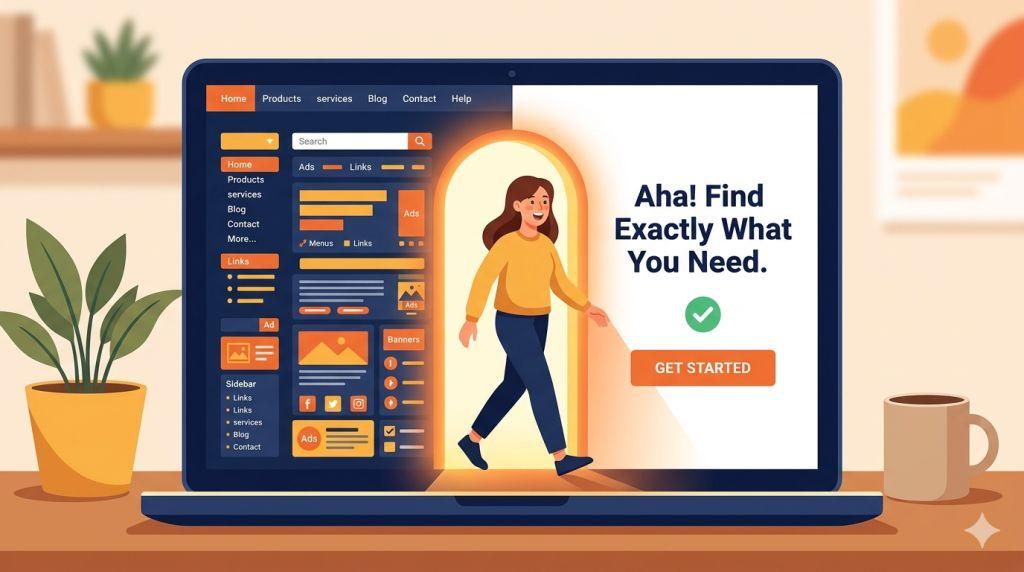
Every great ad needs a great destination. That destination is called a landing page — and understanding it could change how your entire online marketing works.
You’ve probably clicked on an ad before. Maybe it was for a pair of shoes, a local restaurant, or a software tool you were curious about. The moment you clicked, you were sent to a specific page. That page had one job: to get you to do something — buy, call, sign up, or learn more.
That page is called a landing page. And in digital marketing, it’s one of the most important tools a business can use.
In this article, we’re going to answer the question what is a landing page in digital marketing — in plain, simple language. We’ll also share why landing pages matter so much, what makes a great one, and how you can use them to get real results from your online advertising.
What Is a Landing Page in Digital Marketing?
A landing page in digital marketing is a standalone web page built for one specific purpose. It’s the page a visitor “lands on” after clicking an ad, a link in an email, or a result from a search engine.
Unlike your homepage — which talks about everything your business does — a landing page is laser-focused. It talks about one thing, to one specific type of customer, with one clear next step.
Here are a few everyday examples:
- A roofing company runs a Google Ad for “free roof inspection.” The landing page talks only about that free inspection and has a form to book it.
- An online store sends an email about a weekend sale. The link goes to a landing page showing only the sale items.
- A dentist runs a Facebook ad for teeth whitening. The landing page explains the service and has a “Book Now” button.
In every case, the landing page matches the message of the ad and gives the visitor one clear action to take. That focus is exactly what makes landing pages so powerful.
Landing Pages vs. Regular Web Pages: What’s the Difference?
This is one of the most common questions people ask. So let’s clear it up simply.
Your website is like a store. It has many rooms — a homepage, an about page, a services page, a blog, a contact page. Visitors can wander around and explore.
A landing page is like a salesperson standing right at the door. They greet you with exactly what you came for, answer your questions, and guide you to take one specific action. There’s no wandering. No confusion. Just a clear path forward.
Here’s the key difference in a simple list:
- Regular web pages — multiple goals, lots of navigation, broad audience
- Landing pages — one goal, minimal navigation, specific audience
Removing extra navigation from a landing page isn’t an accident — it’s a strategy. Every extra link is a potential exit. Fewer exits mean more conversions.
Why Landing Pages Matter So Much in Digital Marketing
Here’s something that surprises a lot of business owners: your ad is not what makes you money. Your landing page is.
An ad’s job is to get the click. The landing page’s job is to turn that click into a customer. If your landing page fails, it doesn’t matter how good your ad is. You’ve paid for a click that went nowhere.
And the stakes are real. Research shows that businesses with a poor landing page experience pay up to 47% more per click on Google Ads — and their ads are shown less often too. On the other hand, businesses with a great landing page experience can pay 36% less per click while getting better results.
That’s the difference between a landing page that works and one that doesn’t — and it shows up directly in your advertising budget.
💡 Quick Fact: A landing page that loads in 1 second converts visitors 3 times better than a page that takes 5 seconds to load. Speed alone can triple your results.
The 4 Main Types of Landing Pages in Digital Marketing
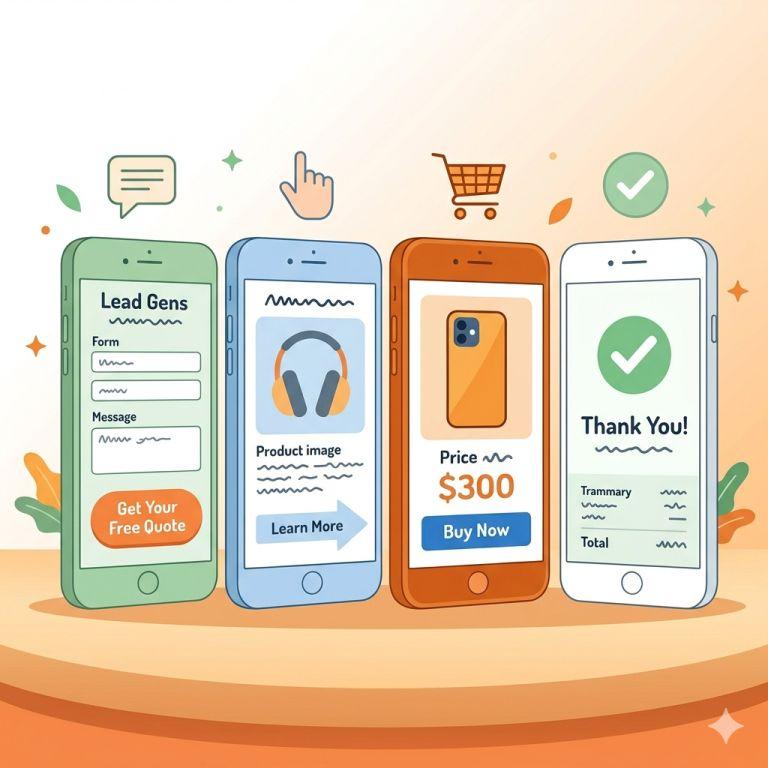
Not all landing pages are the same. Different goals call for different types. Here are the four most common ones:
- Lead Generation Pages — These pages collect contact information, like a name and email address. In exchange, they usually offer something free: a guide, a quote, a consultation, or a discount. These are very common for service businesses like HVAC, law firms, and dentists.
- Click-Through Pages — These warm up the visitor before sending them onward, usually to a checkout or sign-up step. They explain the offer in detail and build enough excitement that the visitor is ready to commit when they click through.
- Sales Pages — These pages are built to sell one product or service directly. They include all the information a buyer needs — features, benefits, pricing, testimonials, and a buy button. E-commerce businesses use these a lot.
- Thank-You Pages — This is the page someone sees after they complete an action. While often overlooked, a well-designed thank-you page can upsell, build loyalty, or encourage sharing.
The type of landing page you need depends on your goal. But all four types share the same core ingredients — which brings us to the next section.
What Makes a Great Landing Page? 5 Must-Have Elements
Whether you’re building a landing page for Google Ads, Facebook Ads, or email campaigns, these five elements are always essential.
- A Strong Headline — This is the first thing visitors read. It should match the message of your ad and immediately tell them they’re in the right place. A great headline answers the visitor’s first question: “Is this what I was looking for?”
- A Clear, Single Call to Action (CTA) — What do you want the visitor to do? Call? Fill out a form? Buy now? Pick one action and make the button or form impossible to miss. One CTA beats five every single time.
- Fast Load Speed — Pages must load in under 2 seconds. Every extra second costs you visitors. Use compressed images and clean code to keep things fast.
- Mobile-Friendly Design — More than half of all web traffic comes from mobile phones. If your landing page looks broken on a phone, you’re losing more than half your potential customers before they even read a word.
- Trust Signals — Customer reviews, star ratings, certifications, guarantees, and real photos all help visitors feel confident enough to take action. People do business with companies they trust.
Landing Pages and Google Ads: A Special Relationship
If you’re running Google Ads, your landing page is more than just a destination — it’s actually part of how Google decides whether to show your ad at all.
Google gives every ad a Quality Score. One of the three main factors in that score is landing page experience. Google asks: does this landing page deliver what the ad promised? Is it fast? Is it easy to use on a phone? Is the content helpful and trustworthy?
In 2025, Google went even further. They launched an AI-powered system that actually reads your landing page and predicts whether visitors will have a good experience — before the ad is even shown. If Google’s AI thinks your page will disappoint people, your ad may not appear at all.
This is why a great Google Ads landing page isn’t just good for your visitors — it’s essential for your ad campaign to work properly. Want to go deeper on this topic? Our full guide covers everything you need to know. To see what this looks like in action across different industries, our Google Ads landing page examples article walks through real pages for home services, legal, e-commerce, healthcare, and local businesses — with clear takeaways for each.
For small businesses especially, getting this right makes a huge difference. PPC management for small businesses often starts with fixing landing pages — because that single change can improve an entire campaign’s performance almost immediately.
Common Landing Page Mistakes to Avoid
Knowing what to do is important. So is knowing what not to do. Here are the most common landing page mistakes that hurt small businesses:
- Sending ad traffic to your homepage — Your homepage is for everyone. A landing page is for the specific person who clicked your specific ad. Homepages confuse visitors; landing pages convert them.
- Too many calls to action — “Call us! Sign up! Download! Follow us! Buy now!” — when you ask for everything, you get nothing. Pick one action and stick with it.
- No message match — If your ad says “Free Estimate Today” and your landing page doesn’t mention a free estimate anywhere, visitors will feel misled and leave. Your ad and landing page must tell the same story.
- Walls of text — People scan web pages; they don’t read them like books. Use short paragraphs, bullet points, bold text, and clear headers to make your page easy to skim.
- Forgetting about mobile — Always test your landing page on a real smartphone before running any ads. If the button is tiny, the text is cut off, or the form is hard to fill out, fix it before spending a single dollar on ads.
How to Connect Landing Pages to Your Bigger Marketing Strategy
A landing page doesn’t live alone. It’s one piece of a bigger puzzle called digital marketing.
Here’s how it fits together: your ads (Google, Facebook, email) bring people to your landing page. Your landing page converts them into leads or customers. Your follow-up (emails, phone calls, retargeting ads) turns those leads into loyal fans.
Every piece depends on the others — but the landing page is the hinge. Without a great landing page, even the best ad campaign will underperform. With a great one, even a modest ad budget can produce outstanding results.
For small businesses that want to compete with bigger companies online, this is often the biggest opportunity. Search engine marketing for small businesses is built around exactly this idea: smart strategy, not big budgets. A well-built landing page levels the playing field.
Once you understand what a landing page is and why it matters, the next step is knowing the specific rules that make one perform well in Google Ads. Our guide on Google Ads landing page best practices covers every actionable step — from message match and mobile design to trust signals and dedicated pages per ad group. And if your current landing page already has traffic but isn’t converting the way it should, our step-by-step guide on how to improve landing page experience in Google Ads explains exactly what Google is measuring and how to fix it.
To dig deeper into landing page best practices straight from the source, Google’s Page Experience documentation is a trustworthy and free resource worth bookmarking.
The Bottom Line: Landing Pages Are Where Marketing Becomes Money
So — what is a landing page in digital marketing? It’s the place where your advertising effort either pays off or falls flat. It’s the bridge between someone who is curious and someone who becomes a customer.
A great landing page is fast, focused, mobile-friendly, and built around one clear action. It matches the promise of the ad that brought the visitor there. And it earns trust quickly, because in digital marketing, you often only get a few seconds to make an impression.
The businesses that understand this — and build their campaigns around it — are the ones that get the most out of every dollar they spend on advertising. Start with your landing page. Everything else gets better from there.