
Keyword Research for Website – Imagine building the most amazing treehouse in your neighborhood. You painted it, added cool decorations, and even put in a secret slide. But there’s one problem: nobody knows where it is because you didn’t put up any signs!
That’s exactly what happens when you build a website without doing keyword research for website content. Your website might be fantastic, but if people can’t find it when they search online, it’s like that hidden treehouse – awesome, but invisible.
Today, we’re going to learn how to put up those signs so people can actually find your website. And the best part? It’s easier than you think!
What Is Keyword Research for Website Success?
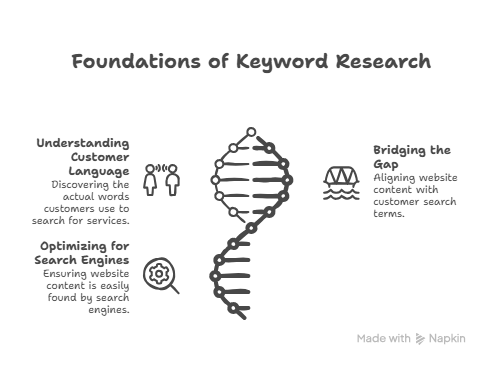
Keyword research for website optimization is the process of finding out exactly what words people type into Google when they’re looking for something you offer.
Let’s say you run a dog training business. You might think your website should talk about “canine behavioral modification techniques.” That sounds super professional, right? But guess what? Real people don’t search for that!
They search for things like:
- “How to stop my dog from barking”
- “Puppy training near me”
- “Why does my dog pull on the leash”
See the difference? Keyword research for website content helps you discover the actual words your customers use, not the fancy words you might prefer.
Why Every Website Needs Keyword Research
Here’s a shocking fact: 91.8% of all searches use long phrases, not just one or two words! That means people are getting really specific about what they’re looking for.
And here’s another surprise: more than half of all searches (58.5%!) end without anyone clicking on a website. People get their answer right there on the search results page. This is happening more and more because of AI tools like ChatGPT.
So what does this mean for your website? It means you need to be smarter than ever about which keywords you choose. You can’t just guess anymore!
Here’s why keyword research for website success matters:
When you pick the right keywords, more people find your website. It’s that simple! Every day, people do over 8.5 billion searches on Google. That’s billion with a “B”! If you’re not using the right keywords, you’re missing out on people who are actively looking for exactly what you offer.
The right keywords bring the RIGHT visitors. Not all website visitors are equal. You don’t just want anyone – you want people who might actually become customers! Good keyword research helps you attract people who are ready to buy or sign up for what you’re offering.
You’ll understand what your customers really want. When you do keyword research, you learn how people talk about their problems. This helps you create better products, write better content, and serve your customers better.
The Big Change in 2026: It’s About Intent, Not Just Words
Here’s something important that changed recently. In the old days (like, five years ago!), websites would just stuff the same keyword over and over again. They thought if they said “dog training” 50 times on a page, they’d rank higher.
Google got smarter and stopped that nonsense! Now, search engines care more about INTENT. Intent means understanding WHY someone is searching for something.
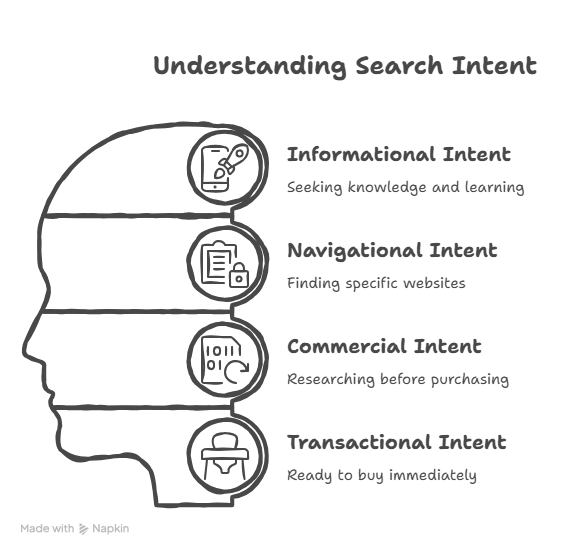
There are four main types of search intent:
Informational Intent: The person wants to learn something. Example: “How do I train a puppy to sit?” They’re not ready to buy anything yet – they just want information.
Navigational Intent: The person is looking for a specific website. Example: “YouTube dog training videos” – they already know where they want to go.
Commercial Intent: The person is researching before buying. Example: “Best dog training classes in Boston” – they’re comparing options but haven’t decided yet.
Transactional Intent: The person is ready to buy RIGHT NOW. Example: “Sign up for puppy training class near me” – they’ve got their wallet out!
When you do keyword research for website pages, you need to think about what intent matches each page. Your homepage might target commercial intent, while your blog posts target informational intent. If you want to see how to uncover which intent your competitors are targeting for any given topic, our guide on keyword research competitor analysis shows you how to reverse-engineer what’s already winning in your industry.
Long-Tail Keywords: Your Secret Weapon
Remember when I said 91.8% of searches use longer phrases? Those are called “long-tail keywords,” and they’re absolutely wonderful for websites!
Here’s why long-tail keywords are so powerful:
Less Competition: Instead of fighting against huge companies for “dog training” (which millions of websites target), you could go after “positive reinforcement dog training for rescue dogs in Seattle.” Way fewer people are competing for that!
Better Conversion: People using long-tail keywords know exactly what they want. Someone searching “best affordable online dog training course for aggressive dogs” is WAY more likely to buy than someone just searching “dogs.”
Easier to Rank: Because there’s less competition, your website can show up on the first page of Google much faster when you target long-tail keywords.
Real example: A local bakery tried to rank for “bakery” and got nowhere. Then they switched to “gluten-free wedding cakes Atlanta delivery” and started getting actual orders! To dive deeper into how to find and use these specific phrases on your site, read our complete keyword research long tail guide.
How to Actually Do Keyword Research for Your Website
Ready to find the perfect keywords for your website? Here’s a step-by-step process anyone can follow:
Step 1: Brain Dump Your Ideas
Start by writing down every topic related to your business. Don’t worry about being perfect – just write!
If you sell gardening supplies, you might write:
- Seeds
- Vegetable gardening
- How to grow tomatoes
- Garden tools
- Composting
- Organic gardening
These are your “seed keywords” – the starting point for everything else.
Step 2: Use Free Tools to Expand Your List
You don’t need to spend hundreds of dollars on fancy tools! Start with free options:
Google Search: Type your seed keyword into Google and scroll to the bottom. You’ll see “Related searches” – those are real keywords people use!
Google’s “People Also Ask”: These boxes show you actual questions people type into Google. Pure gold!
Answer the Public: This free tool shows you hundreds of questions people ask about your topic.
Your Own Website Data: If you already have a website, Google Search Console (free!) shows you which searches are already bringing people to your site.
Step 3: Check What’s Actually Working
Here’s the secret sauce: look at what’s already ranking on page one of Google for your keywords.
Type your keyword into Google and study the top results. What kind of content is ranking? Is it blog posts? Product pages? Videos? This tells you what Google thinks people want when they search that term.
If all the top results are “how-to” guides, don’t try to rank with a product page. Give people what they’re actually looking for!
Step 4: Understand the Numbers
When you use keyword research tools (even free ones), you’ll see some important numbers:
Search Volume: How many people search for this per month. Higher isn’t always better! Sometimes a keyword with 500 searches from perfect customers is better than 5,000 searches from people who aren’t interested.
Keyword Difficulty: How hard it is to rank for this keyword. If you’re a new website, stick to keywords with LOW difficulty (usually 0-30 on a scale of 1-100).
Click Potential: Not all searches lead to clicks anymore. Some keywords trigger AI answers that keep people on Google’s page. Look for keywords that still get clicks!
Step 5: Organize by Topic
Don’t just make a random list of keywords! Group them by topic. This is called “keyword clustering.”
For example, all these keywords could be one cluster:
- How to grow tomatoes from seed
- Best tomato varieties for beginners
- Tomato planting tips
- When to plant tomatoes
You’d create ONE awesome page about growing tomatoes that covers all these related searches, instead of making separate pages for each one.
Where to Actually Put Keywords on Your Website
You’ve done your research – now what? Here’s where keywords should go:
Page Titles: This is the big headline that shows up in Google. Put your main keyword here, but keep it natural and interesting!
URL: If your page is about dog training tips, your URL should be something like: yoursite.com/dog-training-tips
First Paragraph: Mention your keyword naturally in the first 100 words or so.
Headings: Use your keyword and related terms in your H2 and H3 headings throughout the page.
Image Names and Alt Text: Instead of “IMG_1234.jpg,” name your image “golden-retriever-puppy-training.jpg”
Throughout the Content: Sprinkle your keyword naturally as you write. If you’re forcing it or it sounds weird, you’re doing it wrong!
Important: In 2026, don’t stuff keywords! Search engines are smart now. They understand synonyms and related terms. Write naturally for humans, not robots!
The AI Search Revolution
Here’s something brand new that you NEED to know about: AI search is changing everything!
Right now, millions of people are using ChatGPT, Google’s AI summaries, and other AI tools instead of traditional search. And guess what? Websites that show up in AI answers get 15-20% MORE traffic than sites that don’t!
So how do you optimize keyword research for website content for AI search?
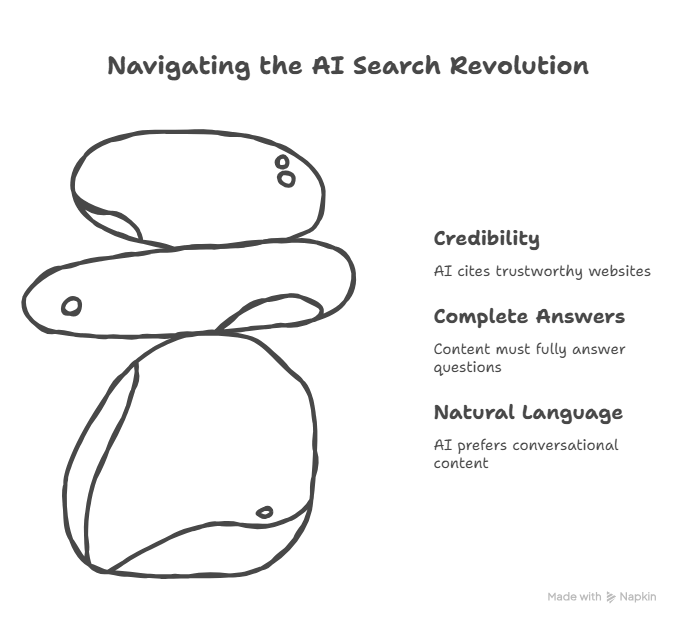
Use Natural Language: AI loves conversational content. Instead of just targeting “best running shoes,” also target “what are the best running shoes for beginners with flat feet?”
Answer Complete Questions: Create content that fully answers the question someone is asking. Don’t just scratch the surface!
Be Credible: AI tools prefer to cite trustworthy websites. Make sure your content is accurate, well-written, and includes real expertise.
Connecting Keywords to Your Marketing
Keyword research for website optimization doesn’t exist in a bubble. It connects to everything you do online!
The keywords you discover help with your search engine marketing for small business strategy. When you understand what people are searching for, you can create better marketing across all channels.
Your keyword research also supercharges your PPC management for small business campaigns. Why? Because you’ll know exactly which keywords to bid on in Google Ads. No more wasting money on keywords that don’t convert!
Plus, keywords help with:
- Writing better social media posts
- Creating email subject lines people actually open
- Making YouTube videos people search for
- Understanding what blog posts to write
If the research side feels overwhelming to do on your own, it’s worth knowing that professional keyword research services can do the heavy lifting for you. They’ll identify the best keywords for each of your pages and give you a prioritized action plan to follow.
Common Mistakes People Make (And How to Avoid Them)
Don’t fall into these traps:
Mistake #1: Targeting Super Competitive Keywords If you’re a new website, don’t try to rank for “pizza” or “shoes.” Target “wood-fired pizza delivery in Brooklyn” instead. Start small and win!
Mistake #2: Ignoring Search Intent A keyword might have huge search volume, but if people searching it aren’t looking for what you offer, it’s worthless! Always match intent.
Mistake #3: Doing It Once and Forgetting About It Search trends change! What people searched for six months ago might be different now. Review your keywords every 3-6 months.
Mistake #4: Keyword Stuffing Writing “best dog training best dog training best dog training” doesn’t work anymore. It just makes your content sound terrible! Write naturally.
Mistake #5: Only Targeting Short Keywords Remember: 91.8% of searches are long-tail! Don’t ignore those longer, more specific phrases.
Your Action Plan for Today
Ready to start? Here’s what to do right now:
- Pick your top 3 website pages that need the most traffic
- Brainstorm 5-10 seed keywords for each page
- Use Google’s “People Also Ask” to find related questions
- Check what’s ranking on page one for your keywords
- Choose 1-2 long-tail keywords per page to target
- Update your page titles, headings, and content naturally
Don’t try to do everything at once! Start with your most important pages and work from there.
The Bottom Line
Keyword research for website success isn’t some mysterious dark art. It’s simply about understanding the language your customers use and making sure your website speaks that same language.
When you do keyword research right, you:
- Get more visitors from Google
- Attract people who actually want what you offer
- Understand your customers better
- Show up in AI search results
- Make all your marketing more effective
The websites winning in 2026 aren’t the ones with the biggest budgets. They’re the ones that understand what their customers are searching for and create content that truly helps them.
Your competitor down the street might have a fancier website, but if they’re not using the right keywords, they’re invisible online. Don’t let that be you!
Start with keyword research for website content today, and watch your traffic grow. Remember: it’s not about being perfect – it’s about being better than you were yesterday. Every keyword you optimize, every page you improve, gets you one step closer to being found by the customers who are looking for exactly what you offer!