
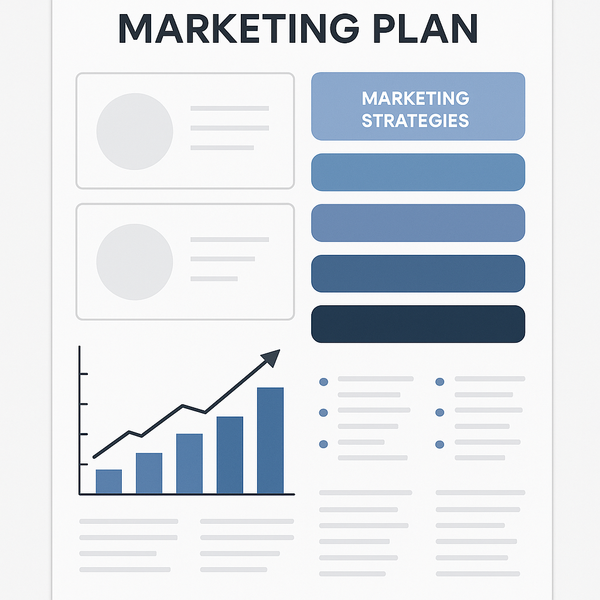
Digital Marketing Plan Template PDF – Creating a comprehensive digital marketing strategy can feel overwhelming without the right framework. A well-structured digital marketing plan template pdf provides the roadmap you need to organize your efforts, align your team, and achieve measurable results. This guide walks you through everything you need to know about using digital marketing plan templates effectively, including implementation strategies and customization options for your specific industry needs.
What Makes an Effective Digital Marketing Plan Template
An effective digital marketing plan template serves as more than just a document—it becomes your strategic compass for navigating the complex digital landscape. The best templates balance comprehensiveness with usability, providing structure without stifling creativity or adaptability.
Essential Components to Include
A robust digital marketing plan template must incorporate several critical elements to ensure comprehensive coverage of your marketing initiatives. Your template should begin with an executive summary that captures the essence of your strategy in a concise, actionable format. This section helps stakeholders quickly understand your direction and goals.
The situation analysis component provides crucial context for your planning. This includes market research findings, competitive landscape assessment, and internal capability audits. Understanding where you currently stand enables more informed decision-making throughout the planning process.
Clear objectives and key performance indicators (KPIs) form the backbone of any successful template. These should follow the SMART framework—specific, measurable, achievable, relevant, and time-bound. Your template needs dedicated sections for both short-term tactical goals and long-term strategic objectives.
Target audience definition requires detailed documentation within your template. Include buyer persona templates, customer journey mapping sections, and demographic/psychographic analysis frameworks. The more thoroughly you understand your audience, the more effective your marketing efforts become.
Strategy and tactics sections should provide space for documenting your approach across various digital channels. This includes content marketing, social media, email marketing, search engine optimization, paid advertising, and any other relevant digital touchpoints for your business.
Benefits of Using a Structured Template
Implementing a structured digital marketing plan template delivers numerous advantages for organizations of all sizes. First and foremost, it ensures consistency across your marketing efforts. When everyone works from the same framework, alignment becomes natural rather than forced.
Templates significantly reduce planning time by eliminating the need to start from scratch. Rather than spending hours determining what to include, you can focus on developing strategies and tactics specific to your business goals. This efficiency gain allows more time for creative thinking and strategic refinement.
Documentation becomes standardized when using templates, making it easier to track progress, measure results, and communicate with stakeholders. Whether presenting to executives or collaborating with team members, having a consistent format enhances clarity and professionalism.
Risk mitigation represents another crucial benefit. Templates help ensure you don’t overlook critical planning elements that could derail your marketing efforts. By following a proven structure, you systematically address all necessary components of a comprehensive digital marketing strategy.
Key Features of Our Digital Marketing Plan Template print-friendly format
Our comprehensive digital marketing plan template print-friendly format incorporates industry best practices while maintaining flexibility for customization. Designed through extensive research and real-world application, it addresses the diverse needs of modern digital marketers across various industries and company sizes.
Template Sections Overview

The template begins with a strategic foundation section that captures your business overview, mission alignment, and overarching marketing goals. This establishes the context for all subsequent planning elements and ensures your digital marketing efforts support broader business objectives.
Market analysis tools within the template guide you through comprehensive research processes. These include competitor analysis frameworks, market trend documentation areas, and opportunity identification matrices. The structured approach ensures thorough market understanding before strategy development.
Customer insights sections provide detailed frameworks for documenting target audience research. From demographic profiles to behavioral patterns, psychographic characteristics to pain point analyses, these sections ensure deep audience understanding drives your strategic decisions.
Channel-specific planning areas address the unique requirements of different digital marketing platforms. Whether focusing on content marketing, social media engagement, email campaigns, or paid advertising, dedicated sections ensure comprehensive channel strategy development.
Budget allocation worksheets help you plan and track marketing investments across channels and campaigns. These sections include both initial budget planning and ongoing expense tracking capabilities, ensuring financial accountability throughout implementation.
Performance measurement frameworks conclude each major section, establishing clear metrics and reporting structures. This ensures continuous optimization based on actual results rather than assumptions or outdated strategies.
Customization Options Available
While our template provides comprehensive structure, flexibility remains paramount. Every business faces unique challenges and opportunities requiring tailored approaches. The template design accommodates extensive customization without sacrificing organizational clarity.
Industry-specific modifications allow you to adapt sections based on your market dynamics. B2B companies might expand account-based marketing sections, while B2C brands might emphasize social commerce strategies. The modular design supports these adjustments seamlessly.
Scalability features ensure the template works equally well for small businesses and large enterprises. Sections can be expanded or condensed based on organizational complexity and resource availability. This adaptability makes the template valuable throughout your business growth journey.
Integration capabilities with other planning tools enhance the template’s utility. Whether connecting with project management systems, analytics platforms, or collaborative workspaces, the print-friendly format format supports various workflow integrations while maintaining document integrity.
How to Use the Digital Marketing Plan Template
Successfully implementing a digital marketing plan template requires systematic approach and attention to detail. The following guidance ensures you maximize the template’s value while avoiding common implementation pitfalls.
Step-by-Step Implementation Guide
Begin your implementation journey by conducting a thorough audit of your current marketing activities. Document existing strategies, active campaigns, and historical performance data. This baseline assessment provides crucial context for planning improvements and setting realistic goals.
Next, assemble your planning team and establish clear roles and responsibilities. Digital marketing success requires cross-functional collaboration, so include representatives from sales, product development, customer service, and other relevant departments. Diverse perspectives enhance strategy quality.
Complete the situational analysis sections methodically. Resist the temptation to rush through this foundational work. Thorough market research, competitive analysis, and internal capability assessments provide insights that inform every subsequent planning decision.
When setting objectives, ensure alignment between digital marketing goals and broader business objectives. Each goal should clearly contribute to organizational success metrics, whether revenue growth, market share expansion, or customer satisfaction improvement.
Develop strategies and tactics with your specific resources and constraints in mind. While ambition drives growth, unrealistic planning leads to disappointment and resource waste. Balance aspiration with practical execution capabilities.
Create detailed implementation timelines with specific milestones and deliverables. Assign ownership for each element and establish regular review cycles. This accountability structure ensures sustained progress rather than initial enthusiasm followed by neglect.
Best Practices for Template Completion
Successful template completion requires disciplined approach and strategic thinking. Start by scheduling dedicated planning time free from daily operational distractions. Quality planning demands focused attention and creative thinking space.
Involve stakeholders early and often throughout the planning process. Their input enhances plan quality while building buy-in for implementation. Regular communication prevents surprises and ensures alignment across the organization.
Use data to inform decisions wherever possible. While intuition and experience provide valuable insights, data-driven planning typically yields superior results. Leverage analytics tools, customer feedback, and market research throughout your planning process.
Document assumptions explicitly within your plan. Markets change, technologies evolve, and customer preferences shift. By clearly stating planning assumptions, you create natural review points for strategy adjustment when conditions change.
Build flexibility into your plans through scenario planning. Consider best-case, expected-case, and worst-case scenarios for major initiatives. This preparation enables rapid response to changing market conditions without complete strategy overhaul.
90-Day Quick-Start Digital Marketing Plan
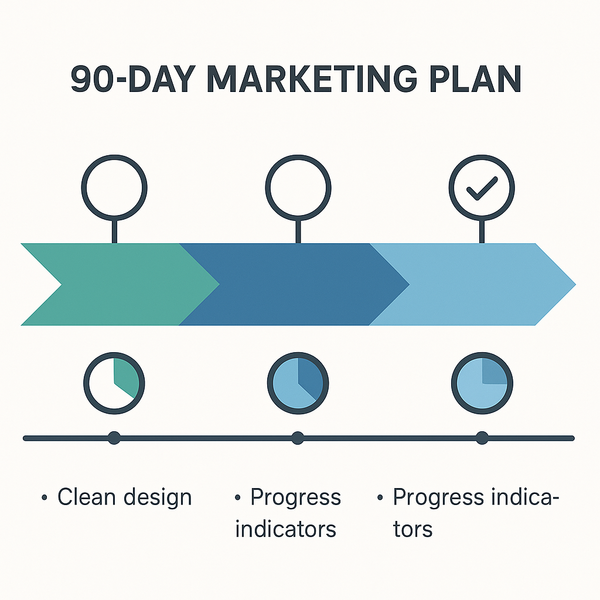
The 90-day quick-start approach provides rapid momentum while building toward long-term success. This accelerated timeline focuses on high-impact activities that generate early wins while establishing sustainable marketing foundations.
Priority Actions for First 30 Days
Your first month focuses on foundation building and quick wins. Begin by auditing your digital presence across all channels. Document current performance metrics, identify obvious improvement opportunities, and establish baseline measurements for future comparison.
Website optimization represents a critical early priority. Ensure your site loads quickly, displays properly on mobile devices, and includes clear calls-to-action. These basic improvements often yield immediate results while supporting all other digital marketing efforts.
Establish or refine your content calendar for the next 90 days. Focus on creating high-value content that addresses customer pain points and showcases your expertise. Quality trumps quantity during this initial phase—better to publish less frequently with superior content than flood channels with mediocre material.
Set up essential analytics and tracking systems if not already in place. You cannot optimize what you don’t measure, so ensure Google Analytics, social media insights, and email marketing metrics are properly configured and accessible to your team.
Launch at least one targeted campaign to generate early momentum. Whether a focused email series, social media promotion, or content marketing initiative, choose something achievable that demonstrates digital marketing value to stakeholders.
Measuring Success at 90 Days
As you approach the 90-day milestone, comprehensive performance assessment becomes crucial. Review all established KPIs and compare results against initial baselines. Look for both quantitative improvements and qualitative insights about your market and audience.
Traffic metrics provide important indicators but shouldn’t be your sole focus. Examine engagement rates, conversion patterns, and customer journey analytics. Understanding how visitors interact with your digital properties reveals optimization opportunities beyond simple traffic growth.
Revenue attribution analysis helps demonstrate digital marketing ROI. Track how your various initiatives contribute to sales, lead generation, or other business objectives. This connection between marketing activities and business results justifies continued investment and expansion.
Gather feedback from internal stakeholders and customers about their experience with your digital marketing efforts. Surveys, interviews, and informal conversations provide insights that metrics alone cannot capture. This qualitative data informs strategy refinement for the next phase.
Document lessons learned throughout the 90-day period. What worked better than expected? What challenges emerged? How did actual results compare to projections? These insights improve future planning accuracy and execution effectiveness.
SOSTAC Framework Integration
The SOSTAC framework provides a proven structure for digital marketing plan template print-friendly format development. This methodology ensures comprehensive coverage of all planning elements while maintaining logical flow and strategic coherence.
Understanding the SOSTAC Model
SOSTAC stands for Situation, Objectives, Strategy, Tactics, Action, and Control. This framework, developed by PR Smith, has become an industry standard for marketing planning due to its clarity and comprehensiveness. Each element builds upon the previous, creating a logical progression from analysis to implementation.
The Situation analysis phase examines your current position in the market. This includes internal capabilities, external opportunities and threats, competitive positioning, and customer insights. Thorough situational understanding provides the foundation for all subsequent planning decisions.
Objectives establish clear, measurable goals for your digital marketing efforts. These should align with broader business objectives while providing specific targets for marketing activities. Well-defined objectives enable focused strategy development and meaningful performance measurement.
Strategy outlines your approach to achieving established objectives. This high-level plan identifies target audiences, positioning strategies, and channel priorities. Strategy provides the bridge between what you want to achieve and how you’ll accomplish it.
Tactics detail the specific activities and initiatives within your strategic framework. While strategy might identify content marketing as a priority, tactics specify blog posting frequency, content themes, and distribution channels. This granular planning ensures executable strategies.
Action plans transform tactics into reality through detailed implementation schedules, resource allocation, and responsibility assignment. This phase addresses the who, what, when, and how of marketing execution, ensuring ideas become activities.
Control mechanisms establish monitoring and optimization processes. Regular performance reviews, established KPIs, and adjustment protocols ensure your digital marketing efforts remain effective and aligned with objectives despite changing market conditions.
Applying SOSTAC to Your Marketing Plan
Implementing SOSTAC within your digital marketing plan template requires systematic approach and attention to interconnections between elements. Begin by thoroughly completing each section before moving to the next, as each builds upon previous insights.
During situation analysis, leverage multiple data sources for comprehensive understanding. Combine quantitative analytics with qualitative research, internal assessments with external perspectives. This multi-faceted approach reveals insights that single-source analysis might miss.
When setting objectives, ensure each follows the SMART criteria while maintaining strategic relevance. Connect each objective to specific business outcomes, whether revenue growth, market expansion, or customer retention. This connection demonstrates marketing’s business value.
Strategy development should consider your unique value proposition and competitive advantages. Rather than copying competitor approaches, identify differentiation opportunities that leverage your strengths while addressing customer needs better than alternatives.
Tactical planning benefits from detailed documentation within your template. Specify not just what you’ll do, but why each tactic supports your strategy and objectives. This clarity helps team members understand their role in broader marketing success.
Action planning requires realistic resource assessment and allocation. Consider both financial budgets and human resources when scheduling activities. Overambitious plans that exceed available resources lead to poor execution and disappointing results.
Control processes should include both regular reviews and trigger-based adjustments. Schedule monthly or quarterly assessments while establishing thresholds that prompt immediate strategy review. This dual approach ensures both systematic improvement and rapid response to significant changes.
Industry-Specific Template Variations
Different industries face unique digital marketing challenges requiring tailored approaches. While core planning principles remain consistent, successful templates accommodate industry-specific needs through targeted modifications and specialized sections.
B2B vs B2C Considerations
B2B digital marketing plans typically emphasize longer sales cycles and multiple decision-makers. Your template should include sections for account-based marketing strategies, lead nurturing workflows, and content designed for various buyer journey stages. Decision-making unit analysis helps identify all stakeholders requiring targeted messaging.
Lead scoring frameworks become essential in B2B contexts. Your template should provide structures for defining qualification criteria, establishing scoring models, and creating hand-off processes between marketing and sales. This alignment ensures marketing efforts support revenue generation effectively.
B2C templates often prioritize emotional connections and immediate conversions. Sections focusing on brand storytelling, social media engagement, and e-commerce optimization address these needs. Customer lifetime value calculations and retention strategies require prominent placement given their importance to B2C success.
Purchase journey mapping differs significantly between B2B and B2C contexts. B2B journeys often involve research phases, vendor comparisons, and committee decisions. B2C journeys might be more impulsive or emotionally driven. Your template should accommodate these differences through flexible journey mapping tools.
Content strategy sections require different emphasis based on your market. B2B content often focuses on thought leadership, educational resources, and ROI demonstration. B2C content might emphasize entertainment value, lifestyle alignment, and social proof. Template sections should guide appropriate content development.
Service vs Product Marketing Differences
Service marketing faces unique challenges around intangibility and variability. Your template should include sections for developing tangible proof points, managing service quality perceptions, and creating compelling service demonstrations. Customer testimonials and case studies require special emphasis given their importance in service marketing.
Product marketing templates benefit from sections addressing product lifecycle management, feature communication, and competitive differentiation. Visual content planning becomes crucial for product marketing, as customers want to see what they’re buying. Include frameworks for product photography, video demonstrations, and augmented reality experiences where applicable.
Pricing strategy documentation differs between services and products. Service pricing often involves customization and value-based models, while product pricing might focus on competitive positioning and margin management. Your template should accommodate these different approaches through flexible pricing strategy sections.
Distribution channel considerations vary significantly. Product marketing might involve e-commerce platforms, retail partnerships, and logistics planning. Service marketing often focuses on delivery excellence and customer experience management. Template sections should address relevant channel strategies for your specific context.
Customer support and success sections require different emphasis. Product marketing might focus on warranty information and technical support, while service marketing emphasizes ongoing relationship management and service delivery optimization. Both require dedicated template sections but with different focal points.
Additional Resources and Next Steps
Successful digital marketing extends beyond initial planning into continuous optimization and growth. The following resources and recommendations support your ongoing marketing evolution and success.
Complementary Marketing Tools
Marketing automation platforms streamline execution of your digital marketing plan. Tools like email marketing systems, social media schedulers, and content management platforms transform your strategic plans into efficient operations. Select tools that integrate well and support your specific channel priorities.
Analytics platforms provide insights essential for optimization. Beyond basic website analytics, consider heat mapping tools, user session recording software, and advanced attribution modeling systems. These tools reveal customer behavior patterns that inform strategy refinement.
Collaboration tools enhance team productivity and alignment. Project management systems, shared calendars, and communication platforms ensure everyone stays informed and coordinated. Choose tools that match your team’s work style and technical capabilities.
Learning resources help your team stay current with digital marketing evolution. Industry publications, online courses, and professional conferences provide ongoing education. According to the Marketing and sales | U.S. Small Business Administration, continuous learning remains essential for small business marketing success.
Testing and optimization tools enable data-driven improvement. A/B testing platforms, conversion rate optimization tools, and user feedback systems help you continuously improve marketing performance. Regular testing should be built into your ongoing marketing processes.
Ongoing Plan Optimization Tips
Schedule regular plan reviews to ensure continued relevance and effectiveness. Monthly tactical reviews and quarterly strategic assessments help you stay aligned with changing market conditions while maintaining momentum toward long-term goals.
Create feedback loops between marketing execution and planning. Insights gained during implementation should inform plan updates and strategy refinement. This iterative approach ensures your marketing becomes increasingly effective over time.
Stay informed about industry trends and emerging opportunities. Digital marketing evolves rapidly, and yesterday’s best practices might become tomorrow’s outdated approaches. Regular environmental scanning helps you identify new opportunities and potential threats.
Build relationships with other marketing professionals facing similar challenges. Industry associations, online communities, and local networking groups provide valuable perspectives and shared learning opportunities. External insights often spark innovative solutions to common challenges.
Document and share successes and failures within your organization. Creating a learning culture around digital marketing accelerates improvement and prevents repeated mistakes. Regular case study development and lessons learned sessions benefit your entire team.
Invest in ongoing skill development for your marketing team. As digital marketing complexity increases, specialized skills become increasingly valuable. Support team members in developing expertise areas that align with your strategic priorities.
Remember that digital marketing success requires patience and persistence. While some tactics yield immediate results, building sustainable competitive advantage through digital marketing takes time. Stay committed to your strategic direction while remaining flexible in tactical execution.
Your digital marketing plan template print-friendly format serves as a living document that evolves with your business. Regular updates, continuous optimization, and strategic refinement ensure it remains a valuable tool for driving marketing success. By following the frameworks and recommendations in this guide, you’re well-positioned to create and implement digital marketing strategies that deliver measurable business results.