
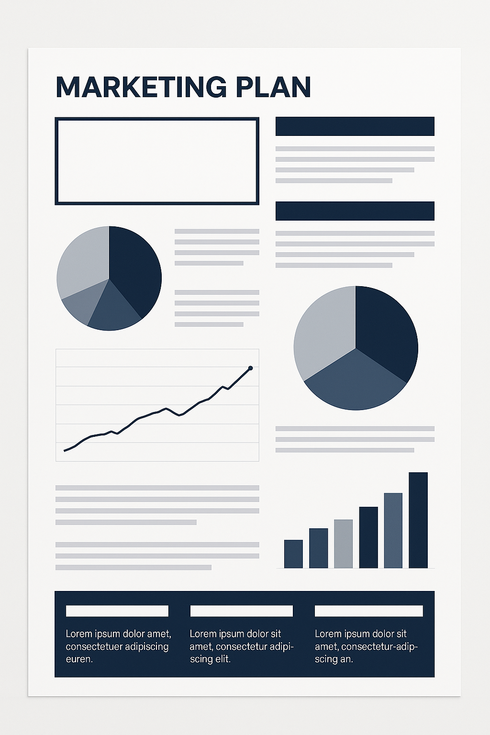
Full Marketing Plan Example – Creating a comprehensive marketing plan can feel overwhelming, especially when you’re starting from scratch. Whether you’re a small business owner, a marketing student, or leading an enterprise team, having a full marketing plan example to reference makes the process significantly easier. This article provides complete, actionable marketing plan examples tailored to different business sizes and industries.
Before diving into specific examples, it’s crucial to understand that a well-structured marketing plan serves as your roadmap to achieving business objectives. From establishing your Free Marketing Plan foundation to implementing advanced strategies, each component plays a vital role in your success.
What Makes a Complete Marketing Plan
A comprehensive marketing plan goes beyond simple promotional tactics. It encompasses strategic thinking, market analysis, and measurable objectives that align with your overall business goals. Understanding these essential components ensures your marketing efforts deliver tangible results.
Essential Components Overview
Every effective marketing plan includes several core elements that work together to create a cohesive strategy. The executive summary provides a high-level overview of your entire plan, making it easy for stakeholders to understand your direction quickly. This section should capture the essence of your marketing objectives, target audience, and key strategies in a concise format.
Your situation analysis forms the foundation of informed decision-making. This includes a thorough examination of your current market position, competitive landscape, and internal capabilities. A SWOT analysis (Strengths, Weaknesses, Opportunities, Threats) helps identify factors that will influence your marketing success.
Target market identification and customer personas represent another crucial component. Detailed demographic, psychographic, and behavioral information about your ideal customers guides every subsequent marketing decision. The more specific your personas, the more effectively you can tailor your messaging and channel selection.
Marketing objectives and goals must be SMART: Specific, Measurable, Achievable, Relevant, and Time-bound. These objectives should directly support your broader business goals while providing clear benchmarks for success. Common objectives include increasing brand awareness, generating leads, improving customer retention, or launching new products.
Your marketing strategies outline the overarching approaches you’ll use to achieve your objectives, while tactics detail the specific actions you’ll take. The marketing mix (product, price, place, promotion) provides a framework for developing these strategies across different areas of your business.
Industry-Specific Requirements
Different industries require unique considerations in their marketing plans. B2B companies typically focus heavily on relationship building, thought leadership, and longer sales cycles. Their plans often emphasize content marketing, trade shows, and account-based marketing strategies.
Retail and e-commerce businesses prioritize customer experience, seasonal campaigns, and omnichannel strategies. Their marketing plans frequently include detailed merchandising calendars, promotional schedules, and customer journey mapping across multiple touchpoints.
Service-based businesses often emphasize trust-building, referral programs, and local marketing efforts. Their plans might include reputation management strategies, customer testimonial campaigns, and community engagement initiatives.
Technology companies typically focus on product education, feature differentiation, and early adopter targeting. Their marketing plans often include detailed product launch sequences, developer relations programs, and technical content strategies.
Small Business Marketing Plan Example
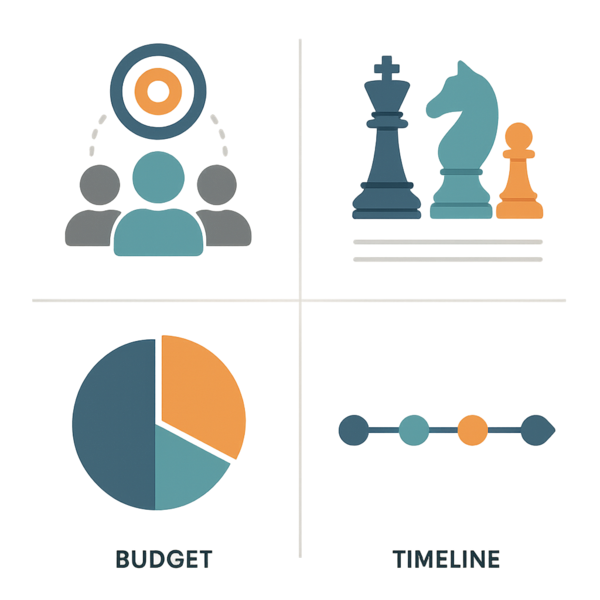
Small businesses face unique challenges, including limited budgets and resources. However, a well-crafted marketing plan can level the playing field by focusing efforts on high-impact activities. This example demonstrates how a small business can create an effective marketing strategy without overwhelming complexity. For more small-business-specific examples across different industries, see our full collection of marketing plans built for small business.
Executive Summary Sample
Consider a local bakery seeking to expand its customer base and increase revenue. The executive summary for this small business marketing plan would highlight the bakery’s commitment to artisanal quality and community connection. The primary objective focuses on increasing monthly revenue by establishing a strong local presence and developing customer loyalty programs.
The bakery’s marketing plan emphasizes building relationships within a five-mile radius of the store location. Key strategies include leveraging social media for community engagement, partnering with local events, and implementing a customer rewards program. The plan allocates resources efficiently, focusing on low-cost, high-impact tactics suitable for a small business budget.
Success metrics include foot traffic increases, social media engagement rates, and repeat customer percentages. The plan sets realistic quarterly milestones, allowing for adjustments based on performance and seasonal variations in bakery sales.
Target Market Analysis
The bakery’s primary target market consists of local residents aged 25-55 who value quality, freshness, and supporting local businesses. This demographic includes young professionals, families, and empty nesters within the immediate neighborhood. Secondary markets include local businesses seeking catering services and event planners organizing celebrations.
Customer research reveals that the target audience prioritizes convenience, product quality, and personal service. They’re active on social media platforms, particularly Instagram and Facebook, where they seek recommendations and share experiences with local businesses. Many express willingness to pay premium prices for artisanal products and personalized service.
Behavioral patterns show peak shopping times during morning commutes and weekend afternoons. Customers frequently purchase for special occasions, weekly family treats, and impromptu gatherings. Understanding these patterns helps optimize staffing, inventory, and promotional timing.
Marketing Strategies and Tactics
The bakery’s marketing strategy centers on community engagement and word-of-mouth amplification. Digital marketing efforts focus on showcasing daily specials, behind-the-scenes content, and customer stories through social media. Regular posting schedules maintain visibility without requiring significant time investment.
Local partnership opportunities include supplying products to nearby coffee shops, participating in farmers’ markets, and sponsoring community events. These collaborations expand reach while reinforcing the bakery’s local business identity. Each partnership includes co-marketing opportunities to maximize exposure.
The customer loyalty program rewards frequent purchases with simple punch cards and exclusive offers for members. Email marketing supports this program by sharing recipes, announcing new products, and providing members-only discounts. This combination encourages repeat business while building a direct communication channel with customers.
In-store experience enhancements include sampling stations, seasonal displays, and custom cake consultations. These tactics encourage longer visits, increased purchase amounts, and memorable experiences that generate positive reviews and referrals.
Enterprise Marketing Plan Example
Enterprise organizations require sophisticated marketing plans that coordinate multiple departments, channels, and initiatives. This example illustrates how large companies can create comprehensive strategies while maintaining flexibility for market changes and emerging opportunities.
Multi-Channel Strategy Breakdown
A national software company’s enterprise marketing plan integrates digital marketing, traditional advertising, event marketing, and partner channels. Each channel serves specific objectives within the overall strategy, creating multiple touchpoints throughout the customer journey.
Digital marketing encompasses paid search advertising, display advertising, content marketing, and marketing automation. The plan allocates resources based on channel performance metrics and customer acquisition costs. Search marketing targets high-intent keywords related to specific software solutions, while display advertising builds brand awareness among target industries.
Content marketing supports the entire customer lifecycle through educational resources, product comparisons, and thought leadership pieces. The editorial calendar aligns with product releases, industry events, and seasonal business cycles. Distribution strategies include owned channels, earned media, and paid amplification.
Event marketing includes major trade shows, proprietary conferences, and regional roadshows. Each event type serves different purposes: trade shows for lead generation, conferences for customer retention, and roadshows for regional market penetration. Virtual event components extend reach while reducing costs.
Partner marketing leverages relationships with complementary technology providers, system integrators, and resellers. Co-marketing initiatives include joint webinars, solution showcases, and integrated campaigns that benefit all parties. Partner enablement programs ensure consistent messaging across channels.
Budget Allocation Example
Enterprise marketing budgets typically represent significant investments requiring careful allocation across channels and initiatives. This software company allocates its annual marketing budget strategically to maximize return on investment while supporting long-term growth objectives.
Digital marketing receives the largest allocation due to its measurability and scalability. Within this category, paid advertising accounts for substantial investment, followed by marketing technology platforms and content creation. The plan includes contingency funds for testing emerging channels and responding to competitive threats.
Event marketing represents the second-largest budget category, reflecting the importance of face-to-face interactions in B2B software sales. Major trade show participation requires significant investment in booth space, staff travel, and collateral materials. The budget includes provisions for measuring event ROI through lead tracking and pipeline attribution.
Content creation and thought leadership initiatives receive dedicated funding to support the company’s position as an industry leader. This includes research projects, analyst relations, and premium content development. The investment supports both lead generation and brand building objectives.
Marketing operations and technology infrastructure ensure efficient execution across all channels. This includes marketing automation platforms, analytics tools, and project management systems. The budget recognizes that technology investments improve team productivity and campaign effectiveness.
Performance Metrics Framework
Enterprise marketing plans require sophisticated measurement frameworks that connect marketing activities to business outcomes. This software company’s metrics framework includes leading indicators, lagging indicators, and attribution models that inform optimization decisions.
Revenue-focused metrics track marketing’s contribution to pipeline generation, customer acquisition, and expansion revenue. Marketing-influenced pipeline measures the total value of opportunities touched by marketing activities. Customer acquisition cost (CAC) analysis ensures efficient spending across channels.
Engagement metrics provide early indicators of campaign effectiveness. Website analytics track visitor behavior, content consumption, and conversion paths. Email marketing metrics monitor open rates, click-through rates, and engagement trends across segments. Social media metrics measure reach, engagement, and sentiment.
Brand health metrics assess market position through awareness studies, preference tracking, and competitive analysis. These longer-term indicators guide strategic decisions and validate brand-building investments. Regular measurement ensures the brand remains relevant and differentiated.
Operational metrics monitor marketing team efficiency and resource utilization. Campaign velocity tracks time from concept to launch. Budget utilization ensures optimal resource allocation. Team productivity metrics identify opportunities for process improvement and automation.
Marketing Plan Example for Students
Students developing marketing plans for academic projects face unique requirements that balance theoretical knowledge with practical application. This example demonstrates how to create a comprehensive yet manageable marketing plan suitable for coursework while building valuable real-world skills.
Academic Project Format
Academic marketing plans typically follow structured formats that demonstrate understanding of marketing principles while addressing assignment requirements. The format begins with a clear introduction stating the chosen company or product, project objectives, and scope limitations. This establishes context for professors evaluating the work.
The situation analysis section showcases analytical skills through comprehensive market research. Students should demonstrate ability to synthesize secondary research from academic sources, industry reports, and credible business publications. Primary research might include surveys or interviews, depending on project requirements.
Theoretical framework integration distinguishes academic plans from purely practical documents. Students should reference relevant marketing theories, models, and academic literature throughout their analysis. This might include Porter’s Five Forces, the marketing mix framework, or consumer behavior theories relevant to their chosen market.
Strategic recommendations must balance creativity with feasibility. While students may propose innovative approaches, they should ground recommendations in research findings and theoretical support. Each strategy should clearly link to identified market opportunities or challenges.
Simplified Budget Planning
Student marketing plans often work with hypothetical budgets that demonstrate understanding of resource allocation principles without requiring detailed financial analysis. A reasonable approach involves establishing a total marketing budget as a percentage of projected revenue, typically ranging from 5-15% depending on industry and growth stage.
Budget allocation across marketing activities should reflect strategic priorities and industry benchmarks. For example, a consumer product launch might allocate heavily toward advertising and promotions, while a B2B service might emphasize content marketing and sales enablement. Students should justify their allocation decisions with research or logical reasoning.
Cost estimation requires reasonable approximations based on available information. Students can research typical costs for various marketing activities through industry publications, case studies, or marketing agency websites. Including a range of estimates demonstrates understanding of budget variability.
ROI projections help evaluate proposed strategies’ potential effectiveness. While precise calculations may be impossible with limited data, students can demonstrate analytical thinking by establishing success metrics and explaining how they would measure marketing effectiveness. This shows understanding of accountability in marketing planning.
Presentation-Ready Structure
Academic marketing plans often require presentation components that effectively communicate key findings and recommendations. Visual elements enhance understanding and demonstrate professional presentation skills valued by employers. Students should create clear, visually appealing slides that complement their written plan.
Executive summary slides distill complex analysis into digestible key points. Effective summaries highlight the most important findings, strategic recommendations, and expected outcomes. Graphics, charts, and infographics can convey information more effectively than text-heavy slides.
Data visualization transforms research findings into compelling visual stories. Market size charts, competitive positioning maps, and customer journey diagrams help audiences quickly grasp important concepts. Students should ensure all visuals are clearly labeled and directly support their narrative.
Implementation timeline graphics demonstrate project management understanding. Gantt charts or simplified timelines show how marketing activities would unfold over time. This practical element shows ability to translate strategy into actionable plans with realistic timeframes.
Industry-Specific Marketing Plan Examples
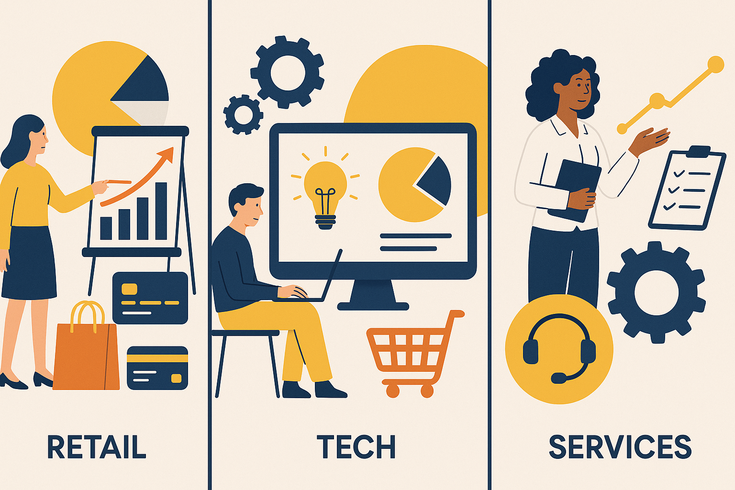
Different industries require tailored marketing approaches that address unique challenges, customer behaviors, and competitive dynamics. These examples demonstrate how marketing plans adapt to specific industry contexts while maintaining fundamental planning principles.
E-commerce Marketing Plan
E-commerce businesses operate in highly competitive digital environments where customer acquisition costs continue rising. A successful e-commerce marketing plan prioritizes conversion optimization, customer lifetime value, and multi-channel attribution. The plan must address the entire customer journey from discovery through retention.
Search engine optimization forms the foundation of organic growth strategies. The plan includes comprehensive keyword research targeting both informational and transactional queries. Content strategies support SEO through category descriptions, buying guides, and user-generated content integration. Technical SEO ensures fast load times and mobile optimization.
Paid advertising strategies balance immediate revenue needs with long-term profitability. The plan segments campaigns by customer intent, using different approaches for brand awareness, consideration, and conversion objectives. Retargeting campaigns recapture abandoned carts and re-engage past customers with personalized offers.
Email marketing automation nurtures customer relationships throughout their lifecycle. Welcome series introduce new subscribers to the brand and popular products. Behavioral triggers send relevant messages based on browsing history, purchase patterns, and engagement levels. Win-back campaigns re-engage lapsed customers with compelling offers.
Social commerce integration recognizes changing shopping behaviors, particularly among younger demographics. The plan includes shoppable posts, influencer partnerships, and user-generated content campaigns. Social proof through reviews and testimonials builds trust in the digital environment.
B2B Service Marketing Plan
B2B service companies face extended sales cycles, multiple decision-makers, and complex value propositions. Their marketing plans emphasize thought leadership, relationship building, and supporting sales teams throughout lengthy buying processes. Trust and expertise demonstration become paramount in service marketing.
Content marketing establishes industry authority through in-depth resources addressing client challenges. The editorial calendar includes whitepapers, case studies, webinars, and research reports. Distribution strategies leverage owned channels, industry publications, and partner networks to reach target decision-makers.
Account-based marketing targets high-value prospects with personalized campaigns. The plan identifies target accounts based on fit criteria and growth potential. Customized content, direct mail, and executive engagement programs create multiple touchpoints with key stakeholders within target organizations.
Lead nurturing programs recognize that B2B buyers conduct extensive research before engaging sales teams. Marketing automation delivers relevant content based on prospect behavior, industry, and buying stage. Lead scoring models identify sales-ready opportunities while continuing to nurture earlier-stage prospects.
Partnership marketing amplifies reach through strategic relationships with complementary service providers. Joint webinars, co-authored content, and referral programs create mutual value. The plan includes partner enablement resources ensuring consistent messaging across indirect channels.
Product Launch Marketing Plan
Product launches require coordinated marketing efforts that generate awareness, drive trial, and establish market position. Successful launch plans build momentum through phased approaches that maximize impact while managing risk. Timing, messaging, and channel coordination become critical success factors.
Pre-launch activities build anticipation and gather early feedback. Beta testing programs engage potential customers while refining product features and messaging. Teaser campaigns create buzz through social media, email lists, and media relations. Early access programs reward loyal customers and generate initial reviews.
Launch phase execution coordinates multiple channels for maximum impact. Press releases, media interviews, and influencer partnerships generate earned media coverage. Paid advertising campaigns drive immediate awareness and traffic. Launch events, whether physical or virtual, create memorable experiences for key stakeholders.
Post-launch sustaining campaigns maintain momentum beyond initial excitement. Customer success stories demonstrate real-world value. Feature highlights educate users about full product capabilities. Competitive comparisons position the product within the market landscape. Continuous optimization based on performance data improves results over time.
Product launch metrics track both immediate and long-term success indicators. Initial metrics focus on awareness, trial, and early adoption rates. Ongoing measurement monitors customer satisfaction, retention, and revenue growth. Feedback loops inform product improvements and future marketing initiatives.
How to Customize These Examples
While these marketing plan examples provide solid foundations, every business requires customization to address unique circumstances. Understanding how to adapt these templates ensures your marketing plan truly serves your specific needs. If the examples above feel like more than you need right now, our simplified full marketing plan example strips things down to a faster, step-by-step version. For detailed guidance on building your custom plan, explore this comprehensive full marketing plan example resource.
Adapting to Your Business Size
Small businesses should focus on high-impact, low-cost strategies that leverage personal relationships and local presence. Simplify complex frameworks to essential elements that you can realistically execute with limited resources. Prioritize activities that directly generate revenue or build customer relationships rather than long-term brand building initiatives.
Medium-sized businesses can adopt more sophisticated approaches while maintaining agility. Invest in marketing automation and analytics tools that improve efficiency without requiring large teams. Balance brand building with direct response marketing to support both immediate and long-term growth objectives.
Large enterprises need comprehensive plans that coordinate multiple stakeholders and initiatives. Build flexibility into plans to accommodate market changes and emerging opportunities. Establish clear governance structures ensuring alignment across departments and regions while allowing local customization where appropriate.
Startups require iterative approaches that test assumptions and pivot based on market feedback. Focus on minimum viable marketing strategies that validate business models before scaling investments. Build learning loops into your plan, allowing rapid adjustments based on early customer responses.
Adjusting Budget and Timeline
Budget constraints often require creative resource allocation and phased implementation approaches. Identify must-have versus nice-to-have initiatives, prioritizing activities with the clearest path to ROI. Consider alternative funding sources such as co-marketing partnerships or performance-based vendor relationships that reduce upfront costs.
Timeline adjustments reflect realistic capacity and market conditions. Build buffer time into project schedules accounting for common delays and dependencies. Phase rollouts allow testing and refinement before full-scale implementation. Seasonal businesses must align marketing activities with peak selling periods for maximum effectiveness.
Resource availability impacts both budget and timeline considerations. Account for team capacity, skill gaps, and competing priorities when planning initiatives. Outsourcing certain activities might accelerate timelines despite increasing costs. Internal capability building requires time investment but improves long-term efficiency.
Market dynamics may necessitate timeline acceleration or strategy pivots. Build review cycles into your plan allowing course corrections based on competitive actions or changing customer needs. Maintain contingency funds for unexpected opportunities or necessary defensive actions.
Setting Realistic KPIs
Key performance indicators must balance ambition with achievability to motivate teams while setting realistic expectations. Benchmark against industry standards while accounting for your unique circumstances. Consider both leading indicators that predict success and lagging indicators that confirm results.
Baseline establishment provides context for goal setting and progress measurement. Analyze historical performance where available, or establish baselines during initial implementation periods. Account for seasonal variations, market maturity, and competitive intensity when setting improvement targets.
Measurement frequency should align with decision-making needs and data availability. Real-time metrics enable rapid optimization for digital campaigns. Monthly reviews suit most strategic initiatives. Quarterly assessments work for brand health and customer satisfaction metrics requiring larger sample sizes.
Success definitions extend beyond numerical targets to include qualitative improvements. Customer feedback, team capability development, and market positioning represent valuable outcomes not always captured in quantitative metrics. Balanced scorecards incorporate multiple success dimensions ensuring holistic performance evaluation.
Regular calibration ensures KPIs remain relevant as business conditions evolve. Annual planning cycles should revisit both metrics and targets based on learnings and changing priorities. Maintain consistency in core metrics while adding new measurements as capabilities and needs expand. If you’d rather work through a complete sample plan section by section, our marketing plan sample PDF walkthrough follows exactly that format.
Creating a comprehensive marketing plan requires thoughtful consideration of numerous factors, from understanding your target market to allocating resources effectively. These full marketing plan examples demonstrate that successful marketing planning adapts proven frameworks to specific business contexts. Whether you’re a student learning marketing fundamentals, a small business owner wearing multiple hats, or an enterprise marketing leader coordinating complex initiatives, these examples provide practical guidance for developing your own effective marketing plan.
Remember that the best marketing plans evolve with your business and market conditions. Start with these examples as your foundation, but continuously refine your approach based on results and changing circumstances. If you’d like a version of this full example ready to save and print, see our full marketing plan example PDF. For additional resources and guidance on marketing planning, visit the Marketing and sales | U.S. Small Business Administration for valuable insights tailored to businesses of all sizes.