
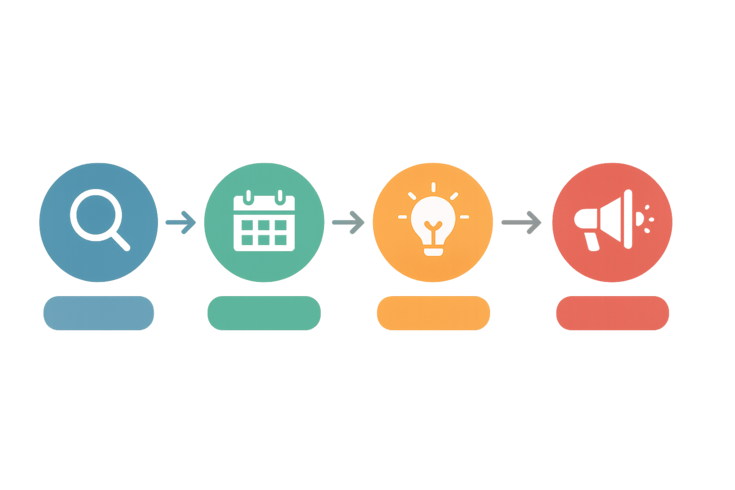
Introduction to Marketing Planning
4 Stages Of Marketing Planning – Marketing planning serves as the backbone of successful business growth, providing a structured approach to reaching your target audience and achieving your business objectives. Without a well-defined marketing plan, businesses often find themselves making reactive decisions rather than proactive strategic moves. If you’re ready to take control of your marketing efforts, you can start with a Free Marketing Plan to guide your journey through the essential stages of planning.
Why Marketing Planning Matters
Marketing planning transforms scattered promotional activities into a cohesive strategy that drives measurable results. It helps businesses allocate resources efficiently, minimize wasted efforts, and create consistency across all marketing channels. By following a structured planning process, organizations can better anticipate market changes, respond to competitive threats, and capitalize on emerging opportunities.
The absence of proper marketing planning often leads to misaligned campaigns, inconsistent messaging, and poor return on investment. Companies that invest time in this process typically see improved customer engagement, higher conversion rates, and stronger brand positioning in their respective markets.
Overview of the 4 Stages
The 4 stages of marketing planning provide a systematic framework for developing and implementing effective marketing strategies. These stages work together to create a comprehensive approach that addresses every aspect of your marketing efforts. If you’ve also seen marketing planning broken into 5 steps elsewhere, don’t worry — that’s simply a different way of framing largely the same process; see the 5-step version if you want to compare the two approaches side by side.
- Stage 1: Situation Analysis – Understanding where you currently stand in the market
- Stage 2: Marketing Strategy Development – Defining your objectives and target audience
- Stage 3: Marketing Mix Implementation – Executing your strategy through specific tactics
- Stage 4: Monitoring and Evaluation – Measuring success and making improvements
Each stage builds upon the previous one, creating a continuous cycle of planning, implementation, and refinement that keeps your marketing efforts aligned with business goals.
Stage 1: Situation Analysis

The first of the 4 stages of marketing planning involves conducting a thorough assessment of your current position. This foundational stage sets the context for all subsequent planning decisions by providing a clear picture of internal capabilities and external market conditions.
Internal Environment Assessment
Begin your situation analysis by examining your organization’s internal strengths and limitations. This assessment should cover various aspects of your business operations that directly impact marketing effectiveness.
Review your current marketing resources, including budget allocation, team capabilities, and technological infrastructure. Evaluate existing marketing materials, brand assets, and communication channels to identify what’s working well and what needs improvement. Consider your product or service offerings, pricing structures, and customer service capabilities as these elements significantly influence marketing success.
Analyze past marketing performance data to understand which campaigns generated the best results and why certain initiatives failed to meet expectations. This historical perspective provides valuable insights for future planning decisions.
External Market Analysis
Understanding the external environment requires examining multiple factors that influence your marketing effectiveness. Start by researching your target market demographics, psychographics, and behavioral patterns. Identify emerging trends that could impact customer preferences or purchasing decisions.
Conduct a thorough competitive analysis to understand how rival companies position themselves, what marketing strategies they employ, and where gaps exist in the market. Look beyond direct competitors to consider indirect competition and potential new entrants that could disrupt your market position.
Examine broader environmental factors including economic conditions, regulatory changes, technological advancements, and social trends. These macro-level influences often create both opportunities and threats that your marketing plan must address.
SWOT Analysis Framework
The SWOT analysis serves as a powerful tool for synthesizing your internal and external assessments into actionable insights. This framework helps identify strategic priorities by categorizing findings into four distinct areas.
SWOT analysis framework used in Stage 1 of marketing planning
When conducting your SWOT analysis, focus on factors that directly impact your marketing capabilities and market position. Strengths might include established brand recognition, unique product features, or strong customer relationships. Weaknesses could encompass limited marketing budget, outdated technology, or gaps in market coverage.
Opportunities often emerge from unmet customer needs, emerging market segments, or technological innovations that enable new marketing approaches. Threats typically include aggressive competition, changing regulations, or shifting consumer preferences that challenge your current market position.
Stage 2: Marketing Strategy Development
The second stage in the 4 stages of marketing planning transforms insights from your situation analysis into concrete strategic direction. This stage establishes the foundation for all tactical decisions by defining clear objectives, identifying target audiences, and determining your market positioning.
Setting Marketing Objectives
Effective marketing objectives provide specific, measurable targets that guide your entire marketing effort. These objectives should directly support broader business goals while remaining realistic and achievable within your resource constraints.
Create objectives that follow the SMART framework – Specific, Measurable, Achievable, Relevant, and Time-bound. Rather than vague goals like “increase brand awareness,” develop precise objectives such as “increase website traffic from organic search by 40% within six months” or “generate 500 qualified leads per month through content marketing by Q4.”
Consider establishing both short-term and long-term objectives to maintain momentum while working toward larger strategic goals. Short-term objectives might focus on immediate improvements in lead generation or customer engagement, while long-term objectives address market share growth or brand positioning changes.
Target Market Selection
Successful marketing depends on focusing your efforts on the most promising customer segments. Target market selection involves identifying specific groups of potential customers who are most likely to respond positively to your marketing messages and purchase your products or services.
Develop detailed buyer personas that represent your ideal customers, including demographic information, behavioral patterns, pain points, and decision-making criteria. Consider factors such as purchasing power, accessibility, and growth potential when evaluating different market segments.
Avoid the temptation to target everyone, as this approach typically results in diluted messaging and inefficient resource allocation. Instead, concentrate on segments where you can deliver superior value and maintain a competitive advantage. Remember that you can always expand your target market as your capabilities and resources grow.
Positioning Strategy
Your positioning strategy defines how you want target customers to perceive your brand relative to competitors. Effective positioning creates a unique mental space for your brand in customers’ minds, making it the preferred choice when they’re ready to purchase.
Develop a clear value proposition that articulates why customers should choose your offering over alternatives. This value proposition should highlight unique benefits that address specific customer needs or pain points identified during your market analysis.
Create positioning statements that guide all marketing communications to ensure consistency across channels. Your positioning should be credible, relevant to target customers, and sustainable over time. Test your positioning concepts with target audience members to ensure they resonate and differentiate your brand effectively.
Stage 3: Marketing Mix Implementation
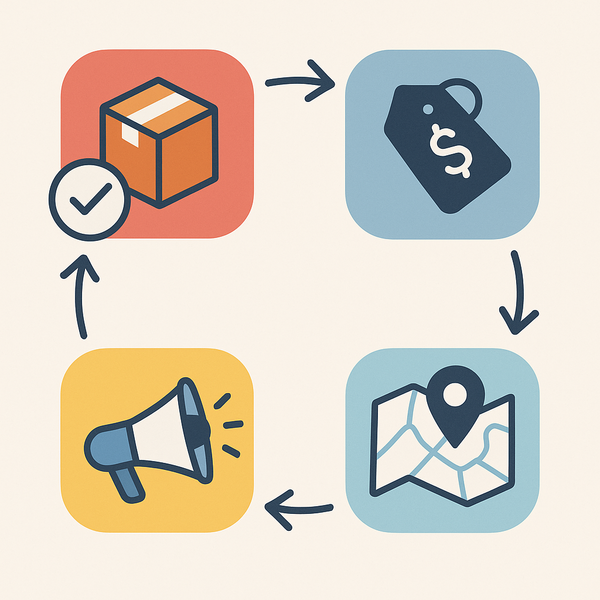
The third stage in the 4 stages of marketing planning involves translating your strategy into specific tactical actions. This stage focuses on optimizing the marketing mix elements to deliver your value proposition effectively to target customers.
The marketing mix components in Stage 3 of the planning process
Product Strategy
Your product strategy encompasses decisions about features, quality levels, packaging, and service components that meet target customer needs. Consider how your product offerings align with positioning strategy and support achievement of marketing objectives.
Evaluate your current product portfolio to identify gaps or opportunities for improvement. Consider whether product modifications, line extensions, or new product development could better serve target segments. Remember that “product” includes not just physical goods but also services, experiences, and solutions that customers value.
Plan for product lifecycle management, anticipating how customer needs and competitive offerings might evolve over time. Develop strategies for introducing new products, managing mature products, and phasing out declining offerings in ways that maintain customer satisfaction and brand reputation.
Pricing Decisions
Pricing strategy must balance multiple objectives including profitability, market share goals, and competitive positioning. Your pricing decisions should reflect the value customers perceive in your offering while remaining competitive within your market context.
Consider various pricing approaches such as cost-based, value-based, or competitive models to determine the most appropriate strategy for your situation. Evaluate how pricing changes might impact demand, considering price elasticity within your target segments.
Develop pricing structures that accommodate different customer segments or purchase situations. This might include volume discounts, seasonal pricing, or bundled offerings that increase average transaction values while providing customer value. Remember to consider psychological pricing factors that influence how customers perceive price-value relationships.
Distribution Channels
Distribution strategy determines how customers access your products or services. Effective distribution ensures your offerings are available when and where target customers prefer to purchase, while maintaining cost efficiency and brand consistency.
Evaluate different channel options including direct sales, retail partnerships, e-commerce platforms, and hybrid approaches. Consider factors such as channel costs, market coverage, customer preferences, and competitive practices when selecting distribution strategies.
Plan for channel integration to provide seamless customer experiences across multiple touchpoints. This omnichannel approach recognizes that customers often research, evaluate, and purchase through different channels at various stages of their buying journey.
Promotional Tactics
Promotional strategy encompasses all communication activities designed to inform, persuade, and remind target customers about your offerings. Effective promotion integrates multiple communication channels to deliver consistent messages that support your positioning strategy.
Develop an integrated marketing communications plan that coordinates advertising, public relations, content marketing, social media, and direct marketing efforts. Each promotional element should reinforce key messages while leveraging the unique strengths of different communication channels.
When implementing promotional tactics, focus on creating valuable content and experiences that engage target audiences rather than interrupting them with unwanted messages. Consider how to create a marketing plan step-by-step that incorporates modern digital marketing approaches alongside traditional promotional methods.
Stage 4: Monitoring and Evaluation
The final stage in the 4 stages of marketing planning ensures your efforts deliver expected results and provides insights for continuous improvement. This ongoing process transforms marketing from a cost center into a measurable driver of business growth.
Key Performance Indicators
Selecting appropriate key performance indicators (KPIs) enables you to track progress toward marketing objectives and demonstrate marketing’s contribution to business success. Choose KPIs that directly relate to your stated objectives and provide actionable insights for decision-making.
Common marketing KPIs include metrics related to customer acquisition (cost per lead, conversion rates), customer engagement (website traffic, social media interactions), and customer retention (repeat purchase rates, lifetime value). Financial metrics such as return on marketing investment and contribution to revenue growth help demonstrate marketing’s business impact.
Establish baseline measurements for each KPI before implementing new strategies, enabling accurate assessment of marketing impact. Set realistic targets for improvement based on industry benchmarks and your specific situation, avoiding the temptation to set overly ambitious goals that demotivate team members.
Performance Tracking Methods
Implement systematic approaches for collecting and analyzing performance data across all marketing activities. Modern marketing analytics tools provide detailed insights into customer behavior, campaign performance, and return on investment across digital channels.
Create dashboards that provide real-time visibility into marketing performance, enabling quick identification of trends and issues requiring attention. Regular reporting cycles ensure stakeholders stay informed about marketing progress and can make timely decisions about resource allocation.
Combine quantitative metrics with qualitative feedback from customers, sales teams, and other stakeholders to develop a comprehensive understanding of marketing effectiveness. Customer surveys, focus groups, and sales team input provide context that helps interpret numerical data and identify improvement opportunities.
Making Adjustments
Use performance data to continuously refine and optimize your marketing strategies and tactics. Regular review cycles enable you to identify what’s working well, what needs improvement, and what should be discontinued.
Develop a systematic process for testing new approaches and measuring their impact before full-scale implementation. A/B testing, pilot programs, and controlled experiments help minimize risk while identifying opportunities for performance improvement.
Maintain flexibility in your marketing plan to respond to changing market conditions, competitive actions, or unexpected opportunities. Build contingency plans for various scenarios, enabling quick pivots when circumstances require strategic adjustments.
Common Pitfalls to Avoid
Understanding common mistakes in the 4 stages of marketing planning helps you navigate potential challenges more effectively. By recognizing these pitfalls in advance, you can take proactive steps to avoid them and increase your chances of marketing success.
Planning Mistakes
One frequent planning mistake involves conducting insufficient market research before developing strategies. Organizations often rely on assumptions or outdated information rather than investing in current market intelligence. This leads to strategies misaligned with actual customer needs or market conditions.
Another common error is creating overly complex plans that become difficult to implement and maintain. While comprehensive planning is important, excessive detail can paralyze execution and make it challenging to adapt to changing circumstances. Strike a balance between thoroughness and practicality in your planning efforts.
Many organizations fail to align marketing plans with overall business strategy, resulting in marketing efforts that don’t support broader organizational goals. Ensure strong connections between marketing objectives and business objectives throughout the planning process.
Unrealistic resource allocation represents another significant planning mistake. Organizations often develop ambitious plans without honestly assessing available resources, leading to incomplete implementation and disappointing results. Be realistic about budget, personnel, and time constraints when developing your marketing plan.
Implementation Challenges
Poor communication and coordination often derail marketing plan implementation. When team members don’t understand their roles or how their efforts contribute to larger objectives, execution suffers. Establish clear responsibilities, timelines, and communication protocols to ensure smooth implementation.
Lack of buy-in from key stakeholders presents another implementation challenge. Without support from leadership, sales teams, and other departments, marketing initiatives struggle to achieve their full potential. Invest time in building consensus and demonstrating value to secure necessary support.
Many organizations struggle with consistency in implementation, starting strong but losing momentum over time. Maintain focus through regular check-ins, celebration of milestones, and continuous reinforcement of plan importance. Create accountability mechanisms that keep implementation on track.
Resistance to measurement and adjustment often limits marketing effectiveness. Some organizations implement plans but fail to monitor results or make necessary adjustments based on performance data. Embrace a culture of continuous improvement that values learning from both successes and failures.
Conclusion
The 4 stages of marketing planning provide a proven framework for developing and implementing effective marketing strategies that drive business growth. By systematically working through situation analysis, strategy development, marketing mix implementation, and monitoring and evaluation, organizations can create marketing programs that deliver measurable results.
Key Takeaways
Success in marketing planning requires commitment to following all four stages rather than taking shortcuts. Each stage builds upon previous work, creating a comprehensive approach that addresses both strategic and tactical considerations. The situation analysis provides essential context, strategy development establishes clear direction, implementation brings plans to life, and monitoring ensures continuous improvement.
Remember that marketing planning is an iterative process rather than a one-time event. Markets evolve, customer preferences change, and competitive landscapes shift, requiring regular updates to your marketing plans. Embrace flexibility while maintaining strategic focus to navigate changing conditions successfully. If you want to see this framework applied concretely, our marketing planning process example walks through a full worked scenario.
Integration across all marketing activities amplifies impact and improves efficiency. When all elements of your marketing plan work together coherently, you create synergies that enhance overall effectiveness. This integrated approach also provides better customer experiences by ensuring consistency across all touchpoints. For a closer look at how these stages fit into a broader framework, see our marketing planning process framework.
Next Steps
Begin implementing the 4 stages of marketing planning by conducting a thorough situation analysis of your current position. Gather relevant data about internal capabilities and external market conditions to establish a solid foundation for strategic decisions. Consider enlisting help from team members or external advisors to ensure comprehensive analysis.
Develop clear, measurable objectives that will guide your marketing efforts over the coming period. These objectives should challenge your organization while remaining achievable given available resources. Share objectives widely to build organizational alignment and commitment.
Create detailed implementation plans that translate strategies into specific actions with assigned responsibilities and timelines. Establish monitoring systems from the outset to track progress and identify areas requiring adjustment. Remember that successful marketing planning requires both disciplined execution and adaptive flexibility. If you’d prefer a complete, guided walkthrough rather than piecing this together yourself, our marketing planning process step-by-step guide covers the entire process start to finish.
For additional guidance on marketing planning best practices, consult resources from the Marketing and sales | U.S. Small Business Administration, which provides valuable insights for businesses of all sizes. Continuous learning and adaptation ensure your marketing planning skills remain sharp and your strategies stay relevant in evolving markets.