

The auto repair industry is undergoing a dramatic transformation in 2026. The traditional “grease monkey” stereotype—mechanics in oil-stained coveralls working silently under hood—has been replaced by tech-savvy service centers that rival Apple Stores in customer experience. Modern shops deploy advanced diagnostic equipment, maintain active social media presences, and use customer relationship management (CRM) systems to nurture lifetime relationships. This evolution isn’t cosmetic; it’s survival.
The shops thriving today understand a fundamental truth: technical expertise alone no longer guarantees success. While your ability to diagnose a failing oxygen sensor or rebuild a transmission remains foundational, profitability now demands equal mastery of marketing, operations, and customer experience. Independent shops face mounting pressure from dealerships equipped with manufacturer-backed marketing budgets and chain operations leveraging national brand recognition. To grow auto repair shop revenue in this competitive landscape requires a deliberate, multi-faceted strategy. If you’re earlier in the journey, this walkthrough of starting an auto repair shop lays the operational groundwork these growth tactics build on.
Many shop owners resist this reality. They entered the industry passionate about fixing cars, not managing Google Business Profiles or analyzing conversion funnels. But market forces are unforgiving. Shops that cling to outdated practices—waiting for the phone to ring, relying solely on word-of-mouth, ignoring online reviews—are watching market share evaporate to competitors who’ve embraced modern business practices. The good news? You don’t need an MBA or a six-figure marketing budget to grow auto repair shop profitability. What you need is a structured growth plan executed with the same precision you apply to engine diagnostics.
This comprehensive guide reveals 11 battle-tested strategies that successful shop owners use to dominate their local markets, increase average repair orders, boost car counts, and build sustainable, sellable businesses. Whether you operate a single-bay specialty shop or manage multiple locations, these tactics will transform how you attract customers, deliver service, and generate revenue. The question isn’t whether you can afford to implement these strategies. The question is whether you can afford not to. Let’s explore how to systematically grow auto repair shop revenue and build a legacy business that outlives your wrenching days.
11 Proven Strategies to Grow Auto Repair Shop Revenue
Before diving into tactical implementation, let’s establish the complete roadmap. These 11 strategies work synergistically—each amplifies the others. Shops that cherry-pick one or two tactics see marginal improvement. Those that systematically implement the full framework see transformational results. Here’s your blueprint to grow auto repair shop revenue. For an even broader look at sequencing these moves, this guide on how to grow an auto repair shop is a helpful companion:
1. Optimize Local SEO and Google Business Profile to dominate “near me” searches
2. Leverage Digital Vehicle Inspections (DVI) to increase transparency and average repair orders
3. Implement a high-converting referral program that turns customers into advocates
4. Master social media marketing to build community authority and attract younger customers
5. Invest in staff training for both technical excellence and sales proficiency
6. Deploy automated email marketing to nurture leads and win back dormant customers
7. Establish strategic partnerships with complementary local businesses
8. Create specialty services that differentiate you from competitors
9. Optimize pricing strategies based on market positioning
10. Implement robust review generation and reputation management systems
11. Use data analytics to identify and eliminate operational inefficiencies
Implementation timelines vary by strategy. Some—like claiming your Google Business Profile—deliver results within weeks. Others—like building a social media following—require months of consistent effort. Expect to see measurable revenue impact within 90 days of full implementation, with compounding returns over 12-24 months. The shops that commit to this framework typically report 25-40% revenue increases in year one, with sustained double-digit growth in subsequent years. These aren’t empty promises; they’re documented outcomes from shops that treat their business with the same systematic approach they apply to complex diagnostics. If you’re serious about growth, comprehensive strategies like those found in auto repair advertising programs can accelerate your timeline and maximize ROI.
Optimize Local SEO and Google Business Profile

When someone’s check engine light illuminates or their brakes start grinding, they don’t flip through the Yellow Pages—they grab their phone and search “auto repair near me.” If your shop doesn’t appear in those critical top three local search results (the “map pack”), you’re invisible to the majority of emergency repair searches in your area. Local SEO isn’t optional marketing; it’s fundamental infrastructure for any shop serious about growth.
Your Google Business Profile (GBP) is the cornerstone. Start by claiming your listing if you haven’t already, then optimize every element obsessively. Select precise business categories—”Auto Repair Shop” as primary, then add specific secondaries like “Brake Shop,” “Oil Change Service,” “Transmission Repair Service,” etc. These granular categories help Google understand exactly when to display your business. Upload high-quality photos regularly: exterior shots, clean bays, your team, before-and-after repair examples. Shops with 100+ photos receive 520% more calls than those with minimal images.
Your business description should incorporate location-specific keywords naturally: “family-owned auto repair shop serving [neighborhood] since [year]” rather than generic corporate-speak. Populate your services menu comprehensively—every service you offer should be listed individually. Enable Google Posts to share weekly specials, seasonal reminders (winter tire changes, AC checks), and shop news. These posts signal active engagement, boosting your algorithmic ranking.
Beyond GBP, ensure NAP (Name, Address, Phone) consistency across all online directories. Even minor discrepancies—like “Street” versus “St.”—confuse search engines. Use tools like Zapier to automate citation management across Yelp, BBB, YellowPages, and automotive-specific directories like RepairPal and Carwise. Build location-specific service pages on your website targeting long-tail searches: “transmission repair in [neighborhood]” or “affordable brake service [city].” When executed properly, local SEO becomes a profit machine that works 24/7, delivering qualified leads at a fraction of the cost of paid advertising.
Leverage Digital Vehicle Inspections (DVI) for Trust
The traditional service advisor pitch—standing at the counter explaining needed repairs using technical jargon while the customer squints skeptically—is dying. Customers in 2026 demand transparency. They’ve been burned by dishonest shops, skeptical of upselling, and paralyzed by information asymmetry. Digital Vehicle Inspections (DVI) solve this problem brilliantly while simultaneously increasing your average repair order (ARO) by 20-35%.
DVI systems allow technicians to document vehicle condition with photos and videos during inspection. Worn brake pads, leaking fluids, cracked belts, tire tread depth—everything captured visually with timestamp and mileage. This documentation gets texted or emailed to customers with color-coded recommendations: red (immediate safety concern), yellow (address soon), green (good condition). Suddenly, the service advisor isn’t a salesperson pushing services—they’re an educator sharing objective evidence.
The psychology is powerful. When customers see their brake pad worn to metal, they don’t question the recommendation. When they watch video of their engine oil thick as molasses, they understand the urgency. This visual evidence transforms the sales conversation from adversarial negotiation to collaborative problem-solving. Approval rates skyrocket because trust replaces skepticism.
But DVI delivers value beyond immediate sales. Those inspection reports become educational tools customers can review at home, share with spouses, and reference later. They position your shop as transparent and professional—differentiators in an industry plagued by trust issues. Over time, customers educated through DVI become more receptive to preventive maintenance recommendations because they’ve seen the progression of wear. They understand that replacing a $40 serpentine belt beats paying for a $800 alternator failure. This long-term customer education compounds over years, increasing customer lifetime value dramatically. The upfront investment in DVI technology—typically $50-150 monthly per bay—pays for itself within weeks through increased ARO and approval rates.
Implement a High-Converting Referral Program
Your happiest customers represent your most powerful marketing channel—if you give them a structured way to advocate for you. Most satisfied customers would gladly refer friends and family to a trustworthy mechanic, but they forget. Life gets busy. Without a systematic referral program, you’re leaving this revenue stream to chance. The solution? Make referrals easy, incentivize them appropriately, and automate the process.
Structure your program with compelling incentives for both referrer and referee. For example: existing customer receives $25 credit when their referral completes their first service; new customer receives $25 off their first visit. This dual-incentive structure motivates sharing while warming up new prospects. The economics work because customer acquisition costs through traditional advertising often exceed $100-200, making a $50 referral investment highly profitable.
Make participation effortless. Provide customers with personalized referral cards at checkout. Create a dedicated landing page where they can submit referrals digitally. Send quarterly email reminders: “Know someone who needs a trusted mechanic? Refer them and you both save $25!” Track referrals meticulously in your shop management system to ensure timely reward delivery.
The best programs create emotional resonance beyond financial incentives. Frame referrals as helping friends avoid bad shops rather than just earning discounts. Highlight customer testimonials in your communications: “John R. referred 8 friends last year because he wanted them to experience the same honest service.” This social proof creates momentum. When customers see peers actively referring, they’re more likely to participate. The compound effect is extraordinary—a single happy customer can generate 3-5 high-quality referrals annually, each with higher lifetime value than cold leads because they arrive pre-sold on your reputation.
Master Social Media Marketing for Mechanics
Social media seems frivolous to many shop owners. “I fix cars, not make TikToks” is a common refrain. But dismissing social media means surrendering younger customers—and future revenue—to competitors who understand its power. The good news? Effective automotive social media doesn’t require professional production or constant posting. It requires authenticity, education, and consistency.
Start with behind-the-scenes content showing your expertise. A 30-second video of a technician explaining why a timing belt fails? That’s engaging educational content. A time-lapse of a complex engine rebuild? Visual storytelling that showcases skill. Before-and-after comparisons of detailing or rust repair? Satisfying transformation content that algorithms love. Use your smartphone—authenticity trumps production value every time.
Focus on helpful maintenance tips rather than promotional content. “5 signs your brakes need attention” or “How to check your oil properly” positions you as a trusted educator, not a salesperson. This builds community authority. When someone in your area needs repairs, you’re the expert they already follow and trust. Tag your location in every post, use relevant local hashtags (#YourCityAuto #YourCityMechanic), and engage with comments promptly to boost visibility.
Platform choice matters. Facebook still dominates for 35+ demographics and works well for community building and review generation. Instagram captures 25-45 year-olds with visual content and Stories. TikTok reaches Gen Z and younger millennials with educational shorts and personality-driven content. You don’t need to be everywhere—choose one or two platforms where your target customers spend time and commit to consistent posting (3-5 times weekly minimum). The ROI takes months to materialize, but shops that persist build massive organic reach. One viral video showcasing impressive diagnostic skills or a dramatic repair can expose your shop to tens of thousands of local viewers at zero advertising cost.
Why Staff Training Helps Grow Auto Repair Shop Retention
The correlation between staff competence and business growth is direct and dramatic. Skilled technicians complete jobs faster with fewer comebacks, increasing bay productivity and customer satisfaction. Trained service advisors convert more estimates, communicate value effectively, and handle objections professionally. Yet most shop owners treat training as an expense rather than an investment. This is backwards thinking that caps growth.
Start with technical training. Invest in manufacturer certifications (ASE, manufacturer-specific programs) that give your team credentials customers recognize and trust. These certifications also keep technicians current on rapidly evolving vehicle technology—essential as EVs and advanced driver assistance systems (ADAS) proliferate. Shops with certified staff command higher labor rates and attract more complex, profitable repairs because customers perceive greater expertise.
Service advisor training is equally critical but often neglected. Your advisors are your sales force, yet most receive zero formal sales training. They need to understand consultative selling, objection handling, and value communication. A well-trained advisor explains why synthetic oil costs more and why it’s worth it. They translate technical issues into customer-friendly language. They build relationships that turn one-time visitors into lifetime customers. The difference between a mediocre advisor (30% estimate approval) and an excellent one (70% approval) is hundreds of thousands in annual revenue.
Don’t overlook soft skills training. Teach your team empathetic communication, active listening, and de-escalation techniques. Automotive repair is stressful for customers—unexpected expenses, transportation inconvenience, technical confusion. Your team’s ability to navigate these emotions determines whether customers return or leave negative reviews. Role-playing difficult conversations, practicing phone skills, and studying customer service best practices transforms your team into retention machines.
Budget 2-3% of revenue for training annually. This pays for online courses, in-person workshops, certifications, and dedicated training time. Yes, there’s opportunity cost when technicians aren’t wrenching, but the productivity gains and reduced errors provide massive ROI. Moreover, investment in training dramatically improves retention. Skilled workers want to grow; shops that facilitate growth keep their best people. When you consider replacement costs for a good technician (often 6-12 months of salary), training becomes obviously cost-effective. The shops that consistently grow auto repair shop revenue treat staff development as non-negotiable infrastructure, not a luxury to cut during tight quarters. For shops looking to build comprehensive growth systems, exploring professional website design for business alongside training ensures your online presence matches your operational excellence.
Deploy Automated Email Marketing to Nurture Leads
Most shops treat email marketing as an afterthought—maybe sending a monthly newsletter if someone remembers. This passive approach wastes your most valuable asset: your customer database. Every person who’s ever visited your shop represents future revenue potential. The question is whether you’ll systematically nurture those relationships or let competitors do it for you.
Start with service reminder automation. When a customer completes an oil change, schedule an automated email 3 months out reminding them it’s time for the next service. Include a scheduling link for one-click booking. This simple automation captures maintenance business before customers forget or drift to convenient quick-lube chains. Expand this to all time-based services: tire rotations, brake fluid flushes, air filter replacements. The more automated touchpoints, the stickier your customer relationships.
Segment your list for targeted campaigns. Customers who declined recommended services receive educational content explaining the importance of that repair, followed by a time-sensitive discount offer. Dormant customers (no visit in 12+ months) get a “we miss you” reactivation campaign with a compelling comeback incentive. High-value customers receive VIP appreciation emails and early access to seasonal specials. This segmentation ensures relevance—the right message to the right person at the right time.
Create educational drip campaigns for new customers. After their first visit, send a welcome sequence: shop story and values, introduction to your team, explanation of your warranty, helpful maintenance tips, reminder about your referral program. This onboarding builds relationship depth beyond transactional encounters. It positions you as a trusted advisor, not just a service provider.
Track email performance obsessively. Monitor open rates, click rates, and conversion rates. A/B test subject lines, sending times, and call-to-action copy. Continuously optimize based on data. Modern email platforms (Mailchimp, Constant Contact, Sendinblue) make this analysis straightforward. Shops that treat email marketing as a revenue channel rather than a chore consistently grow auto repair shop retention and reactivate lost customers at a fraction of new customer acquisition costs.
Establish Strategic Partnerships with Local Businesses
Your shop doesn’t exist in isolation—it’s part of a local business ecosystem. Strategic partnerships with complementary businesses create referral networks that benefit everyone involved while providing tremendous value to shared customers. The key is identifying non-competitive businesses that serve your target demographic. This kind of ecosystem thinking is a core theme in this resource on how to grow your auto repair business, which digs deeper into building referral networks from scratch.
Car dealerships make natural partners. Many dealerships outsource warranty work or refer customers for services they don’t perform. Establish relationships with service managers at local dealerships, particularly independent and used car dealers. Offer priority scheduling for their referrals and reciprocate by recommending their dealership for vehicle purchases. This symbiotic relationship delivers consistent lead flow.
Local businesses with fleet vehicles need reliable maintenance partners. Real estate companies, property management firms, landscaping businesses, delivery services—all operate vehicles that require regular service. Approach these businesses with fleet maintenance proposals: discounted rates in exchange for exclusive service contracts, priority scheduling, convenient pickup/drop-off, and detailed maintenance tracking. Fleet accounts provide predictable recurring revenue that smooths seasonal fluctuations.
Partner with complementary automotive businesses: tire shops, car washes, detailing services, tinting shops. Cross-promote services through flyer exchanges, referral programs, or bundled service packages. A customer getting tires mounted learns about your full-service capabilities; your brake job customer discovers the detailing shop next door. These partnerships expand your service ecosystem without capital investment.
Community involvement creates organic partnership opportunities. Sponsor local sports teams, participate in chamber of commerce events, support school fundraisers, host car care clinics at senior centers. These activities build brand recognition and goodwill while connecting you with potential partners. The coffee shop owner whose team you sponsor? They’ll recommend you to customers. The school whose auction you donated to? Teachers become referral sources. This community integration compounds over years, establishing you as the trusted local shop rather than just another business.
Create Specialty Services That Differentiate You
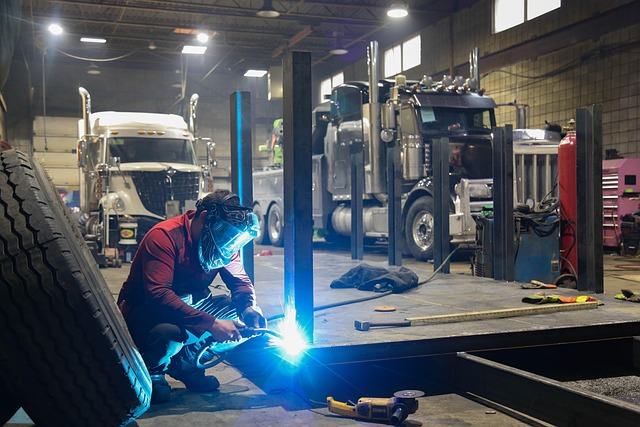
Commoditized services—oil changes, tire rotations, basic maintenance—generate volume but slim margins. Every shop offers them, creating price competition that erodes profitability. To grow auto repair shop margins and attract more profitable work, develop specialty services that differentiate you from competitors and justify premium pricing.
Identify underserved niches in your market. Diesel repair, European imports, hybrid/EV service, classic car restoration, performance modifications—these specialties command higher labor rates because fewer shops have the equipment and expertise. Becoming the go-to shop for Volkswagen/Audi owners or the only local shop certified for Tesla service creates a competitive moat. Customers seeking specialized service prioritize expertise over price, dramatically improving your closing rate and profitability.
Advanced diagnostics represent another high-margin specialty. Modern vehicles are computers on wheels; accurate diagnosis requires sophisticated scan tools and training most shops lack. Invest in dealer-level diagnostic equipment and training. Position yourself as the diagnostic specialist who solves problems other shops can’t. This attracts complex, time-consuming jobs that general repair shops refer out—work that’s extremely profitable because customers are paying for expertise, not just labor hours.
Consider mobile services for commercial accounts or premium customers. Many businesses can’t afford vehicle downtime; offering on-site service for fleet maintenance commands premium rates. Similarly, busy professionals will pay extra for pickup/drop-off service that eliminates their inconvenience. These concierge services differentiate you while targeting high-value customer segments.
Whatever specialty you choose, market it aggressively. Update your Google Business Profile categories, create dedicated service pages on your website, produce social media content showcasing expertise, and develop case studies demonstrating successful outcomes. Specialization allows you to become a big fish in a small pond rather than competing with every shop in town. This focused positioning attracts ideal customers while justifying pricing that supports healthy margins and sustainable growth.
Optimize Pricing Strategies Based on Market Positioning
Pricing strategy determines profitability as much as volume. Many shops default to competitor-based pricing—charging whatever nearby shops charge—which commoditizes their service and triggers race-to-the-bottom dynamics. Strategic pricing aligns your rates with your market positioning, service quality, and target customer segment. For a deeper dive into the math behind this, see this guide on how to make your auto repair shop profitable.
First, understand your cost structure completely. Calculate your fully-loaded labor cost (wages + benefits + taxes + overhead allocation). Add your target profit margin. This yields your minimum billable labor rate—the floor below which you lose money. Many shops underprice because they don’t actually know their costs. Get this math right before making pricing decisions.
Next, audit competitive pricing in your market. Call competing shops posing as a customer to understand their rates and service offerings. This intelligence reveals market positioning opportunities. If everyone charges $95-110 per hour, you face a choice: compete on price ($95/hour with high volume, thin margins) or differentiate on value ($125/hour with premium service, better margins). There’s no universal right answer—it depends on your capabilities and goals.
Premium positioning requires delivering premium experience. This means cleaner facilities, faster service, better communication, more convenient hours, superior warranty, higher-quality parts—tangible value that justifies higher prices. Shops that charge premium rates without delivering premium service get destroyed by online reviews. But those that execute premium service well attract ideal customers who value quality over price, creating sustainable competitive advantage.
Consider implementing dynamic pricing for different services. Commoditized services (oil changes) might be priced competitively to drive traffic, while specialized diagnostic work carries premium rates reflecting expertise. Seasonal services (A/C repair in summer, heating in winter) can command surge pricing during peak demand. This nuanced approach maximizes revenue across your service mix rather than applying blanket pricing to everything.
Review and adjust pricing regularly. Labor costs rise, rent increases, parts prices fluctuate—your pricing must adapt. Annual rate reviews ensure your pricing keeps pace with costs while remaining competitive. Don’t be afraid to raise rates; customers absorbed in their own inflation understand businesses face the same pressures. The shops that thrive long-term treat pricing as a strategic lever to grow auto repair shop profitability, not a static number inherited from a previous owner.
Implement Robust Review Generation Systems
In 2026, your online reputation is your real reputation. Before choosing an auto repair shop, 93% of customers read reviews. Your star rating and review volume directly impact whether customers even call. Shops with 100+ five-star reviews dominate their markets; those with mediocre ratings or few reviews become invisible. Review generation isn’t optional—it’s essential infrastructure.
Automate review requests immediately after service. Integrate review request systems into your shop management software so every customer receives an email or text 24-48 hours after pickup. This timing is optimal—service is fresh in their mind, emotions are positive, and they haven’t yet forgotten. Make the request simple: one-click links directly to your Google Business Profile review page. Friction kills conversion; make leaving a review effortless.
Build volume systematically. Aim to generate 20-30 new reviews monthly through consistent requesting. More reviews provide social proof, dilute occasional negative feedback, and signal authority to search algorithms. Review volume often matters as much as rating—a shop with 200 reviews at 4.8 stars typically outperforms a shop with 20 reviews at 5.0 stars because volume indicates legitimacy.
When negative reviews inevitably appear, respond professionally within 24 hours. Address the specific complaint, acknowledge frustration, explain your perspective calmly, and offer resolution. Never argue or get defensive—it reflects poorly regardless of who’s right. Use phrases like “We’re disappointed to hear this” and “We’d like the opportunity to make this right.” This public response demonstrates to future customers that you take complaints seriously and stand behind your work. Often, the professional response matters more than the negative review itself.
Encourage detailed reviews by asking specific questions: “How was your experience with our service advisor? Did we explain the repairs clearly? Would you recommend us to friends?” Specific prompts generate detailed reviews that provide more credibility than generic “great service!” comments. These detailed reviews also incorporate keywords naturally, improving your local SEO. The compound effect of systematic review generation creates an insurmountable competitive advantage. While competitors hope for good reviews, you systematically generate them, building a reputation moat that protects market share and supports premium pricing.
Use Data Analytics to Eliminate Operational Inefficiencies
Most shops operate on intuition—gut feelings about productivity, profitability, and performance. But intuition masks inefficiencies that slowly bleed profits. Data analytics transforms your shop from a black box into a transparent, optimizable system. The shops that embrace metrics-driven management consistently grow auto repair shop efficiency and profitability faster than those flying blind.
Start tracking key performance indicators (KPIs) religiously. Average Repair Order (ARO), car count, labor hours sold per tech, effective labor rate, bay productivity, estimate approval rate, customer retention rate, gross profit per service category—these metrics reveal exactly where your business performs well and where it’s hemorrhaging money. Modern shop management systems calculate these automatically; you just need to review them weekly and act on insights.
Analyze ARO trends to identify opportunities. If your ARO is $350 but top-performing shops in your market average $500, you’re leaving $150 on the table per customer. This gap might indicate inadequate inspection processes, under-trained service advisors, or failure to recommend preventive maintenance. Drill into the data: Which advisors have the highest ARO? What do they do differently? Which service categories drive ARO? Where should you focus training and process improvement?
Monitor technician productivity closely. Efficient techs turn 7-8 billable hours per 8-hour shift; inefficient ones bill 4-5 hours. This variance represents massive profitability differences. Are slow techs undertrained? Do they lack proper tools? Are they spending excessive time on non-billable activities? Data identifies the problem; management solves it through training, equipment investment, or process refinement.
Track marketing ROI by channel. If you spend $500 monthly on Google Ads generating 10 new customers with $4000 total revenue, that’s an 8X return. If your $800 monthly direct mail campaign generates 2 customers and $1200 revenue, that’s a money-losing channel. Data shows you exactly where to invest marketing dollars for maximum return, eliminating waste and concentrating resources on high-ROI channels. The shops that religiously track, analyze, and optimize based on data compound growth year after year. They make decisions based on evidence rather than assumptions, systematically eliminating inefficiencies that cap growth. This analytical approach separates thriving shops from those perpetually struggling despite hard work.
Conclusion: Building a Sustainable Legacy
The path to grow auto repair shop revenue in 2026 requires more than technical expertise and hard work. It demands strategic thinking, systematic execution, and unwavering commitment to continuous improvement. The 11 strategies outlined in this guide—local SEO optimization, digital vehicle inspections, referral programs, social media marketing, staff training, email automation, strategic partnerships, specialty services, pricing optimization, review generation, and data analytics—work synergistically to create a growth engine far more powerful than any single tactic.
Implementation is where most shops stumble. They read guides like this, feel motivated, then return to daily firefighting without making meaningful changes. Avoid this trap by approaching implementation systematically. Choose 2-3 strategies to tackle first—preferably quick wins like Google Business Profile optimization and review generation—to build momentum. Once those are running smoothly, layer in additional strategies quarterly. Progress beats perfection; incremental improvement compounds over time.
Track your key performance indicators obsessively. Review your ARO, car count, labor sales, customer retention, and profitability monthly. These metrics tell you whether your strategies are working. If ARO climbs from $350 to $425 after implementing DVI, you have proof of ROI. If car count increases 15% after six months of social media consistency, you validate that investment. Data provides feedback that guides resource allocation and keeps you accountable to goals.
Remember that building a thriving shop isn’t a sprint; it’s a marathon. The competitors who’ve dominated your market for years built that position through consistent execution over time. You can replicate and surpass their success using the same principle. Show up every day, execute your strategies, learn from data, refine your approach, and never stop improving. Small improvements—2% better close rate here, 5% higher ARO there, 10% more efficiency in the bay—compound into transformational results.
The ultimate goal isn’t just revenue growth, though that’s essential. The goal is building a sustainable, valuable business that serves your life rather than consuming it. A shop with systematized operations, loyal customers, trained staff, and consistent profitability provides options: work less while maintaining income, sell for maximum value when ready to retire, or pass a legacy business to the next generation. These outcomes require intentional effort to grow auto repair shop infrastructure, not just hustle harder at your current approach.
The opportunity is there. The strategies work. The question is whether you’ll commit to implementation. Will you still be waiting for the phone to ring five years from now, or will you be the dominant shop in your market? The difference is the decisions you make today and the actions you take consistently over coming months and years. Stop leaving growth to chance. Build your roadmap, execute with discipline, and watch your shop transform into the business you’ve always envisioned. The legacy you build starts now.