
The automotive aftermarket industry is entering a defining era in 2026. Independent auto repair shops face unprecedented opportunities alongside equally significant challenges: rising customer expectations, aggressive competition from dealerships and national chains, and the complexity of servicing hybrid and electric vehicles. Yet many shop owners remain stuck in the same revenue bracket year after year, frustrated by inconsistent car counts and razor-thin profit margins. The difference between shops that plateau and those that scale isn’t luck—it’s strategy. Understanding how to grow an auto repair shop requires a systematic approach that addresses every facet of your business, from digital marketing to technician training. This guide presents seven essential strategies that successful shop owners are using right now to break through growth ceilings. Whether you’re operating a single bay or managing multiple locations, these proven tactics will show you exactly how to grow an auto repair shop in today’s competitive landscape. By the end of this masterclass, you’ll have a clear roadmap for transforming your operation from a job into a genuinely scalable business. The question isn’t whether growth is possible—it’s whether you’re ready to implement the systems that make it inevitable. Let’s explore how to grow an auto repair shop with precision, profitability, and sustainable momentum.
1. Digital Dominance: How to Grow an Auto Repair Shop Online
The digital battlefield is where most auto repair growth wars are won or lost in 2026. Your online presence isn’t supplementary to your business—it is your business’s front door, first impression, and primary customer acquisition channel. Mastering how to grow an auto repair shop online begins with local SEO, specifically your Google Business Profile optimization. When potential customers search “brake repair near me” or “oil change West Perrine,” Google’s local pack displays only three businesses. Claiming that coveted spot requires meticulous attention to your profile: complete business information, consistent NAP (Name, Address, Phone) citations across directories, regular posts showcasing completed jobs, and a systematic approach to generating authentic customer reviews. Most shops collect reviews sporadically; growth-focused shops request them after every five-star service experience through automated text message campaigns.
Content marketing represents the second pillar of digital dominance. Educational blog posts serve a dual purpose: they establish your expertise while capturing search traffic from customers researching their car problems before committing to a repair. Articles like “5 Warning Signs Your Transmission Is Failing” or “What That Dashboard Light Actually Means” position your shop as a trusted advisor rather than just another vendor. This approach to how to grow an auto repair shop builds relationships before the phone ever rings. The customer who reads your helpful content is pre-qualified, educated, and significantly more likely to choose your shop when they’re ready to book. To accelerate your content strategy, consider exploring professional website design services that understand automotive industry needs.
Paid advertising completes the digital trifecta, but the key is strategic balance. Google Ads capture high-intent searchers actively looking for immediate service—someone searching “emergency radiator repair” at 3 PM is ready to book now. Meta Ads (Facebook and Instagram) work differently, targeting awareness and consideration phases with video content showcasing your shop culture, before-and-after transformations, and customer testimonials. The mistake most shops make is choosing one or the other; growth-oriented operations understand how to grow an auto repair shop requires both channels working in concert. Allocate 60-70% of your ad budget to Google for immediate conversions and 30-40% to Meta for brand building and retargeting. Track every dollar with UTM parameters and call tracking numbers to understand which campaigns genuinely drive appointments. For a comprehensive approach to how to grow an auto repair shop through digital channels, investigate specialized auto repair advertising strategies that integrate all three components into a cohesive growth engine.
2. Maximizing Average Repair Order (ARO) with DVI

Increasing your car count matters, but maximizing revenue from each vehicle already in your bays often delivers faster results. Digital Vehicle Inspections (DVI) have revolutionized how progressive shops communicate value and build trust with customers. Traditional paper inspections create a barrier between what the technician discovers and what the customer understands. DVI systems bridge this gap through photos, videos, and color-coded severity ratings that transform abstract recommendations into tangible, visual evidence. When a customer sees a photograph of their brake pads worn to 2mm alongside a new pad for comparison, the conversation shifts from “Do I really need this?” to “How soon should we schedule it?”
The psychology driving DVI effectiveness centers on transparency and informed consent. Modern consumers are skeptical of repair shops—decades of industry bad actors created this reality. DVI systematically dismantles that skepticism by showing rather than telling. Shops implementing comprehensive DVI processes report ARO increases of 25-40% within the first quarter, not through aggressive upselling but through complete vehicle assessment. Every car receives the same thorough multi-point inspection regardless of why it arrived. The technician documents everything: good components, items approaching replacement intervals, and immediate safety concerns. This standardization ensures consistency while capturing opportunities that visual-only inspections miss.
Implementation separates effective DVI from merely having the software. Technicians need training not just on the platform but on capturing compelling photos: proper lighting, clear angles, close-ups that highlight the issue. Service advisors require coaching on presenting inspections: addressing critical items first, explaining “red/yellow/green” rating systems, and offering clear next steps. The integration with your shop management system must be seamless—inspections that require duplicate data entry won’t get completed consistently. When executed properly, DVI transforms your shop’s culture from reactive repair to proactive vehicle care, which is precisely the mindset required for sustainable growth and higher customer lifetime value.
3. Customer Retention and Lifetime Value
Acquiring a new customer costs five times more than retaining an existing one, yet most auto repair shops invest disproportionately in attraction while neglecting retention. The growth ceiling for shops operating in “transactional mode”—where every customer interaction stands alone—is real and unforgiving. Breaking through requires shifting from one-off repairs to relationship-based recurring revenue models. Maintenance plans represent the most direct path: offering prepaid packages for oil changes, tire rotations, and seasonal inspections creates predictable revenue while keeping customers in your ecosystem before competitors can reach them.
Automation amplifies retention efforts without proportionally increasing workload. Modern CRM systems integrated with your shop management software can trigger service reminders based on mileage intervals, time since last visit, or seasonal requirements. A customer who received brake service six months ago should automatically receive a text message when their vehicle is due for the next oil change. Email sequences can educate customers about preventive maintenance: “Your 2019 Honda Accord is approaching 60,000 miles—here’s what your manufacturer recommends.” These touchpoints maintain top-of-mind awareness while demonstrating that your shop cares about their vehicle’s longevity, not just immediate transactions. Tools like Zapier can connect your existing software stack to create these automated workflows even if your primary platform lacks native integration.
Referral programs convert satisfied customers into active promoters. The mechanics are straightforward: reward existing customers for bringing new business through discounts, service credits, or even cash incentives. The execution requires consistency and visibility. Your service advisors should mention the referral program during checkout for every positive interaction. Reminder magnets, window clings, and follow-up emails should reinforce the offer. Track referral sources meticulously to identify your most valuable advocates—customers who send multiple referrals deserve special recognition and perhaps elevated benefits. The compound effect of retention-focused systems is dramatic: a shop that increases customer retention by just 5% can increase profits by 25-95% according to research, because loyal customers spend more, cost less to serve, and generate referrals that arrive pre-sold on your shop’s value.
4. Operational Efficiency and Shop Workflow
Revenue growth means nothing if operational inefficiency consumes the profit. The gap between grossing $1 million and netting healthy margins often comes down to workflow optimization and eliminating “dead time”—those moments when bays sit empty, technicians wait on parts, or vehicles remain unmoved despite completed repairs. Time-motion studies of high-performing shops reveal that technician wrench time (actual productive labor) often represents only 60-70% of paid hours. The remaining 30-40% evaporates through waiting for approvals, searching for tools, redundant vehicle movements, and inefficient parts procurement. Recovering even half of that lost time directly impacts your bottom line through increased billable hours without adding overhead.
The Service Advisor role is critical to workflow excellence. In struggling shops, advisors function as order-takers: they write repair orders, answer phones, and handle checkout, but don’t actively manage shop flow. In optimized operations, Service Advisors orchestrate the entire customer and vehicle journey. They prioritize work based on promised completion times and technician bandwidth, proactively communicate with customers to secure repair approvals quickly, and coordinate parts delivery to minimize technician downtime. Morning production meetings—10-15 minutes where the advisor and lead technician review the day’s scheduled work—prevent bottlenecks before they form. When advisors understand how to grow an auto repair shop through operational excellence, they become force multipliers for your entire team.
KPI tracking transforms gut feelings into actionable data. Shops serious about growth monitor metrics obsessively: technician efficiency rates (billed hours vs. actual hours), bay utilization percentages, average time in shop per vehicle, and parts gross profit margins. Modern shop management systems generate these reports automatically; the discipline lies in reviewing them weekly and acting on trends. If one technician consistently shows 85% efficiency while others hover at 65%, investigate why—is it skill level, bay assignment, or workflow support? If vehicles average 2.3 days in your shop versus the industry standard of 1.5 days, your parts ordering process likely needs restructuring. Data removes emotion from improvement decisions and reveals the specific operational levers that drive how to grow an auto repair shop through internal optimization rather than just external marketing. These systems create the foundation for sustainable scaling without proportional increases in chaos or overhead costs.
5. Leadership and Training: How to Grow an Auto Repair Shop Through Talent
Equipment and systems matter, but people determine whether your shop merely survives or genuinely thrives. The technician shortage plaguing the automotive industry in 2026 makes talent acquisition and retention more critical than ever. Shops competing solely on hourly wages will lose this battle to dealerships and national chains with deeper pockets. Winning the talent war requires offering what money alone can’t buy: career development, modern equipment, respectful culture, and clear advancement paths. A-level technicians want to work on interesting vehicles using current diagnostic technology, not wrestle with ancient equipment in chaotic environments. Your recruitment pitch should emphasize continuing education opportunities, clean facilities, and investment in their professional growth. Understanding how to grow an auto repair shop means recognizing that your team’s skill ceiling determines your business’s growth ceiling.
Ongoing education isn’t optional anymore—it’s existential. The automotive technology landscape is shifting faster than any previous generation: electric vehicles, advanced driver assistance systems (ADAS), 48-volt hybrid architectures, and over-the-air software updates require fundamentally different diagnostic approaches than traditional internal combustion engines. Shops that delay investing in EV and ADAS training will find themselves increasingly irrelevant as the vehicle fleet evolves. Allocate training budgets generously: manufacturer certification courses, industry conferences, and online platforms all contribute to keeping your team current. The cost of training is significant; the cost of obsolescence is terminal. For more insights on building a growth-oriented team, explore additional strategies at this comprehensive guide on how to grow an auto repair shop.
Culture eats strategy for breakfast. You can implement every system in this masterclass, but without a team that embraces accountability and ownership, execution will falter. Fostering this culture starts with transparency: share financial performance, celebrate wins publicly, and involve technicians in problem-solving discussions. When a customer complaint arises, treat it as a learning opportunity rather than a blame assignment exercise. Implement regular one-on-ones where team members can voice concerns and receive constructive feedback. Recognize that the best technicians often view themselves as independent professionals rather than employees; they want autonomy within structure, not micromanagement. Shops that master how to grow an auto repair shop through talent development create environments where skilled professionals choose to stay not just because of compensation, but because they’re respected, challenged, and invested in the shop’s success. This cultural foundation makes every other growth strategy exponentially more effective.
6. Financial Health and Reinvestment Strategies
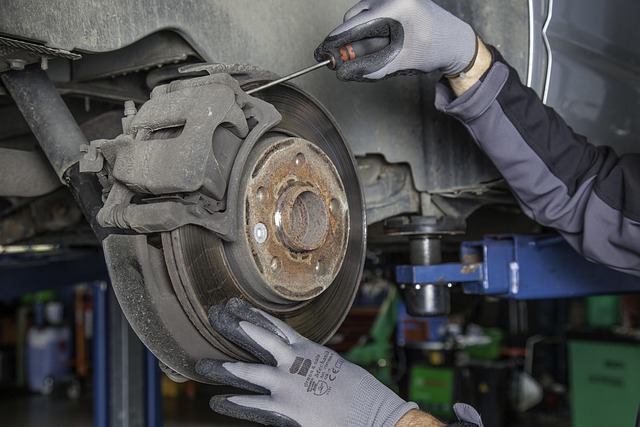
Profitable growth requires financial literacy beyond basic bookkeeping. Many shop owners can tell you their gross revenue but struggle to articulate their true profit margins when labor and parts are properly separated. Understanding these margins is foundational: labor typically carries 65-75% gross profit margins (after technician wages), while parts generally run 35-45% gross profit (after wholesale costs and freight). This disparity explains why labor-intensive services like diagnostics and electrical work often drive more profit than parts-heavy jobs like engine replacement. Shops maximizing profitability strategically price both components, using parts margin to remain competitive while ensuring labor rates reflect the true value of expertise and service quality.
Equipment investment decisions separate growing shops from stagnant ones. The question isn’t whether to invest but when and what. A new four-post alignment rack might cost $45,000—a significant expense that many owners defer indefinitely. But if that rack enables you to perform 10 additional alignments weekly at $100 profit each, it generates $52,000 annually and pays for itself within a year while capturing recurring revenue from customers who previously went elsewhere. The same calculation applies to diagnostic scanners, programming tools, and additional lifts. Smart reinvestment focuses on capabilities that either increase capacity (more cars through existing bays) or capture services you’re currently referring out. Neither decision should be made emotionally; both require ROI analysis that factors in utilization rates and market demand.
Cash flow management becomes critical as you scale. Seasonal fluctuations affect all shops: summer road trips increase demand, winter weather creates different opportunities, and spring often sees declines as customers defer maintenance. Growth-oriented shops maintain cash reserves equal to 2-3 months of operating expenses to weather these cycles without panic. They negotiate favorable payment terms with parts suppliers—net 30 or even net 45 for established accounts—while collecting payment from customers immediately. This timing gap creates working capital advantages that struggling shops never achieve. Line of credit arrangements with banks provide additional safety nets for unexpected equipment failures or opportunities to purchase inventory at bulk discounts. Financial health isn’t about hoarding cash; it’s about having the liquidity to seize opportunities and the margins to reinvest in capabilities that compound your growth trajectory.
7. Systems and Scalability
The final pillar separating shops that grow from those that scale is systematization. A shop owner who remains the bottleneck for every decision, every customer interaction, and every problem has built a job, not a business. True scalability requires documented processes that enable your team to deliver consistent results without constant supervision. Standard Operating Procedures (SOPs) aren’t bureaucratic red tape—they’re the foundation of replicable excellence. Every repeatable task in your shop should have a written process: how to greet customers, how to conduct inspections, how to order parts, how to close out work orders. When new employees can reference documented procedures instead of constantly interrupting experienced staff, your entire operation becomes more efficient.
Technology integration amplifies systematization. Shop management software serves as your central nervous system, but only if properly implemented. Too many shops use expensive platforms at 30% capacity, treating them as glorified calculators for invoicing. Maximize your investment by utilizing scheduling tools, inventory management, customer communication features, and reporting dashboards. Integrate your software with parts suppliers for real-time pricing and availability. Connect it to your CRM for automated follow-ups. Link it to your accounting platform to eliminate duplicate data entry. Each integration removes friction and creates compound time savings across your team.
The ultimate test of systematization is whether your shop can operate profitably without your daily presence. This doesn’t mean abandoning your business—it means building an operation resilient enough to function when you’re sick, on vacation, or focused on strategic growth initiatives rather than daily firefighting. Promote from within to create leadership redundancy: a lead technician who can make workflow decisions, a senior service advisor who manages customer escalations, a shop foreman who handles scheduling and quality control. When you’ve built systems that work and people who execute them, you’ve created genuine enterprise value that extends far beyond your personal technical skills or customer relationships. This is the culmination of understanding how to grow an auto repair shop—building something that transcends the founder and creates lasting value in the marketplace.
Your Roadmap to 2026 Growth
Scaling an auto repair shop in 2026 demands more than occasional effort—it requires systematic execution across seven interconnected pillars. Digital marketing establishes your market presence and fills your pipeline with qualified leads. DVI technology maximizes revenue from every vehicle while building customer trust. Retention systems transform one-time customers into loyal advocates generating compound returns. Operational efficiency ensures that revenue growth translates to profit growth. Talent development builds the team capable of executing your vision. Financial discipline provides the resources to invest in capabilities that sustain momentum. Systematization creates the scalability that separates jobs from genuine enterprises. No single element delivers transformation; the synergy of all seven creates the breakthrough you’re seeking.
The shops that will dominate their markets over the next five years won’t discover secret shortcuts or magic bullets. They’ll simply out-execute their competition through consistent application of proven principles. They’ll optimize their Google Business Profile this week, implement DVI next month, and refine their workflow quarterly. They’ll invest in their team’s education even when budgets feel tight, because they understand that capability compounds. They’ll track their metrics religiously and adjust based on data rather than assumptions. This is how to grow an auto repair shop: not through occasional inspired action, but through disciplined daily execution of systems that work. Your next step is clarity and commitment. Review these seven strategies and honestly assess your current state in each area. Identify your biggest gap and address it first with the relentless focus that separates thriving shops from those perpetually stuck at the same revenue plateau.