
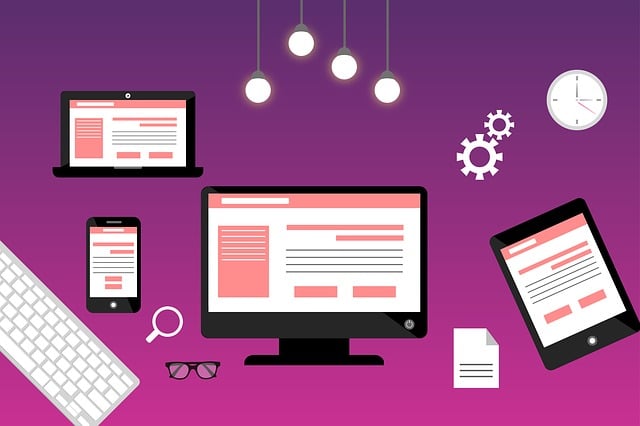
What are the signs of a good web design? It is one of the most important questions any business owner can ask before investing in a new website. Research shows that it takes roughly 50 milliseconds for a visitor to form an opinion about your site, and that snap judgment determines whether they stay or leave. A poorly designed website does not just look unprofessional; it actively drives potential customers into the arms of your competitors. Understanding what are the signs of a good web design gives you the power to evaluate your current site, hold your design team accountable, and ultimately build a digital presence that converts browsers into buyers.
The challenge is that “good design” can feel subjective. One person loves bold colours and large imagery while another prefers minimalist layouts and plenty of whitespace. However, beneath personal taste there are measurable, research-backed indicators that separate high-performing websites from forgettable ones. When you understand what are the signs of a good web design, you move beyond guesswork and start making decisions rooted in data, usability, and proven best practices.
In this guide we break down ten essential indicators that define quality web design. Whether you are launching a brand-new site or auditing an existing one, these signs will serve as your checklist. By the end you will know exactly what are the signs of a good web design and how to apply each principle to your own online presence. Let us get started.
1. Visual Hierarchy and Clean Layout
The first thing a visitor notices, often without even realising it, is visual hierarchy. Visual hierarchy refers to the arrangement of elements on a page in a way that guides the eye from the most important information to the least. A well-designed site uses size, colour, contrast, and spacing to tell the visitor exactly where to look first, second, and third.
Effective layouts typically follow the F-pattern or Z-pattern that eye-tracking studies have identified as the natural way people scan web pages. Understanding these patterns is central to answering what are the signs of a good web design at the structural level. The F-pattern applies to text-heavy pages where readers scan the top line, drop down, and scan a shorter second line before scrolling vertically along the left side. The Z-pattern works well for landing pages with less text, guiding the eye from the top-left logo across to a top-right call to action, then diagonally down to the bottom-left content and across to a bottom-right button.
What are the signs of a good web design when it comes to layout? Look for generous whitespace between sections, a clear grid system that keeps content aligned, and a deliberate above-the-fold strategy that puts the most critical message front and centre. If you want to understand the foundational principles behind great layouts, the 5 golden rules of web design provide an excellent starting point. When every element has a purpose and a place, visitors feel at ease, and that comfort translates directly into longer session times and higher conversion rates. A cluttered, chaotic page signals amateurism, while a clean layout signals trustworthiness. That distinction alone answers what are the signs of a good web design for many experienced marketers.
2. Mobile Responsiveness Is Non-Negotiable
More than sixty percent of global web traffic now comes from mobile devices. If your website does not adapt seamlessly to smartphones and tablets, you are ignoring the majority of your audience. Google switched to mobile-first indexing several years ago, which means the search engine primarily evaluates the mobile version of your site when determining rankings. A site that looks stunning on a desktop monitor but breaks apart on a phone screen is, by modern standards, a badly designed site.
What are the signs of a good web design in terms of responsiveness? Fluid grids that adjust to any screen width, images that resize without losing clarity, touch-friendly buttons with enough spacing to prevent accidental taps, and text that remains readable without pinching and zooming. A responsive site is not simply a shrunken version of the desktop layout; it is a thoughtfully restructured experience that prioritises the most important content for smaller screens.
Testing is crucial. Use tools like Google’s Mobile-Friendly Test and physically check your site on multiple devices. What are the signs of a good web design on mobile specifically include fast load times on cellular connections, easy-to-tap navigation menus, and forms that are simple to complete with a thumb. Pay close attention to how images and videos behave on smaller screens. Media that overflows the viewport or forces horizontal scrolling is a clear indicator of poor responsive implementation. The best mobile experiences feel native, as though the site was built exclusively for the device in your hand. If you are starting from scratch and want to explore cost-effective options, a free website design for business resource can help you get a responsive site up and running without breaking the bank.
3. Fast Loading Speed and Performance
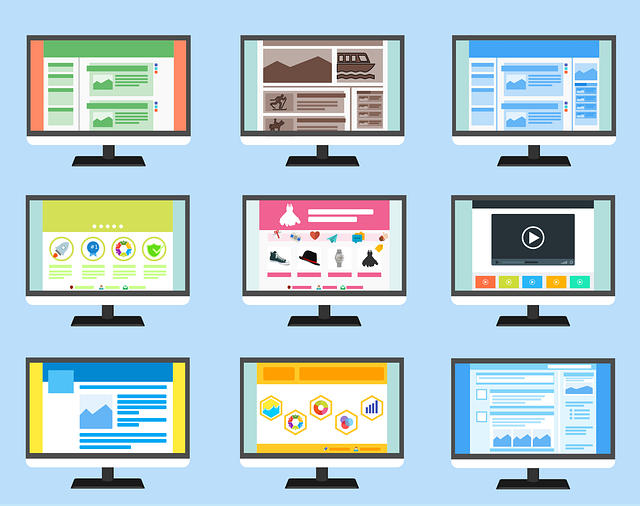
Speed is not a luxury feature. It is a core component of user experience and a confirmed Google ranking factor. Studies consistently show that if a page takes longer than three seconds to load, more than half of mobile visitors will abandon it. Every additional second of delay reduces conversions by roughly seven percent. A visually gorgeous site that loads slowly is, in practice, a site that nobody sees.
What are the signs of a good web design from a performance standpoint? The site should score well on Core Web Vitals, which are Google’s set of metrics measuring real-world user experience. Largest Contentful Paint measures how quickly the main content appears and should be under 2.5 seconds. First Input Delay, now largely replaced by Interaction to Next Paint, tracks how responsive the page is to user interactions. Cumulative Layout Shift measures visual stability, ensuring elements do not jump around as the page loads.
Achieving strong performance requires optimised images in modern formats like WebP, browser caching, minified CSS and JavaScript files, lazy loading for images and videos below the fold, and a reliable hosting provider. Content delivery networks can also speed up load times for visitors in different geographic regions. When you ask what are the signs of a good web design, loading speed should always be near the top of your list because it underpins every other element of the user experience.
4. Intuitive Navigation and User Flow
Navigation is the roadmap of your website. If visitors cannot find what they are looking for within a few clicks, they will leave. The so-called three-click rule suggests that any piece of content should be reachable within three clicks from the homepage. While the exact number is debatable, the principle holds true: users expect effortless movement between pages.
A well-designed navigation structure uses clear, descriptive labels rather than clever or ambiguous wording. Visitors should never have to guess what “Solutions” or “Resources” means in the context of your business. Breadcrumb trails help users understand where they are within the site hierarchy, and a well-implemented internal linking strategy keeps people flowing from one relevant page to the next. If your site runs on WordPress, there are countless plugins and menu builders that make creating intuitive navigation straightforward.
What are the signs of a good web design in navigation? Look for a sticky header that stays visible as you scroll, a logical grouping of menu items, a prominent search bar on content-rich sites, and a footer that mirrors key navigation links. Mega menus work well for large e-commerce sites with many categories, while simpler businesses benefit from a streamlined horizontal menu. What are the signs of a good web design ultimately come down to friction: the less friction a visitor encounters, the better the design.
5. What Are The Signs Of A Good Web Design in Typography and Readability
Typography is one of the most underestimated elements of web design, yet it accounts for roughly ninety-five percent of the information on most websites. The fonts you choose, how you size them, and how much space you place between lines and paragraphs all have a measurable impact on readability, comprehension, and emotional response.
Good typographic design starts with font pairing. A common approach is to combine a serif typeface for headings with a sans-serif typeface for body text, or vice versa. The key is contrast without conflict. Body text should be no smaller than sixteen pixels for desktop screens, and line height should be set to roughly 1.5 to 1.75 times the font size to give each line room to breathe. Paragraphs should be kept short, ideally no more than three to four sentences, to accommodate the scanning behaviour of online readers.
What are the signs of a good web design in typography also include sufficient colour contrast between text and background. The Web Content Accessibility Guidelines recommend a contrast ratio of at least 4.5 to 1 for normal text and 3 to 1 for large text. Poor contrast does not just frustrate visitors with visual impairments; it makes reading uncomfortable for everyone. Heading hierarchy should follow a logical progression from H1 through H2, H3, and so on, making the content easy to scan and helping search engines understand the structure of your page. When typography is handled well, visitors stay longer because reading feels effortless.
6. Strong and Strategic Calls to Action
Every page on your website should have a purpose, and that purpose should be communicated through a clear call to action. Whether you want visitors to request a quote, sign up for a newsletter, download a guide, or make a purchase, the CTA needs to stand out visually and communicate value in just a few words.
Effective CTAs use action-oriented language. Phrases like “Get Your Free Quote,” “Start Your Trial,” or “Download the Guide” outperform vague labels like “Submit” or “Click Here.” The button itself should contrast with the surrounding design so it draws the eye immediately. Placement matters as well: above-the-fold CTAs capture visitors who are ready to act, while secondary CTAs placed after informative content capture those who need more convincing before committing.
What are the signs of a good web design in terms of calls to action? You should see a primary CTA within the first viewport, consistent button styling throughout the site, microcopy that reduces anxiety such as “No credit card required” beneath a signup button, and strategic repetition of CTAs in long-form content. A/B testing different colours, copy, and placements is an ongoing process that the best-designed sites embrace. What are the signs of a good web design here come down to intentionality: every CTA should feel like a natural next step rather than an aggressive sales pitch.
7. Consistent Branding and Colour Psychology
Your website is often the first touchpoint a potential customer has with your brand, and consistency across that touchpoint builds trust. Consistent branding means your logo, colour palette, fonts, imagery style, and tone of voice are uniform across every page. When a visitor moves from the homepage to a service page to the blog, the experience should feel seamless.
Colour psychology plays a significant role in how visitors perceive your brand. Blue communicates trust and reliability, which is why it dominates the financial and technology sectors. Red evokes urgency and excitement, making it popular for clearance sales and food brands. Green signals health, growth, and sustainability. The colours you choose should align with the emotions you want to provoke in your target audience.
What are the signs of a good web design in branding? A defined colour palette of two to three primary colours and one or two accent colours, consistent use of your logo in the same position on every page, imagery that matches a cohesive style such as all photography or all illustration rather than a random mix, and a tone of voice that remains steady whether you are writing a homepage headline or a blog post. Working with a professional website design company can ensure your branding is implemented consistently and strategically. What are the signs of a good web design in this area ultimately reflect how well your online presence mirrors your real-world brand identity.
8. Accessibility and Inclusive Design
A truly well-designed website is one that everyone can use, regardless of ability. Accessibility is not just an ethical responsibility; it is a legal one in many jurisdictions and a practical business decision. The World Health Organisation estimates that over one billion people worldwide live with some form of disability. Ignoring accessibility means ignoring a significant portion of your potential audience.
The Web Content Accessibility Guidelines, commonly referred to as WCAG, provide a comprehensive framework for making websites usable by people with visual, auditory, motor, and cognitive disabilities. Key practices include providing descriptive alt text for every image, ensuring all interactive elements are accessible via keyboard navigation, using ARIA labels where necessary, offering captions or transcripts for video and audio content, and maintaining colour contrast ratios that meet at least the AA standard.
What are the signs of a good web design when it comes to accessibility? Test your site with a screen reader and check that every piece of content is announced correctly. Navigate the entire site using only the tab key and see if you can reach and activate every button, link, and form field. Run an automated accessibility audit using tools like WAVE or Lighthouse and address every issue flagged. What are the signs of a good web design here are not about visual aesthetics; they are about functional inclusivity that widens your reach and demonstrates genuine care for every visitor.
9. What Are The Signs Of A Good Web Design for SEO Performance
Design and search engine optimisation are not separate disciplines. They are deeply intertwined. A beautiful website that search engines cannot crawl, index, and understand is a website that will struggle to attract organic traffic. SEO-friendly design starts with a logical heading hierarchy where each page has one H1 tag, supported by H2 and H3 subheadings that break content into scannable sections.
Clean URL structures matter as well. A URL like yourdomain.com/services/web-design is far more effective than yourdomain.com/page?id=4827 for both users and search engines. Every page should have a unique, keyword-informed meta title and meta description. Structured data markup using Schema.org vocabulary helps search engines display rich results such as star ratings, FAQ dropdowns, and breadcrumb trails directly in the search results.
What are the signs of a good web design for SEO also include an XML sitemap that is submitted to Google Search Console, a robots.txt file that guides crawlers to the right content, fast page speeds as discussed earlier, and a secure HTTPS connection. Internal linking should be strategic, passing authority to your most important pages. Image file names and alt text should be descriptive and, where appropriate, include relevant keywords. If you are wondering how much web designers typically charge for SEO-optimised builds, the investment pays for itself many times over through sustained organic visibility. When design and SEO work in harmony, your website becomes a magnet for qualified traffic rather than a digital brochure that nobody can find.
10. Security and Trust Signals
In an era of increasing data breaches and online scams, visitors need to feel safe before they will hand over their personal information or make a purchase. Security is not just a backend concern; it is a visible design element that directly impacts conversions. A padlock icon in the browser bar, powered by an SSL certificate, is the absolute minimum. Without HTTPS, most modern browsers will display a “Not Secure” warning that sends visitors running.
Beyond SSL, trust signals include recognisable payment badges for e-commerce sites, clear and easily accessible privacy policies, visible contact information including a physical address and phone number, and social proof elements such as customer testimonials, case studies, and third-party review badges. What are the signs of a good web design in terms of trust? The visitor should never have to wonder whether the site is legitimate. Every element, from the professional design itself to the explicitly stated policies, should reinforce credibility.
Display trust badges near forms and checkout pages where anxiety is highest. Feature real testimonials with names and, where possible, photos or company logos. Link to your social media profiles to show that your brand is active and reachable. Security also extends to keeping your CMS, plugins, and themes up to date so that known vulnerabilities are patched promptly. Regular backups and a web application firewall add further layers of protection that safeguard both your business and your visitors. What are the signs of a good web design in terms of security ultimately come down to the cumulative effect of dozens of small, intentional signals that tell the visitor they are in safe hands.
Conclusion
Recognising the signs of a good web design is not about chasing trends or copying what competitors are doing. It is about understanding the timeless principles that make websites effective: visual hierarchy that guides the eye, mobile responsiveness that meets users where they are, fast loading speeds that respect their time, intuitive navigation that eliminates frustration, typography that makes content a pleasure to read, strategic calls to action that drive conversions, consistent branding that builds recognition, accessibility that welcomes everyone, SEO performance that attracts organic traffic, and security that earns trust.
Each of these ten indicators works together as part of a cohesive whole. A site can have stunning visuals but still fail if it loads slowly or confuses visitors with unclear navigation. Likewise, a lightning-fast site will underperform if its branding feels inconsistent or its CTAs are buried beneath the fold. The goal is balance, and the best websites achieve it by treating design as a strategic discipline rather than a purely creative one. When you consistently evaluate your site against these benchmarks, you develop an instinct for what are the signs of a good web design that will serve you through every redesign and iteration.
Take a fresh look at your own website with these ten signs as your guide. Audit each area honestly, identify where you are falling short, and prioritise the improvements that will have the biggest impact on your users and your bottom line. Now that you know what are the signs of a good web design, you have everything you need to build a digital presence that looks outstanding, performs brilliantly, and grows your business for years to come.