



Is SEO Difficult to Learn? – You might be wondering if diving into the world of Search Engine Optimization (SEO) is akin to scaling Mount Everest, or if it’s more like a leisurely stroll through a well-paved park. The short answer, and perhaps the most honest one, is that the difficulty of learning SEO is not a simple binary. It’s a spectrum, heavily influenced by your background, your approach to learning, and your willingness to commit. Think of SEO not as a single, fixed mountain to conquer, but as a dynamic, ever-shifting landscape, a vast ocean where currents change and new islands appear. Learning SEO is about developing the skills to navigate this landscape, to understand its tides, and to chart your own course.
The Nature of SEO as a Discipline
SEO is fundamentally about making your website, or your client’s website, more visible and accessible to search engines like Google, Bing, and DuckDuckGo. This visibility then translates into organic traffic, which means visitors who find you through unpaid search results. This is a critical distinction from paid advertising, where you pay for every click. The goal of SEO is to earn those clicks through relevance, authority, and a good user experience.
Understanding Search Engine Goals
At its core, a search engine’s primary objective is to provide its users with the most relevant and useful information in response to a query. This means search engines are constantly refining their algorithms to better understand user intent and to prioritize content that genuinely satisfies that intent.
User Intent: The Compass of SEO
User intent is the “why” behind a search query. Are they looking to buy something (transactional), learn something (informational), find a specific website (navigational), or compare options (commercial investigation)? Understanding this is paramount. If your content doesn’t align with the user’s underlying intent, even the most technically perfect website will struggle to rank. Imagine trying to sail a ship with the wrong compass; you’ll be expending energy but not necessarily going anywhere productive.
Relevance and Authority: The Pillars of Visibility
Search engines assess relevance by examining how well your content matches the search query, considering keywords, semantic meaning, and the overall topic of your page. Authority, on the other hand, is built over time through a combination of factors, including the number and quality of backlinks pointing to your site, and the overall reputation and trustworthiness of your domain.
Factors Influencing the Difficulty of Learning SEO

The perceived difficulty of learning SEO is subjective and can be influenced by several key factors. What might feel like an insurmountable challenge to one individual could be a manageable learning curve for another.
Your Background and Existing Skillset
If you already possess a strong understanding of web development, coding, content creation, or marketing principles, you’ll likely find certain aspects of SEO more intuitive. For instance, a developer will find technical SEO, like crawlability and site speed, less daunting than someone with no technical background.
Technical Aptitude
Your comfort level with technology plays a significant role. Tasks involving website audits, understanding sitemaps, robots.txt files, and implementing schema markup might require a degree of technical fluency. The more comfortable you are with digital tools and concepts, the smoother this aspect of your learning journey will be.
Content and Marketing Acumen
Conversely, if you excel at writing, understanding audience psychology, and crafting compelling narratives, content-focused SEO aspects will likely resonate more strongly. You’ll grasp the importance of keyword research, on-page optimization, and creating content that users will not only find but also engage with and share.
Your Learning Style and Approach
How you choose to acquire knowledge is as important as the knowledge itself. Different learning styles will encounter different challenges and avenues for progress.
Passive Consumption vs. Active Practice
A critical point for aspiring SEOs in 2026 and beyond is the shift towards hands-on practice over passive consumption. Simply reading articles or watching videos, while informative, is like looking at a recipe without ever stepping into the kitchen. True understanding comes from doing. Experts emphasize the power of daily, small actions. This means implementing what you learn immediately, even if it’s on a small scale.
Just-in-Time Learning
The concept of just-in-time learning is becoming increasingly relevant. Instead of trying to learn “just in case” you might need a piece of information, you learn “just in time” when you hit a specific roadblock. This approach is highly effective because it’s contextually relevant and directly addresses a problem you’re currently trying to solve. When you encounter an issue with your site’s speed, you then dive deep into understanding how to optimize it. This iterative process of acting, hitting a roadblock, and then specifically solving that problem accelerates learning.
The Marathon, Not a Sprint
Mastery in SEO isn’t achieved overnight. It often requires 5 to 10 years of dedicated effort. This is not to discourage you, but to set realistic expectations. It’s a long game, and consistent, deliberate practice is the key. Trying to absorb everything at once is like trying to drink from a fire hose; you’ll get soaked but absorb very little.
The Core Pillars of SEO Learning
Despite the dynamic nature of SEO, there are foundational concepts that remain constant and form the bedrock of any successful SEO strategy. Prioritizing these will make your learning process more coherent.
On-Page Optimization: The Content Weaver
On-page SEO refers to the optimizations you implement directly on your website’s pages. This is where you have the most direct control.
Keyword Research and Implementation
This is the process of identifying the terms and phrases that your target audience uses when searching for information, products, or services related to your business. It’s about understanding the language of your audience and then strategically incorporating those terms into your content.
Understanding Search Volume and Difficulty
When researching keywords, you’ll encounter metrics like search volume (how many people search for a term) and keyword difficulty (how hard it is to rank for that term). Balancing these is crucial for new sites. Targeting highly competitive, high-volume keywords immediately can be like trying to start a conversation in a crowded stadium; your voice will likely be lost.
Content Quality and Relevance
This is where the principles of E-E-A-T (Experience, Expertise, Authoritativeness, Trustworthiness) come into play. Search engines want to surface content that is not only accurate but also demonstrates real-world experience, expert knowledge, and is from a trusted source. Your content needs to be comprehensive, well-written, and directly address the user’s search intent.
Crafting User-Centric Content
Your content should be designed primarily for the user, not the search engine. When you focus on providing value, answering questions thoroughly, and creating an enjoyable reading experience, search engines are more likely to recognize and reward your efforts.
Technical SEO: The Website’s Backbone
Technical SEO ensures that your website is crawlable, indexable, and understandable by search engines. It’s the plumbing and electricity of your website.
Crawlability and Indexability
Search engines use “bots” or “spiders” to crawl the web, discovering new pages and updates. If your site isn’t structured correctly, these bots might not be able to find or understand your content.
Robots.txt and Sitemaps
Understanding how to use your robots.txt file to guide search engine crawlers and how to create and submit an XML sitemap to help them discover all your important pages are fundamental technical skills.
Site Speed and Mobile-Friendliness
In an era where users expect instant gratification, website speed is paramount. A slow-loading site will frustrate users and negatively impact your rankings. Similarly, with a majority of searches happening on mobile devices, a mobile-friendly website is no longer optional; it’s essential.
Core Web Vitals
Google’s Core Web Vitals are a set of metrics that measure aspects of user experience: loading performance, interactivity, and visual stability. Optimizing for these is a key part of technical SEO.
Off-Page SEO: Building Your Reputation
Off-page SEO refers to actions taken outside of your website to impact your rankings. It’s largely about building your site’s authority and reputation on the internet.
Link Building: The Digital Handshakes
Backlinks, or links from other websites to yours, are often considered a vote of confidence. High-quality backlinks from reputable sources signal to search engines that your content is valuable and trustworthy.
The Quality vs. Quantity Debate
Historically, SEOs focused on the sheer quantity of backlinks. However, the focus has shifted dramatically to quality over quantity. A single, authoritative backlink is far more valuable than dozens of low-quality or spammy links. Building these quality links is often the most challenging aspect of SEO for beginners.
Brand Mentions and Social Signals
While not direct ranking factors in the same way as backlinks, brand mentions and positive social signals can contribute to your site’s overall online presence and authority, indirectly influencing SEO.
Challenges You Will Encounter Learning SEO
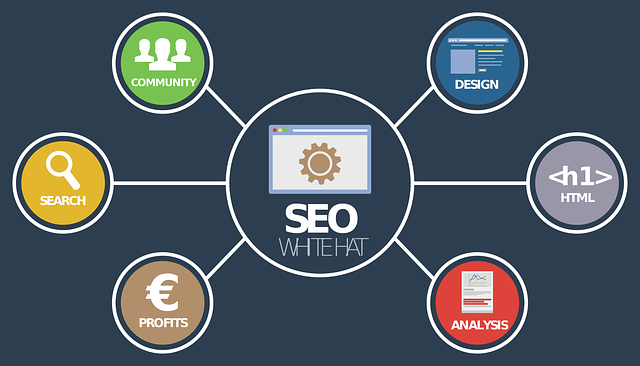
As you embark on your SEO learning journey, you will inevitably encounter obstacles. Recognizing these challenges in advance can help you prepare and persevere.
Rising Competition and Market Saturation
The digital landscape is increasingly crowded. As SEO has become more recognized as a vital marketing channel, more individuals and businesses are investing in it, leading to rising competition across many industries. This means it’s harder to climb the rankings, especially for new websites.
The “New Site” Struggle
New websites often struggle because they lack the trust signals that search engines value. They don’t have a history of positive user engagement, established authority, or a strong backlink profile. This is why it takes time and consistent effort to build that foundation.
The Evolving Search Landscape and AI’s Influence
Search engines are not static entities. They are constantly updated, and now, the rise of Artificial Intelligence (AI) is fundamentally reshaping how users interact with search and how search engines deliver results.
AI Reducing Clicks: The Snippet and SERP Feature Phenomenon
You may notice that for many informational queries, Google will provide an answer directly in a featured snippet or another SERP (Search Engine Results Page) feature, often reducing the need for users to click through to a website. This phenomenon, known as AI reducing clicks, means that even ranking well might not always translate into website traffic. You need to adapt your strategy to account for this.
Technical Gaps and AI Readiness
The increasing sophistication of search algorithms and AI necessitates a deeper understanding of technical SEO. Concepts like semantic SEO, topic clusters, and schema markup are becoming crucial for helping search engines, and by extension, AI, understand the context and relationships within your content. This improves your site’s ability to be surfaced for a wider range of queries, even those generated by AI.
Content Overload Demands Commitment to Quality
The internet is awash with content. To stand out, your content cannot be mediocre. It needs to be exceptional, valuable, and uniquely helpful. This demands a commitment to quality over checklists. Simply ticking off boxes for keyword inclusion or meta description length will not suffice in the long run.
Intent Mismatches in Content Creation
A common pitfall is creating content that doesn’t accurately match the intent of the searcher. You might have great information, but if it’s not what the user was actually looking for when they typed in a particular query, it won’t perform well.
Structured Roadmaps and Learning Resources
While SEO can seem overwhelming, you don’t have to navigate it alone or without direction. Structured learning paths and specialized tools can greatly ease the process.
Following Curated Learning Paths
Platforms like Coursera offer comprehensive beginner-to-expert paths in SEO. These programs are designed to build your knowledge systematically, often incorporating practical elements.
Project-Based Learning
A key advantage of these structured courses is their emphasis on hands-on projects. You’ll typically find modules that involve 2-4 hour projects focusing on critical SEO areas like keyword research, on-page optimization, and conducting technical audits. These projects often require you to use industry-standard tools.
Utilizing SEO Tools for Practice and Analysis
Modern SEO analysis relies heavily on specialized software. Getting familiar with these tools is an integral part of learning.
Essential SEO Tool Stack
Tools like SEMrush, Ahrefs, and Screaming Frog are indispensable for tasks such as:
- Keyword research and analysis
- Competitor analysis
- Technical site audits
- Backlink tracking
- Content gap analysis
- Log file analysis
Working with these tools, even on a trial basis, will give you practical experience in the day-to-day operations of an SEO professional.
The Importance of Discipline and a Balanced Approach
Ultimately, success in SEO learning, like in many complex endeavors, hinges on your discipline and your ability to maintain a balanced perspective.
Balancing Short-Term Wins and Long-Term Strategy
SEO requires a dual approach: you need to aim for some short-term wins to maintain motivation and demonstrate progress, but you must also remain focused on the long-term bets that build sustainable authority and visibility. This might involve quick wins like optimizing existing content or longer-term projects like building out topical authority around core subjects.
The Necessity of Ongoing Maintenance
SEO is not a “set it and forget it” discipline. The digital landscape is constantly changing, and your website requires continuous attention. Maintenance is a crucial component. This includes tasks like:
- Fixing broken links
- Monitoring keyword rankings
- Updating outdated content
- Adapting to algorithm updates
- Ensuring site speed remains optimal
Neglecting maintenance is like letting your garden go wild; what was once well-tended will quickly become overgrown and unproductive.
Avoiding the Hype Train
The SEO industry can be prone to fads and hype surrounding new tactics or tools. It’s important to avoid chaos from hype by staying grounded in fundamental principles and critically evaluating new trends. Not every new tactic is revolutionary, and many are simply variations on established themes. A solid understanding of the core pillars of SEO will allow you to discern what is truly valuable from what is merely noise.
In conclusion, the question of whether SEO is difficult to learn is met with a nuanced answer. It is a discipline that demands continuous learning, adaptation, and significant hands-on practice. While the learning curve can be steep for some, especially those new to the digital world or facing intense competition, a structured approach, a focus on foundational principles, and a commitment to consistent effort can make the journey manageable and rewarding. It requires you to be both a student and a practitioner, constantly observing, analyzing, and refining your understanding of this ever-evolving field.

Juan is a Digital Advertising / SEM Specialist with over 10 years of experience with Google AdWords, Bing Ad Center, Facebook, LinkedIn, Google Analytics, HTML, and WordPress. He is a co-founder of Sheaf Media Group and has work in several online advertising projects for retail, automotive, and service industries. Additionally, Juan holds a bachelor’s degree in Psychology and has a deep interest in the science of human behavior which he attributes as the key factor for his success in the advertising world.