


You stand at a crossroads in your digital journey, contemplating the foundational platform for your online presence. The question “Should I still use WordPress?” echoes with relevance, particularly as the digital landscape shifts with accelerated innovation. This article navigates the complexities of WordPress, providing a factual analysis to aid your decision-making, stripped of hyperbole.
WordPress, a content management system (CMS), has long been the cornerstone of the internet, powering a significant percentage of all websites. Its ubiquity is not accidental; it stems from a confluence of factors that have cemented its position over decades. However, its longevity also invites scrutiny, especially in an era defined by rapid technological advancements and specialized platforms.
Market Share and Global Reach
Historically, WordPress has maintained a dominant market share in the CMS arena. This prevalence is a testament to its broad appeal, serving individuals, small businesses, and large enterprises alike. Its open-source nature has fostered a global community of developers, users, and enthusiasts, contributing to its continuous evolution and widespread adoption. You encounter WordPress daily, often without realizing it, as it underpins a vast array of websites across diverse industries and geographical locations.
Adaptability in a Dynamic Digital Environment
The digital environment is a fluid ecosystem, constantly reshaped by new technologies and evolving user expectations. WordPress, as a platform, has demonstrated remarkable adaptability. Its core architecture, while requiring diligent management, offers a robust framework capable of incorporating new functionalities and addressing emerging trends. This adaptability is crucial in an age where static websites are increasingly relegated to a niche.
Understanding the Pillars of WordPress: Advantages You Leverage
When you consider WordPress, you are looking at a system built on several fundamental strengths that have propelled its widespread adoption and continue to justify its use for many. These advantages act as foundational pillars supporting a diverse array of online projects.
Open-Source Freedom and Community Empowerment
One of the most significant advantages of WordPress is its open-source nature. This means the software is freely available, and its underlying code can be inspected, modified, and distributed by anyone. This open paradigm fosters a vibrant and enormous global community of developers, designers, and users.
The Power of Collaboration
The open-source model encourages continuous improvement and innovation. When you use WordPress, you benefit from the collective intelligence and efforts of this community. Bugs are often identified and patched swiftly, new features are proposed and implemented, and a wealth of knowledge is shared freely through forums, documentation, and tutorials. This communal ownership translates into a resilient and self-correcting system.
Cost-Effectiveness and Control
Beyond community, open-source implies no direct licensing fees for the core software. While you will incur costs for hosting, domain names, premium themes, and plugins, the foundational software itself is free. This significantly lowers the barrier to entry for individuals and businesses on a budget, allowing resources to be allocated elsewhere. Furthermore, the absence of vendor lock-in provides you with unprecedented control over your digital asset. You are not beholden to a single company’s roadmap or pricing structure.
Extensive Customization through Themes and Plugins
Imagine WordPress as a robust engine. Themes and plugins are the infinite array of body styles, accessories, and specialized functionalities you can attach to that engine. This ecosystem is arguably its most compelling feature, offering unparalleled flexibility.
Tailoring Your Visual Identity
Themes dictate the aesthetic and layout of your website. Thousands of free and premium themes are available, ranging from minimalist blogs to complex e-commerce storefronts. You can choose a theme that closely aligns with your brand identity or even build one from scratch, leveraging the underlying theme framework. This abundance allows you to present a unique and professional visual facade without needing to code every element yourself.
Extending Functionality Beyond the Core
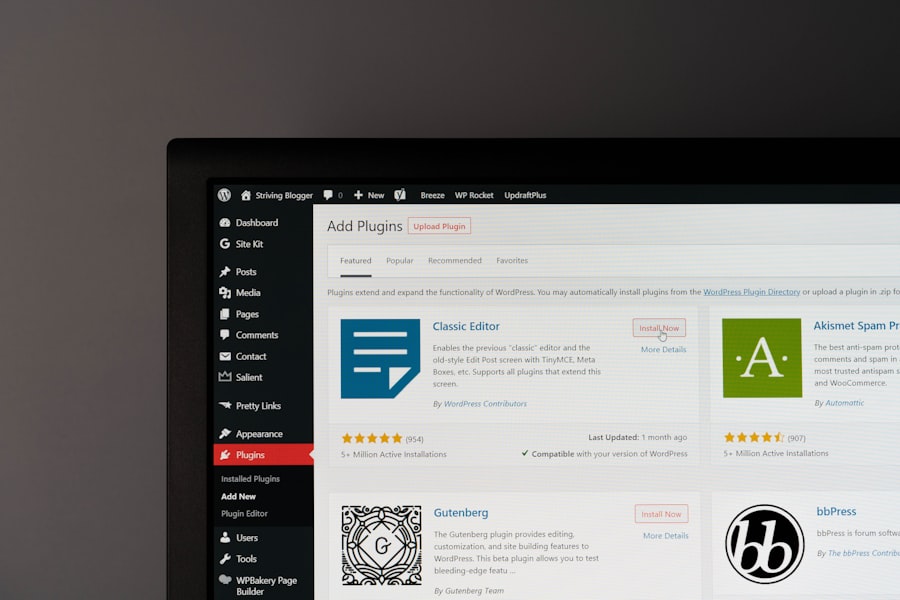
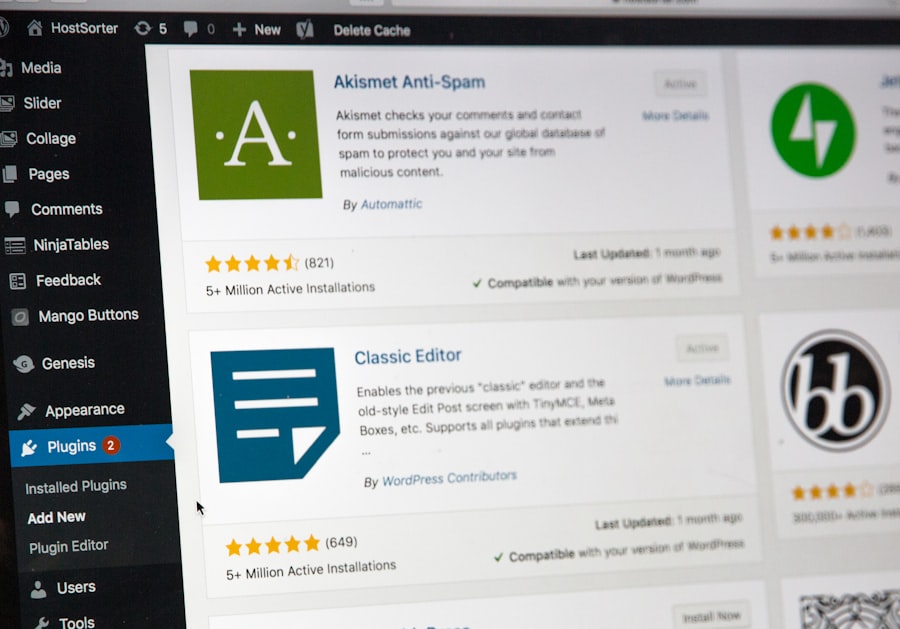
Plugins are akin to applications for your website, adding specific features and capabilities. Whether you need an e-commerce platform (like WooCommerce), a sophisticated contact form, an image gallery, or advanced security measures, there is likely a plugin for it. The WordPress plugin directory boasts tens of thousands of free plugins, with countless more available commercially. This extensibility means your website can grow and evolve with your needs, adding new features as your requirements change. You are not confined to the default capabilities; instead, you can sculpt your site to perform almost any function imaginable.
Search Engine Optimization (SEO) Capabilities
In the digital realm, visibility is paramount. If your website is a beacon, SEO is the lighthouse keeper ensuring it can be seen from afar. WordPress offers robust built-in features and an extensive array of plugins designed to optimize your content for search engines.
Intrinsic SEO Friendliness
Out of the box, WordPress is designed with SEO in mind. It generates clean URLs, allows for easy creation of proper title tags and meta descriptions, and inherently supports a logical site structure. These fundamental elements are crucial for search engine crawlers to understand and index your content effectively.
Plugin-Powered SEO Mastery
Where WordPress truly shines in SEO is through its dedicated plugins. Tools like Yoast SEO or Rank Math provide a guided experience, assisting you in optimizing individual posts and pages for specific keywords. They offer content analysis, readability checks, XML sitemap generation, and integration with various webmaster tools. This empowers you to take significant control over your search engine rankings, even if you are not an SEO expert. The platform, when properly configured, acts as a powerful ally in your quest for online visibility, ensuring your content reaches its intended audience.
Navigating the Labyrinth: Challenges and Considerations
While WordPress offers undeniable advantages, it is not a panacea. Like any powerful tool, it comes with its own set of responsibilities and potential pitfalls. Approaching WordPress without a clear understanding of these challenges is akin to navigating a dense forest without a map.
The Imperative of Self-Managed Security and Maintenance
One of the most frequently cited concerns with WordPress is the burden of security and maintenance, which largely falls on your shoulders. Unlike managed platforms where the vendor handles these aspects, with WordPress, you are the primary custodian.
A Constant Vigilance Against Vulnerabilities
The open-source nature, while a strength, also presents a vulnerability. The sheer volume of themes and plugins available means a larger attack surface. In 2024 alone, over 8,000 vulnerabilities were identified in WordPress plugins, highlighting the constant threat landscape. You must remain vigilant, regularly updating the core WordPress software, themes, and plugins to patch these known exploits. Neglecting updates is like leaving your front door unlocked in a bustling city; it invites unwanted attention and potential compromise.
The Maintenance Treadmill
Beyond security, routine maintenance is essential for optimal performance. This includes regular database optimization, backing up your website, checking for broken links, and managing user accounts. While tools and plugins can automate some of these tasks, a fundamental level of active management is required. This ongoing commitment is a departure from “set it and forget it” solutions and can represent a significant time investment, especially as your site grows. For complex enterprise deployments, the cost of this maintenance can become substantial, necessitating dedicated IT resources or specialized managed hosting.
Performance Risks from Suboptimal Components
The vast ecosystem of themes and plugins, while a strength for customization, can also be a double-edged sword. Not all components are created equal, and poorly developed or unoptimized themes and plugins can significantly degrade your website’s performance.
The Weight of Bloat
Every plugin and theme adds code and assets to your website. If these components are inefficiently coded, excessively large, or perform redundant operations, they can slow down page load times. This “bloat” can manifest as sluggish performance, impacting user experience and, consequently, your search engine rankings. Imagine a vehicle weighed down by unnecessary cargo; it will struggle to reach its destination quickly. You must exercise discernment when selecting and installing components, prioritizing quality, and active development.
Conflicts and Instability
The interplay between different plugins and themes can sometimes lead to conflicts. Two plugins might try to modify the same core functionality or rely on conflicting versions of a library. These conflicts can result in errors, broken features, or even render your site inaccessible. Diagnosing and resolving such conflicts requires technical acumen and can consume considerable time and effort. A carefully curated and regularly audited set of extensions is crucial to maintaining a stable and performant website.
Learning Curve for Non-Coders
While WordPress boasts a reputation for user-friendliness, particularly for basic content publishing, scaling its capabilities and managing its intricacies can present a steeper learning curve for individuals without a technical background.
Beyond the Basics
For basic blogging or simple static pages, WordPress is remarkably intuitive. However, once you venture into complex layouts, custom post types, advanced integrations, or troubleshooting issues, a degree of technical understanding becomes beneficial, if not essential. Understanding fundamental concepts of HTML, CSS, and PHP, even if only superficially, empowers you to diagnose problems, make minor customizations, and communicate more effectively with developers. Users have noted that mobile tweaks often require direct coding, reflecting that the “no-code” promise has its limits.
The Amplification of Bad Decisions
The very flexibility that makes WordPress so powerful also means that poor decisions can have amplified consequences. Choosing a poorly coded theme, installing too many plugins, or neglecting security updates, when magnified by the platform’s extensive capabilities, can lead to significant problems. Knowing when to seek professional help or invest in learning advanced skills becomes critical to harnessing WordPress’s true potential without succumbing to its complexities.
You can Hire WordPress Developer to enhance your website’s functionality and design.
Strategic Fit: Who Benefits Most from WordPress?
Understanding the strengths and weaknesses of WordPress allows you to assess its strategic fit for your specific needs. It’s not a universal solution, but rather a powerful tool that excels in certain applications, yet falters in others.
Ideal Scenarios: Blogs, Small Businesses, and Content Marketing Hubs
WordPress remains an excellent choice for a significant portion of the online landscape. Its architecture and ecosystem are particularly well-suited for several common use cases.
Blogs and Personal Websites
The platform’s origins as a blogging tool are evident in its core strengths. For individuals or organizations looking to publish articles, share insights, and foster discussion, WordPress offers an intuitive interface for content creation, categorization, and distribution. Its ease of installation and extension for these purposes has consistently received high user ratings (4.6/5 overall), making it a go-to for personal branding and digital storytelling.
Small to Medium-Sized Business Websites
For small and medium-sized businesses (SMBs) requiring an online presence with informational pages, contact forms, appointment scheduling, and perhaps a simple e-commerce store, WordPress provides a robust and cost-effective solution. The vast array of themes allows for professional designs without custom development, and plugins like WooCommerce transform it into a capable e-commerce platform. The control over SEO is particularly beneficial for SMBs competing for local search visibility.
Scalable Content Marketing with AI Integrations
Looking towards 2026, WordPress is positioned to lead in scalable content marketing, especially with the integration of AI tools. You can leverage AI plugins for SEO analysis, content generation, personalization, and workflow automation. This allows for efficient production and optimization of high volumes of content, giving you full ownership and flexibility over your data and strategies. The open-source nature facilitates the adoption of emerging AI technologies without vendor restrictions, offering a significant advantage for sophisticated digital marketing initiatives.
Less Suited Scenarios: Highly Complex Enterprises Requiring Extreme Security
While WordPress’s flexibility can be stretched to accommodate large-scale operations, it is not always the optimal choice for enterprises with specific, stringent requirements, especially those demanding unparalleled security at scale.
Enterprise-Level Security Demands
For organizations handling highly sensitive data, or operating in regulated industries, the self-managed security aspect of WordPress can become a significant overhead. While WordPress can be secured, achieving the level of comprehensive, proactive security monitoring and incident response required by a large enterprise often necessitates substantial investment in specialized security infrastructure and expertise, or a move to platforms designed from the ground up with enterprise-grade security as a core tenet. Drupal, for example, is frequently cited as a preferred option for high-scale security deployments due to its intrinsically more robust security architecture and framework for complex permissions and user roles.
Custom Application Development Beyond Content Management
While WordPress can be extended, it is fundamentally a content management system. If your primary need is for a highly custom web application with intricate business logic, complex data models, or specialized integrations that go far beyond standard content publishing and consumption, WordPress might become an unwieldy solution. Trying to force WordPress into a purely application development framework can lead to “bad decisions amplified by flexibility,” resulting in overly complex code, performance issues, and higher maintenance costs. In such cases, a custom-built solution or a more application-centric framework might offer greater efficiency and long-term viability.
The Future Trajectory: Is WordPress Outdated?
The question of whether WordPress is “outdated” is a recurring one, often fueled by the emergence of new technologies and methodologies. However, a nuanced perspective reveals that while challenges exist, the platform is far from obsolete.
Continuous Evolution and Community Support
WordPress benefits from a massive, active developer community that continuously contributes to its core, themes, and plugins. This perpetual motion ensures that the platform receives regular updates, security patches, and new features. It’s a living system, not a relic. User reviews often praise the ease of installing extensions and the continuous stream of updates, though some note delays in core updates syncing smoothly with third-party components. This ongoing commitment to improvement means that WordPress, when properly implemented and maintained, is far from outdated. Its open-source nature allows for swift adaptation to new web standards and technologies.
AI Integration and Scalable Content Marketing for 2026
As noted, looking ahead to 2026, WordPress is projected to be a leader in scalable content marketing, particularly due to its capacity for AI integrations. The ability to embed AI for SEO, personalization, and workflow automation directly into your content production process positions WordPress as a forward-thinking platform. You retain full ownership and flexibility over your data and strategies, a critical advantage in the AI-driven future where data governance and tailored experiences are paramount. This capability ensures that WordPress remains a cutting-edge tool for those focused on sophisticated content strategies and digital lead generation.
The Decisive Factor: Implementation and Management
Ultimately, the effectiveness and longevity of your WordPress site depend less on the platform itself and more on your approach to its implementation and ongoing management. WordPress is a powerful, versatile canvas. Whether it becomes a masterpiece or a cluttered mess is largely determined by the artist – you.
The Responsibility of Ownership
If you treat WordPress as a “set it and forget it” solution, it is more likely to develop issues, become vulnerable, and underperform. However, if you embrace the responsibility of ownership – regularly updating, conducting security audits, optimizing performance, and selecting quality components – WordPress remains a robust and highly capable platform. Issues of high maintenance costs at scale are often a reflection of suboptimal implementation choices rather than inherent platform deficiencies.
A Tool, Not a Panacea
WordPress is a tool, and like any tool, its utility is determined by the craftsman. It requires skill, attention, and judicious application. It offers incredible flexibility and control, which, while empowering, also implies a greater degree of responsibility. The platform itself is not outdated; it successfully adapts. The question “Should I still use WordPress?” then transforms into “Am I prepared to leverage WordPress effectively and responsibly?” For many, given its ongoing evolution, community support, and strategic advantages in areas like AI-powered content marketing, the answer remains a resounding yes, provided you commit to its proper stewardship.

Juan is a Digital Advertising / SEM Specialist with over 10 years of experience with Google AdWords, Bing Ad Center, Facebook, LinkedIn, Google Analytics, HTML, and WordPress. He is a co-founder of Sheaf Media Group and has work in several online advertising projects for retail, automotive, and service industries. Additionally, Juan holds a bachelor’s degree in Psychology and has a deep interest in the science of human behavior which he attributes as the key factor for his success in the advertising world.