


Simple Full Marketing Plan Example – Creating a comprehensive marketing plan doesn’t have to be overwhelming. Whether you’re launching a startup or revitalizing an established business, having a simple full marketing plan example to guide your efforts can make the difference between scattered tactics and strategic success. This guide walks you through each essential component of a marketing plan, providing practical templates and actionable insights you can implement immediately.
A well-crafted marketing plan serves as your roadmap to reaching customers, building brand awareness, and achieving measurable business growth. By following this structured approach, you’ll develop a clear vision of your marketing objectives, understand your target audience better, and create strategies that deliver real results.
Executive Summary Example
The executive summary acts as the gateway to your entire marketing plan. This critical section provides stakeholders with a concise overview of your marketing strategy, goals, and expected outcomes. Think of it as your marketing plan’s elevator pitch – it should capture attention while conveying the essence of your strategic approach.
Key Components of an Executive Summary
Your executive summary should begin with a clear statement of your business’s current market position and where you aim to be within a specific timeframe. Include your primary marketing objectives, such as increasing brand awareness, expanding into new markets, or launching new products or services.
Next, highlight your unique value proposition. What sets your business apart from competitors? This differentiation forms the foundation of your marketing messages and should be prominently featured in your summary. Follow this with a brief overview of your target audience segments and the key marketing channels you’ll use to reach them.
The financial aspect deserves attention too. Provide a high-level summary of your marketing budget and expected return on investment. While detailed figures belong in later sections, your executive summary should give readers a sense of the resources required and anticipated outcomes.
Writing Tips for Maximum Impact
Keep your executive summary concise yet comprehensive. Aim for one to two pages that capture the essence of your entire plan. Use clear, jargon-free language that any stakeholder can understand, regardless of their marketing expertise.
Start with your most compelling information. Lead with achievements, opportunities, or insights that demonstrate why your marketing plan deserves support and resources. Use bullet points or short paragraphs to enhance readability and make key information easy to scan.
Write your executive summary last, even though it appears first in your document. This approach ensures you’ve fully developed your strategies and can accurately summarize them. Review and refine this section multiple times, as it often determines whether readers continue through your entire plan.
Market Analysis Template
Understanding your market landscape forms the foundation of any successful marketing strategy. A thorough market analysis reveals opportunities, identifies challenges, and provides the insights needed to make informed marketing decisions. This section transforms raw market data into actionable intelligence that guides your tactical choices.
Target Audience Definition
Begin by creating detailed profiles of your ideal customers. Go beyond basic demographics to explore psychographics, behaviors, and motivations. Consider factors like lifestyle preferences, shopping habits, media consumption patterns, and decision-making processes.
Segment your audience into distinct groups based on shared characteristics. For example, a fitness equipment company might identify segments such as busy professionals seeking home workout solutions, seniors focused on maintaining mobility, and competitive athletes training for events. Each segment requires tailored messaging and channel strategies.
Document each segment’s pain points and how your products or services address them. Understanding these connections helps you craft compelling value propositions that resonate with specific audience needs. Include information about where each segment typically researches products, what influences their purchasing decisions, and their preferred communication channels.
Competitor Analysis Framework

Evaluate your competitive landscape by identifying direct and indirect competitors. Direct competitors offer similar products or services to the same target market, while indirect competitors satisfy the same customer need through different means. Both types influence your market positioning.
Analyze competitor strengths and weaknesses across multiple dimensions. Examine their product offerings, pricing strategies, marketing channels, brand positioning, and customer service approaches. Look for gaps in the market where competitors fall short or underserved segments they’ve overlooked.
Study competitor marketing tactics to understand what resonates with your shared audience. Review their website content, social media presence, advertising campaigns, and content marketing efforts. Note successful strategies you might adapt and ineffective approaches to avoid. This competitive intelligence informs your differentiation strategy.
Industry Trends Assessment
Stay ahead of market changes by identifying emerging trends that could impact your business. Consider technological advances, shifting consumer preferences, regulatory changes, and economic factors that might influence your industry over the next several years.
Examine how these trends create opportunities or pose threats to your business. For instance, the growing emphasis on sustainability might prompt you to highlight eco-friendly practices or develop greener products. Digital transformation trends might suggest investing in e-commerce capabilities or mobile marketing strategies.
Connect industry trends to your marketing strategies. If data shows increasing mobile device usage among your target audience, prioritize mobile-optimized content and advertising. If personalization emerges as a key expectation, develop strategies for customized marketing messages and experiences.
Marketing Strategy Overview
Your marketing strategy translates market insights into actionable plans. This section bridges the gap between understanding your market and implementing specific tactics. A well-defined strategy ensures all marketing activities align with business objectives and work together cohesively.
Goals and Objectives Setting
Establish clear, measurable marketing goals that support broader business objectives. Use the SMART framework to ensure goals are Specific, Measurable, Achievable, Relevant, and Time-bound. Instead of vague aspirations like “increase sales,” set precise targets such as “generate 500 qualified leads per month through content marketing by Q4.”
Create a hierarchy of objectives that cascade from high-level goals to specific tactical outcomes. Primary goals might focus on revenue growth or market share expansion, while supporting objectives address brand awareness, lead generation, customer retention, or geographic expansion. Each objective should contribute meaningfully to achieving your primary goals.
Define success metrics for each objective. Determine how you’ll measure progress and what constitutes achievement. Include both leading indicators that predict future success and lagging indicators that confirm results. This measurement framework guides resource allocation and helps you adjust strategies based on performance.
Marketing Mix Strategy
Develop your marketing mix by addressing the fundamental elements of product, price, place, and promotion. For products, define your core offerings and any planned expansions or improvements. Clarify how product features translate into customer benefits and competitive advantages.
Your pricing strategy should reflect market positioning while supporting profitability goals. Consider whether you’ll compete on price, value, or premium positioning. Factor in psychological pricing principles, competitive benchmarks, and customer willingness to pay. Include any planned promotions, discounts, or loyalty programs.
Distribution strategies determine how customers access your products or services. Evaluate channel options including direct sales, retail partnerships, e-commerce, or hybrid approaches. Consider channel conflicts and how to maintain consistent brand experiences across touchpoints. Each channel should align with target audience preferences and shopping behaviors.
Channel Selection Process
Choose marketing channels based on audience presence, budget constraints, and strategic fit. Start by mapping where your target segments spend time and consume information. B2B audiences might favor LinkedIn and industry publications, while B2C segments could prioritize Instagram and lifestyle blogs.
Evaluate each potential channel’s effectiveness for your specific goals. Content marketing excels at building thought leadership and organic traffic, while paid advertising delivers faster results for lead generation. Email marketing nurtures relationships cost-effectively, and social media builds community engagement. Select channels that complement each other and create synergies.
Consider resource requirements for each channel. Some channels demand significant time investment but minimal budget, while others require substantial financial investment but less hands-on management. Balance your channel mix to optimize both resource allocation and market coverage. Start with fewer channels executed well rather than spreading resources too thin.
Budget Planning Section
Effective budget planning ensures your marketing investments generate positive returns while maintaining financial discipline. This section transforms strategic ambitions into realistic financial plans that balance growth objectives with available resources. A well-structured marketing budget serves as both a planning tool and performance benchmark.
Resource Allocation Methods
Begin budget planning by determining your overall marketing investment level. Common approaches include allocating a percentage of revenue, matching competitor spending, using objective-and-task methods, or investing based on available funds. Most businesses benefit from combining approaches, using percentage-of-revenue as a baseline while adjusting for specific objectives and opportunities.
Distribute your budget across marketing functions and channels based on strategic priorities. A typical allocation might include content creation, paid advertising, marketing technology, events and sponsorships, agency or contractor fees, and internal team costs. Weight investments toward channels and activities that historically deliver strong returns or support critical new initiatives.
Build flexibility into your budget to capitalize on emerging opportunities or respond to market changes. Reserve contingency funds for testing new channels, scaling successful campaigns, or addressing unexpected challenges. This agility helps you optimize performance throughout the year rather than rigidly following initial allocations.
Cost Estimation Techniques
Develop accurate cost estimates by researching actual market rates and gathering quotes from potential vendors. Break down large initiatives into component costs to improve accuracy. For example, a content marketing program includes writer fees, design costs, promotion expenses, and distribution platform fees.
Consider both direct costs and hidden expenses. Direct costs include obvious items like advertising spend or software subscriptions. Hidden costs encompass staff time, opportunity costs, learning curves for new initiatives, and ongoing maintenance requirements. Comprehensive cost analysis prevents budget overruns and ensures realistic planning.
Account for timing differences between investment and return. Some marketing activities like SEO or brand building require sustained investment before generating measurable results. Others like paid search advertising deliver immediate returns. Structure your budget to maintain both short-term performance and long-term growth investments.
ROI Projections
Project returns for each marketing investment to guide resource allocation decisions. Start by establishing baseline metrics for current performance, then estimate improvements from planned initiatives. Use conservative assumptions and consider both best-case and worst-case scenarios to set realistic expectations.
Calculate ROI using appropriate metrics for each marketing activity. Lead generation campaigns might focus on cost per lead and conversion rates, while brand awareness initiatives track reach and engagement metrics. Connect marketing metrics to business outcomes like revenue, customer acquisition costs, and lifetime value to demonstrate tangible impact.
Create monitoring systems to track actual performance against projections. Regular reviews help you identify which investments deliver expected returns and which require adjustment. Use these insights to refine future budgets and improve projection accuracy over time. Document lessons learned to build institutional knowledge about what works for your specific business.
Implementation Timeline
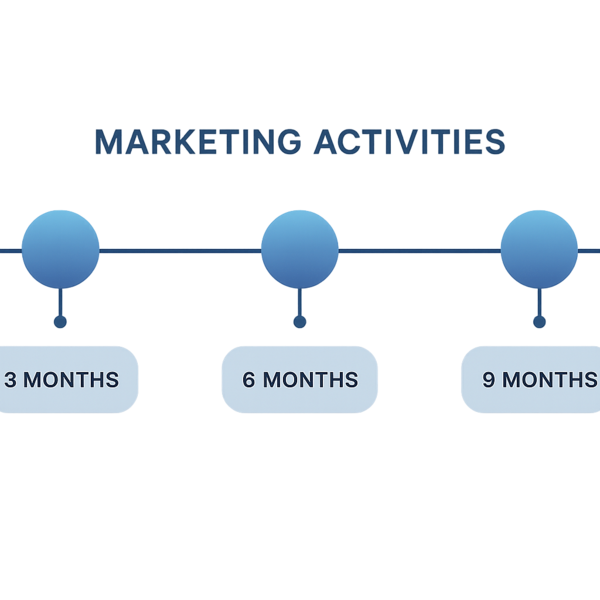
A detailed implementation timeline transforms your marketing strategy from concept to reality. This roadmap coordinates activities, assigns responsibilities, and ensures steady progress toward your goals. Effective timeline planning prevents bottlenecks, maintains momentum, and helps teams stay aligned throughout execution. When creating your timeline, consider using a simple full marketing plan example as a reference point for structuring your phases.
Phase-by-Phase Breakdown
Organize your implementation into logical phases that build upon each other. The foundation phase typically includes market research completion, team assembly, technology setup, and initial content creation. This groundwork enables smooth execution of subsequent activities and prevents delays from inadequate preparation.
The launch phase activates your core marketing channels and campaigns. Begin with pilot programs to test messaging and refine approaches before full-scale rollout. Sequence launches to manage workload and allow lessons from early initiatives to improve later ones. Coordinate across channels to create integrated campaigns that amplify impact.
Growth and optimization phases focus on scaling successful initiatives and improving underperforming areas. Plan regular review cycles to assess performance and adjust tactics. Build in time for testing new approaches, expanding into additional channels, and deepening engagement with existing audiences. This iterative approach ensures continuous improvement and adaptation to market feedback.
Milestone Planning
Define clear milestones that mark significant progress points in your marketing plan execution. Milestones might include website launch, first campaign deployment, reaching specific audience metrics, or achieving revenue targets. Each milestone should represent meaningful advancement toward your ultimate objectives.
Set realistic timelines for milestone achievement based on resource availability and task dependencies. Work backward from desired completion dates to identify required start times and interim deadlines. Buffer time for unexpected delays, review cycles, and iteration based on results. Aggressive timelines may seem impressive but often lead to rushed execution and subpar results.
Create accountability by assigning milestone ownership and establishing review processes. Regular check-ins ensure early identification of potential delays and enable proactive problem-solving. Celebrate milestone achievements to maintain team motivation and momentum. Use milestone reviews to capture learnings and refine future planning.
Team Responsibilities
Clearly define roles and responsibilities for every team member involved in marketing plan execution. Document who leads each initiative, who provides support, and who holds approval authority. This clarity prevents duplicate efforts, ensures coverage of all activities, and speeds decision-making.
Match responsibilities to team member skills and capacity. Consider both technical expertise and bandwidth when making assignments. Provide growth opportunities by assigning stretch projects with appropriate support. Build redundancy for critical roles to prevent single points of failure from derailing progress.
Establish communication protocols that keep everyone informed without creating meeting overload. Define update frequencies, reporting formats, and escalation procedures. Use project management tools to maintain visibility into progress and dependencies. Regular team meetings should focus on coordination, problem-solving, and strategic alignment rather than simple status updates.
Measurement Framework
A robust measurement framework transforms marketing from a cost center into a measurable growth driver. This system enables data-driven decision-making, demonstrates marketing value to stakeholders, and guides continuous improvement. Without effective measurement, you’re navigating blind and missing opportunities to optimize performance.
KPI Selection Guide
Select key performance indicators that directly connect to your marketing objectives and business goals. Avoid vanity metrics that look impressive but don’t drive meaningful outcomes. Focus on metrics that inform decisions and demonstrate progress toward strategic objectives.
Create a balanced scorecard combining leading and lagging indicators across the customer journey. Awareness metrics might include website traffic, social media reach, and brand mention frequency. Engagement metrics track email open rates, content consumption, and social interactions. Conversion metrics measure lead generation, sales qualified leads, and customer acquisition. Retention metrics monitor customer lifetime value, repeat purchase rates, and advocacy behaviors.
Establish benchmark values and performance targets for each KPI. Use historical data, industry standards, and competitive intelligence to set realistic yet challenging goals. Define what constitutes success, acceptable performance, and concerning trends. This framework enables quick identification of issues requiring intervention and opportunities worth pursuing.
Tracking Tools and Methods
Implement comprehensive tracking systems that capture data across all marketing touchpoints. Web analytics platforms monitor website behavior and conversion paths. Marketing automation systems track email engagement and lead nurturing effectiveness. Social media analytics reveal audience growth and engagement patterns. CRM integration connects marketing activities to revenue outcomes.
Configure tracking to capture both aggregate performance and granular insights. Aggregate data reveals overall trends and program effectiveness. Granular data enables optimization by identifying which specific tactics, messages, or audience segments drive superior results. Balance data collection depth with analysis capacity to avoid drowning in unused information.
Ensure data accuracy through proper implementation and regular audits. Verify tracking codes function correctly, establish naming conventions for consistent reporting, and validate data integrity across systems. Clean, reliable data forms the foundation for trustworthy insights and confident decision-making. Document your tracking setup to maintain consistency as team members change.
Performance Review Schedule
Establish regular review cycles that balance timely insights with meaningful trend identification. Daily monitoring might focus on campaign performance and urgent issues. Weekly reviews assess tactical execution and short-term adjustments. Monthly analyses evaluate program effectiveness and resource allocation. Quarterly business reviews examine strategic progress and major pivots.
Structure reviews to drive action rather than merely report numbers. Begin with performance against goals, identify significant variances, analyze root causes, and develop improvement plans. Focus discussion on insights and decisions rather than data recitation. Document decisions and follow up on implementation to ensure reviews generate tangible improvements.
Share performance insights broadly to build marketing credibility and align stakeholder expectations. Create executive dashboards highlighting business impact metrics. Develop team scorecards showing tactical performance and improvement opportunities. Use success stories and case studies to demonstrate marketing value beyond mere numbers. Regular transparent communication builds trust and secures ongoing support for marketing investments.
Marketing success requires more than good intentions – it demands structured planning, disciplined execution, and continuous optimization based on measurable results. This comprehensive guide provides the framework and practical tools needed to develop and implement an effective marketing plan. By following these templates and adapting them to your unique business context, you’ll create a roadmap that drives sustainable growth and competitive advantage. Remember that the best marketing plans evolve based on market feedback and performance data, so remain flexible while staying true to your strategic vision.

Juan is a Digital Advertising / SEM Specialist with over 10 years of experience with Google AdWords, Bing Ad Center, Facebook, LinkedIn, Google Analytics, HTML, and WordPress. He is a co-founder of Sheaf Media Group and has work in several online advertising projects for retail, automotive, and service industries. Additionally, Juan holds a bachelor’s degree in Psychology and has a deep interest in the science of human behavior which he attributes as the key factor for his success in the advertising world.