


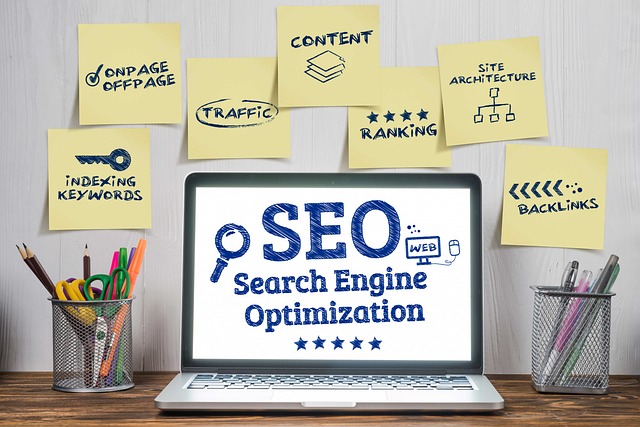
What Are The 4 Types Of SEO? – You are navigating the complex and ever-evolving landscape of digital marketing, where visibility is paramount. Understanding the fundamental methodologies that propel your online presence is not merely advantageous; it is essential. This guide delves into the foundational and emergent types of Search Engine Optimization (SEO), dissecting each category to provide you with a comprehensive understanding of how they intersect and contribute to your overall digital strategy. Consider these types as the architectural blueprints for your digital infrastructure, each serving a distinct yet interconnected purpose in building a robust online edifice.
Even in 2026, the bedrock principles of SEO, often categorized into four types, continue to form the backbone of any successful digital strategy. These are the pillars upon which all more advanced optimizations rest, ensuring your website is discoverable, relevant, and authoritative. Ignoring these fundamental aspects is akin to constructing a building without a solid foundation; it may stand for a time, but its longevity and resilience are perpetually compromised.
Technical SEO: The Engineering Blueprint
Technical SEO is the unseen machinery beneath your website’s surface, dictating how easily search engines can access, crawl, interpret, and index your content. It’s about ensuring your site’s infrastructure is robust and efficient, much like designing highways for seamless traffic flow. Without a technically sound website, even the most compelling content may remain hidden from its intended audience.
Site Speed and Core Web Vitals
You understand that user patience is a finite resource. Slow loading times can lead to high bounce rates and diminished search engine rankings. Technical SEO focuses on optimizing server response times, leveraging browser caching, compressing images and code, and implementing Content Delivery Networks (CDNs) to ensure your website loads with lightning speed. The Core Web Vitals, a set of metrics measuring real-world user experience for loading performance, interactivity, and visual stability, have become critical ranking factors. Your adherence to these standards directly impacts your user’s first impression and your search engine’s assessment of your site’s quality.
Crawlability and Indexability
Search engine bots, often referred to as spiders or crawlers, tirelessly traverse the internet to discover new and updated content. Technical SEO ensures these bots can efficiently navigate your site without encountering roadblocks. This involves optimizing your robots.txt file to guide crawlers, creating a comprehensive XML sitemap to list all important pages, and addressing broken links or redirect chains that can impede crawling. If a search engine cannot crawl or index your site, your content, regardless of its quality, will remain invisible to searchers.
Mobile-Friendliness
In an era dominated by mobile devices, your website’s responsiveness is non-negotiable. Technical SEO ensures your site fluidly adapts to various screen sizes and orientations, offering an optimal viewing and interaction experience across all devices. Mobile-first indexing, where Google primarily uses the mobile version of your content for indexing and ranking, highlights the critical importance of a mobile-friendly design. You are therefore ensuring that your content is accessible and engaging, regardless of how your audience chooses to interact with it.
On-Page SEO: The Content and User Experience Canvas
Once your technical infrastructure is sound, On-Page SEO shifts your focus to the content itself and how it is presented to both users and search engines. This is where you meticulously craft your message, ensuring it is not only relevant and engaging but also signals its purpose clearly to search algorithms. Consider this the interior design of your digital property, making it appealing and functional for its inhabitants.
Content Relevance and Quality
You strive to provide value to your audience. On-Page SEO emphasizes creating high-quality, comprehensive, and unique content that directly addresses user queries and fulfills their intent. This involves thorough keyword research to understand what terms your audience uses, and then integrating those keywords naturally within your headings, body text, and meta descriptions. However, keyword stuffing, the practice of excessively repeating keywords, is detrimental and can lead to penalties. The focus has decisively shifted towards entity signals, where search engines analyze the concepts and relationships discussed in your content rather than just isolated keywords. Your content should demonstrate expertise, authoritativeness, and trustworthiness (E-A-T), providing a fulfilling experience for the reader.
User Experience (UX)
Beyond raw content, how users interact with your website is paramount. On-Page SEO considers elements such as clear navigation, legible fonts, engaging multimedia (images, videos), and a logical content hierarchy. A positive user experience encourages longer dwell times, lower bounce rates, and increased engagement, all of which are positive signals to search engines. You are creating an enjoyable journey for your visitors, guiding them effortlessly through your information.
Schema Markup
Schema markup, a form of microdata, is a powerful tool within On-Page SEO that helps search engines better understand the context of your content. By adding specific labels to elements on your page (e.g., indicating a product’s price, a recipe’s ingredients, or an event’s date), you provide explicit signals that can lead to rich snippets in search results. These enhanced listings can significantly increase your click-through rates, making your content stand out in a crowded search results page.
Off-Page SEO: Building Authority and Trust
Off-Page SEO operates beyond the confines of your website, focusing on establishing your site’s authority and trustworthiness across the broader internet. Think of it as building your reputation in the digital community, earning endorsements from influential figures. It’s about demonstrating to search engines that your content is valued and respected by others.
Backlink Building
Backlinks, or inbound links from other reputable websites to yours, are often considered the currency of Off-Page SEO. Each backlink acts as a vote of confidence, signaling to search engines that your content is valuable and authoritative. The quality, relevance, and diversity of these backlinks are far more important than their sheer quantity. You are not merely collecting links; you are cultivating a network of credible endorsements. This involves strategies like content marketing to create shareable assets, outreach to industry influencers, and guest posting on relevant publications.
Brand Mentions and Authority
Beyond explicit backlinks, mentions of your brand, even unlinked, contribute to your overall authority. Search engines are increasingly sophisticated in recognizing brand signals and their impact on relevance and trust. Cultivating a strong brand presence through excellent customer service, engaging social media activity, and consistent brand messaging implicitly bolsters your Off-Page SEO. You are establishing your brand as a recognized and respected entity within its domain.
Social Signals
While the direct ranking impact of social media shares and likes remains a subject of ongoing debate, social signals indirectly contribute to Off-Page SEO. They amplify your content’s reach, drive traffic to your site, and expose your brand to a wider audience, naturally leading to more organic mentions and potentially backlinks. Your active participation in relevant online communities and the strategic sharing of your content across social platforms enhance your digital footprint.
Local SEO: Connecting with Your Immediate Community
For businesses with a physical location or those serving a specific geographic area, Local SEO is an indispensable component. It is the compass that guides local customers directly to your doorstep, whether physical or digital. You are optimizing for proximity, ensuring that when potential customers in your vicinity search for products or services you offer, your business appears prominently.
Google Business Profile Optimization
Your Google Business Profile (formerly Google My Business) is the cornerstone of Local SEO. Optimizing this profile with accurate business information (name, address, phone number), compelling descriptions, relevant categories, high-quality images, and consistent hours of operation is critical. You are providing search engines and potential customers with the essential details they need to locate and engage with your business.
Local Citations and Directories
Local citations are consistent mentions of your business name, address, and phone number (NAP) across various online directories (e.g., Yelp, Yellow Pages, industry-specific directories). The consistency of this information across the web is crucial, as discrepancies can confuse search engines and erode trust. You are reinforcing your local presence across multiple reputable platforms.
Online Reviews and Reputation Management
Customer reviews play a pivotal role in Local SEO. Positive reviews on platforms like Google, Yelp, and industry-specific sites not only enhance your visibility but also build trust and credibility with potential customers. Actively soliciting reviews and responding thoughtfully to both positive and negative feedback demonstrates your commitment to customer satisfaction and contributes significantly to your local search performance. You are leveraging the voice of your customers to strengthen your local standing.
Emerging 4-Layer Framework: The Future of Digital Visibility

As the digital landscape evolves with the increasing dominance of artificial intelligence and advanced user expectations, a new framework is emerging to address these complexities. This framework expands on the traditional types, integrating them into a more holistic and future-proof approach. Consider this the smart home automation system for your digital property, where everything is interconnected and intelligently adapts to its environment.
SXO (Search Experience Optimization): The User’s Seamless Journey
SXO is a refinement and expansion of traditional UX within the SEO context, focusing on the entirety of the user’s journey, from initial query to conversion. It’s about creating an utterly frictionless experience where users not only find what they need but also enjoy the process. You are designing a digital path free of obstacles and full of positive interactions.
Intent-Driven Content
Understanding and fulfilling user intent is at the core of SXO. This goes beyond simple keyword matching to deciphering the underlying need or goal behind a search query. Whether the user has informational, navigational, commercial investigation, or transactional intent, your content should be precision-engineered to directly address that specific need, reducing friction and enhancing satisfaction.
Personalization and Contextual Relevance
SXO recognizes that no two users are exactly alike. Leveraging data to personalize content, recommendations, and even the search experience itself becomes vital. This ensures that the information presented is contextually relevant to the individual user, whether based on their location, past behavior, or device. You are tailoring the experience to each individual, making their journey more efficient and enjoyable.
Multi-Channel Cohesion
A truly frictionless search experience extends beyond your website. SXO emphasizes consistency and seamless transitions across various touchpoints, including social media, email marketing, and even offline interactions. Your brand message and user experience should be cohesive, regardless of the channel through which the user engages.
AIO (AI Optimization): Powering Intelligence and Automation
The integration of Artificial Intelligence (AI) permeates every facet of modern digital strategy. AIO refers to the optimization of your content and strategies to be understood and leveraged by AI models, particularly Large Language Models (LLMs), and to utilize AI for greater efficiency and insight. You are preparing your digital property to communicate fluently with the intelligent operating systems of the future.
Content Automation and Generative AI
AIO involves leveraging generative AI tools for content creation, ideation, and refinement. While human oversight remains critical for quality and factual accuracy, AI can assist in generating diverse content formats, repurposing existing material, and scaling content production. Your goal is to use AI to enhance your content output without sacrificing authenticity or relevance.
Data-Driven Decisions with AI
AI-powered analytics and insights are revolutionizing SEO strategy. AIO involves utilizing AI tools to identify trends, predict user behavior, optimize keyword targeting, and even detect algorithmic shifts earlier. You are employing artificial intelligence as a powerful analytical co-pilot, providing deeper insights and enabling more informed strategic decisions.
Entity-Centric Content Creation
With AI’s enhanced understanding of concepts and relationships, AIO emphasizes structuring content around entities rather than just keywords. This involves clearly defining and linking related entities within your content, helping AI models grasp the overarching themes and knowledge graphs your content addresses. You are speaking the language of AI, making your content more comprehensible to intelligent systems.
GEO (Generative Engine Optimization): Shaping AI’s Responses
As search interfaces increasingly shift towards AI-generated summaries and direct answers, GEO becomes critical. This addresses how your content is optimized to be selected and consumed by generative AI models to formulate their responses, influencing how AI “cites” or incorporates information from your site. You are ensuring your voice is heard and accurately represented in the AI-powered conversations of tomorrow.
Structured Data for AI Consumption
Just as schema markup helps traditional search engines, meticulously structured data is paramount for GEO. This provides explicit, machine-readable information that generative AI can easily parse and incorporate into its responses. Properly formatted tables, lists, and defined entities within your content are essential for this optimization.
Factual Accuracy and Verifiability
Generative AI models prioritize authoritative and factually accurate information. GEO emphasizes ensuring your content is meticulously researched, cited, and verifiable. AI systems are increasingly adept at cross-referencing information, and content that demonstrates high levels of veracity is more likely to be selected as a source for AI-generated answers. You are building a reputation for indisputable reliability, which AI respects.
Answer-Focused Content Architecture
Designing content specifically to answer common questions and address implicit queries is a core tenet of GEO. This involves clearly articulating answers, summaries, and key takeaways that generative AI can easily extract and synthesize. Your content becomes a readily digestible knowledge source for AI.
AEO (Answer Engine Optimization): Capturing Zero-Click and Voice Search
With the rise of rich snippets, featured snippets, and voice assistants, many user queries are now answered directly within the search results page or by a spoken response, bypassing a click to your website. AEO focuses on optimizing your content to be the definitive answer for these “zero-click” and voice search queries. You are aiming to be the direct source of truth for immediate gratification queries.
Featured Snippet Optimization
Featured snippets, often appearing at the top of search results, provide a concise answer directly on the SERP. AEO involves structuring your content with clear, concise answers to common questions, using headings, bullet points, and numbered lists that are easily extracted by search engines for these prominent placements.
Voice Search Optimization
Voice search relies on natural language processing and often seeks direct, succinct answers. AEO for voice search involves using conversational language, optimizing for long-tail keywords that mimic spoken queries, and providing clear, concise answers that can be easily delivered verbally by voice assistants. Your content needs to be spoken-word friendly.
FAQ Schemas and Q&A Sections
Implementing FAQ schema markup and creating dedicated Q&A sections directly addresses common user questions and presents answers in a format that both traditional and answer engines can readily interpret and utilize for direct answers. You are pre-empting user questions and providing the most straightforward possible answers.
Conclusion
The world of SEO is a dynamic ecosystem, constantly evolving with technological advancements and shifting user behaviors. While the traditional four types of SEO remain the indispensable foundation for any digital strategy, the emerging 4-layer framework of SXO, AIO, GEO, and AEO represents the cutting edge. You are not merely optimizing for algorithms; you are optimizing for the entire digital experience, for human users interacting with increasingly intelligent systems. By embracing both the enduring principles and the innovative advancements, you position your online presence not just to survive, but to thrive in the complex and competitive digital landscape of 2026 and beyond. This comprehensive understanding empowers you to build not just a website, but a resilient, authoritative, and future-proof digital asset.

Juan is a Digital Advertising / SEM Specialist with over 10 years of experience with Google AdWords, Bing Ad Center, Facebook, LinkedIn, Google Analytics, HTML, and WordPress. He is a co-founder of Sheaf Media Group and has work in several online advertising projects for retail, automotive, and service industries. Additionally, Juan holds a bachelor’s degree in Psychology and has a deep interest in the science of human behavior which he attributes as the key factor for his success in the advertising world.