


Why Are People Moving Away From WordPress? – You stand at a crossroads. As a digital architect, a business owner, or simply someone observing the shifting sands of the internet, you’ve likely encountered WordPress. For years, it has been the bedrock for countless websites, a digital Swiss Army knife capable of crafting everything from personal blogs to complex e-commerce ventures. Yet, a subtle, discernible exodus is underway. You are witnessing a significant recalibration in the digital landscape, a re-evaluation of what constitutes an optimal online presence. This isn’t a sudden collapse but rather a gradual migration, driven by evolving technological demands, financial imperatives, and a refined understanding of operational efficiency.
The question isn’t whether WordPress is still viable – for many, it absolutely is. The pertinent inquiry is why an increasing number of individuals and organizations are choosing to depart from a platform that once seemed synonymous with online presence. You are about to explore the multifaceted reasons behind this trend, dissecting the challenges that have pushed users away and the attractions that pull them towards alternative horizons.
Imagine purchasing a classic car. It’s beautiful, iconic, and capable. But as time wears on, its intricate mechanics demand specialized knowledge, parts become rare, and every repair is a bespoke, costly endeavor. This analogy, though imperfect, reflects the experience many now face with legacy WordPress and WooCommerce installations. You are not just building a website; you are acquiring an ongoing project with inherent liabilities.
The Accumulation of Maintenance Debt
Your WordPress site, particularly one equipped with WooCommerce, is a living entity. It requires nurturing, updates, and vigilant oversight. Over time, you accrue what developers term “maintenance debt”—a growing backlog of necessary updates, security patches, and compatibility adjustments. This isn’t always readily apparent in the initial buildout.
The Specialization Trap
As your site ages, updating plugins, themes, and the core WordPress software isn’t always a simple one-click affair. Conflicts arise. Custom code, often interwoven with various plugin functionalities, demands careful navigation. You find yourself needing highly specialized developers not just to add features but simply to maintain the existing infrastructure. This creates a dependency, a golden handcuff that can feel restrictive and expensive.
The Cost Implication: A Hidden Drain
Initially, WordPress appears to be a cost-effective solution, thanks to its open-source nature. However, once you factor in the bespoke development required for ongoing maintenance, security audits, and troubleshooting, the perceived savings often evaporate. Migrations to platforms like Shopify Plus, despite their higher initial subscription fees, can demonstrably cut monthly technical costs by a substantial 40-60%. This isn’t merely anecdote; it’s a measurable financial benefit reflecting a shift in resource allocation from reactive maintenance to proactive growth. You are trading off perceived initial savings for long-term fiscal predictability and reduced operational overhead.
High Total Cost of Ownership (TCO) in WooCommerce Setups
When you consider the total cost of ownership for a WooCommerce setup, you must look beyond hosting fees and initial development. You are confronting a complex equation that includes not just development hours but also plugin licenses, security subscriptions, performance optimization services, and the intangible cost of downtime when things inevitably go awry.
The Developer Dependency Cycle
For many bespoke WooCommerce implementations, every significant change or update necessitates developer intervention. You become reliant on their expertise, their availability, and their hourly rate. This dependency forms a significant portion of your TCO. It’s a recurring expense that, when aggregated, can overshadow the subscription fees of an all-in-one platform where many of these services are bundled and managed.
Comparing Apples and Oranges: The Value Proposition Reimagined
When you evaluate a platform like Shopify Plus against a self-hosted WooCommerce solution, you’re often comparing two fundamentally different service models. With WooCommerce, you are largely responsible for the entire infrastructure; with Shopify Plus, you are effectively subscribing to a fully managed service that takes care of hosting, security, updates, and often provides a suite of advanced features out-of-the-box. The “free” aspect of WordPress gives you the freedom to build anything, but also the responsibility for everything. This trade-off is increasingly being viewed as a burden rather than a benefit when scaling an e-commerce operation.
The Labyrinth of Features: Plugin Bloat and System Complexity
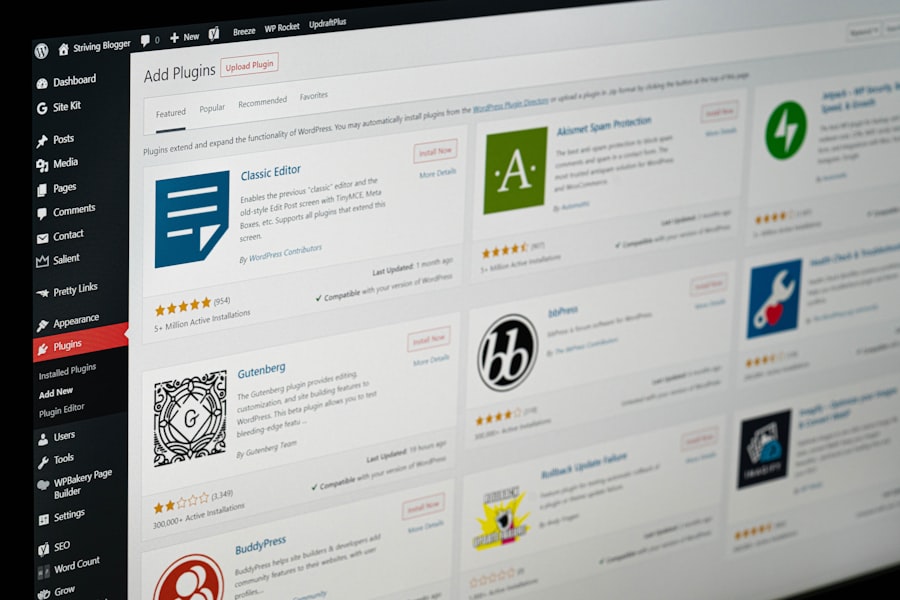
You start with a simple WordPress installation, a blank canvas. To achieve your desired functionality, you then begin adding plugins – a simple contact form, an SEO tool, a caching solution, a security firewall, an e-commerce suite, perhaps a page builder. Each addition brings with it power, but also new layers of complexity. This often leads to what many derisively call the “plugin zoo.”
The “Plugin Zoo” Phenomenon
The WordPress plugin repository boasts tens of thousands of plugins, offering solutions for nearly every conceivable need. This incredible flexibility is both its greatest strength and, paradoxically, a significant weakness.
Interoperability Nightmares
Each plugin is developed by a different entity, with varying coding standards and update schedules. As you accumulate plugins, the likelihood of conflicts increases exponentially. You might install a seemingly innocuous plugin only to find it breaks a critical function of another, or even renders your entire site unusable. Diagnosing these conflicts can be a time-consuming and frustrating endeavor, often requiring expert intervention. You are left to untangle a web woven by many hands, none of whom coordinated their efforts.
Performance Degradation
While many plugins are well-coded, others are not. Each plugin adds overhead – database queries, script executions, and CSS files. A site laden with an excessive number of plugins, or even a few poorly optimized ones, will suffer from degraded performance. This translates to slower loading times, a frustrating user experience, and potentially lower search engine rankings, directly impacting your business objectives. You are, in essence, adding weight to your vehicle, inevitably slowing it down.
Security Vulnerabilities
Every plugin you install is a potential entry point for attackers. While the WordPress core is rigorously maintained, the vast plugin ecosystem presents a more diverse security challenge. Exploitable vulnerabilities in popular plugins are a common vector for website hacks. You are extending the perimeter of your digital fortress with each new tool, and each extension needs to be secured meticulously.
The Shift to Holistic Platforms
The response to the “plugin zoo” is a growing preference for platforms that offer integrated solutions. You are seeing a trend towards systems where essential functionalities are built-in rather than bolted on.
Built-in Backups, Caching, and Staging
Modern hosting platforms and managed services increasingly offer features like automated daily backups, robust caching mechanisms, and staging environments as part of their core offering. This reduces your reliance on individual plugins for these critical functions, simplifying your setup and enhancing reliability. You are no longer responsible for assembling these vital components; they are presented to you as a complete, coherent system.
Integrated Security Protocols
Instead of relying on a patchwork of security plugins, many contemporary platforms offer enterprise-grade security at the server level, including WAFs (Web Application Firewalls), DDoS protection, and continuous malware scanning. This centralized approach provides a more robust and less error-prone security posture than a fragmented plugin-based strategy. You are entrusting your security to a dedicated team, rather than a collection of disparate tools.
Reduced Error Rates and Dependency
By consolidating functionalities, these platforms inherently reduce the surface area for errors. Fewer individual components mean fewer potential points of failure and fewer dependencies. This translates to greater stability, less troubleshooting, and ultimately, more time for you to focus on your core business rather than battling technical issues.
Barriers to Global Ambition: Logistical Limitations for Cross-Border E-commerce
For businesses with global aspirations, or those already operating across borders, the complexities inherent in legacy e-commerce platforms can become a significant impediment. You might find that your established WordPress/WooCommerce setup, while perfectly adequate for domestic operations, strains under the demands of international trade.
The Intricacies of Global Commerce
Building a truly global e-commerce operation is a nuanced endeavor. It’s not simply about translating product descriptions. It involves navigating a labyrinth of international regulations, taxation laws, currency fluctuations, and logistical challenges.
Real-time Tax Calculation across Jurisdictions
Sales tax, VAT, GST – these vary dramatically from country to country, region to region, and even city to city. Manually configuring and maintaining accurate tax rates for every potential customer location is a monumental task, prone to error and constantly subject to change. WooCommerce, while extensible, often requires significant bespoke development or complex third-party integrations to handle real-time, dynamic tax calculations across multiple jurisdictions with sufficient accuracy and legal compliance. You are essentially acting as an international tax accountant through your website.
Multi-currency Support and Exchange Rates
While WooCommerce can support multiple currencies through plugins, managing accurate exchange rates, displaying prices in local currencies, and processing payments accordingly adds layers of complexity. Ensuring that these rates are always up-to-date and that conversions are handled smoothly for both the customer and the accounting system can be a challenge. You are running a small, real-time currency exchange within your e-commerce platform.
Multi-warehouse and International Shipping Logistics
For businesses operating with multiple warehouses or fulfilling orders from different countries, managing inventory, shipping rates, and logistics becomes exceptionally intricate. Determining the optimal shipping origin, calculating international shipping costs, handling customs declarations, and tracking cross-border shipments with precision can push the limits of a standard WooCommerce setup. You are effectively trying to coordinate an international supply chain through a system not primarily designed for that scale of logistical control.
The Allure of Robust, Integrated Solutions
The limitations highlighted above drive businesses towards platforms purpose-built for global e-commerce. You are seeking a system that provides out-of-the-box solutions for these complex problems, rather than requiring you to engineer them yourself.
Centralized Global Commerce Features
Platforms designed for enterprise-level e-commerce often integrate global tax engines, multi-currency display and payment processing, and advanced international shipping logic as foundational features. This significantly reduces the development burden and the risk of regulatory non-compliance for businesses operating internationally. You are leveraging pre-built infrastructure for global trade.
Scalability for International Expansion
These more robust solutions are architected to scale globally from day one. They provide the infrastructure and tools necessary to expand into new markets with greater ease, managing localized content, regional payment methods, and diverse fulfillment strategies without requiring a complete overhaul of the underlying system. You are investing in a platform that grows with your global ambitions, rather than holding them back.
You can Hire WordPress Developer to create a stunning and functional website for your business.
The Future Imperative: Efficiency and AI Readiness

The digital landscape is not static; it is in constant, rapid flux. You are currently experiencing a significant technological shift, a “Great Replatforming” that is shaping the future of online business. This movement is not merely about aesthetic updates; it is fundamentally about operational efficiency and the integration of emerging technologies like Artificial Intelligence.
The “Great Replatforming” of 2026
The year 2026 is often cited as a benchmark for this “Great Replatforming,” a period where many businesses are projected to move away from legacy systems to platforms better positioned for the next wave of technological innovation.
Operational Efficiency as a Core Metric
In an increasingly competitive environment, every ounce of operational efficiency counts. Businesses are scrutinizing their technology stacks not just for functionality but for how effectively they streamline processes, reduce manual intervention, and optimize resource allocation. Legacy WordPress setups, with their reliance on plugins, custom coding, and often fragmented administration interfaces, can inadvertently create operational bottlenecks. You are seeking a smoother, more automated workflow, reducing friction at every touchpoint.
The Demand for Seamless Integration
Modern businesses demand seamless integration between their e-commerce platform, CRM, ERP, marketing automation, and other critical systems. While WordPress offers APIs and integration plugins, the complexity of maintaining these connections and ensuring data consistency across disparate systems can be substantial. Newer platforms often prioritize a more cohesive ecosystem, offering native integrations or robust API frameworks designed for easier, more reliable data exchange. You are looking for a digital nervous system, not a collection of isolated organs.
The AI Readiness Gap
Artificial Intelligence is no longer a futuristic concept; it is an immediate imperative. From personalized customer experiences to automated content generation, inventory forecasting, and predictive analytics, AI is set to revolutionize every aspect of online business. The compatibility of your chosen platform with AI technologies is therefore a crucial consideration.
Enabling AI Integration
Platforms that are “AI-ready” are designed with architectures and data structures that facilitate the easy integration of AI models and services. This might involve robust APIs for feeding data into AI algorithms, built-in tools for A/B testing AI-driven recommendations, or partnerships with leading AI providers. Legacy systems might require significant custom development to achieve similar levels of integration, creating a barrier to innovation. You are evaluating whether your platform is a fertile ground for AI, or barren soil.
Data Accessibility and Structure
Effective AI relies on well-structured, clean, and easily accessible data. The sprawling and often inconsistent data structures found in highly customized WordPress databases can pose challenges for AI algorithms that require structured input. More modern platforms often prioritize data hygiene and offer standardized data models, making it far easier to leverage your e-commerce data for AI-driven insights and automations. You need a clear, organized library for your AI to learn from, not a chaotic attic.
The Perception of Stagnation: Core Development and Future Vision
As you observe the evolution of WordPress, you might notice a distinct approach to development that, for some, signals a lack of revolutionary ambition compared to its early days. This isn’t to say WordPress isn’t evolving, but its trajectory appears to be one of careful, incremental enhancement rather than radical reinvention.
Incrementalism vs. Overhaul
The current development focus for WordPress, particularly looking towards 2026, centers on refining existing components and fostering collaboration within its open-source community.
Gutenberg Phase 3 and Collaboration
A significant portion of development efforts is directed towards Gutenberg, the block editor. Phase 3 of Gutenberg focuses on collaborative editing, workflow improvements, and expanding its capabilities beyond simple content creation to full-site editing. While these are valuable enhancements, they represent a deepening of existing functionality rather than a fundamental architectural shift. You are witnessing an evolution within the existing framework, not a leap to a new one.
Reactive vs. Proactive Development
Some users perceive WordPress’s development as more reactive than proactive. Instead of anticipating the next wave of web technologies and building a framework to embrace them, the platform often appears to adapt to trends once they’ve become established. This can manifest as slower adoption of modern front-end technologies, advanced performance optimizations, or native support for cutting-edge e-commerce features when compared to purpose-built competitors. You might feel like you’re playing catch-up, rather than leading the charge.
The Desire for a More Opinionated Framework
For many, the sheer flexibility of WordPress, its “do anything” philosophy, is its greatest draw. However, this freedom comes at a cost – the need to make countless decisions and engineer solutions from scratch. An increasing number of users are seeking a more opinionated framework.
Opinionated Platforms and Best Practices
An “opinionated” platform guides you towards best practices, often providing a streamlined workflow and pre-made solutions for common challenges. While offering less extreme customization, these platforms excel in specific niches (e.g., e-commerce, SaaS applications) by providing a cohesive set of tools that work harmoniously. You are trading boundless freedom for efficient, well-beaten paths that minimize decision fatigue and reduce the likelihood of errors.
Architectural Overhaul vs. Iterative Enhancement
When you consider the underlying architecture, WordPress, despite its numerous updates, retains a core structure established decades ago. Competing platforms, often built more recently, leverage modern programming paradigms, database technologies, and cloud-native infrastructure that can inherently offer superior performance, scalability, and security from the ground up. The feeling among some is that WordPress is continuously patching and enhancing an older engine, while others are building entirely new, more powerful vehicles. You are left to ponder whether continuous iteration can truly compete with a fresh foundation built for a new era.
The Shifting Sands: A Concluding Perspective
You have navigated the multifaceted reasons behind the gradual shift away from WordPress for certain use cases. It’s not a narrative of failure, but one of adaptation in a rapidly evolving digital ecosystem. WordPress remains an incredibly powerful and versatile platform, and for countless users, it is still the optimal choice. Its open-source nature, vast community, and immense flexibility ensure its continued relevance.
However, for businesses grappling with rising maintenance debt in complex WooCommerce setups, struggling with the “plugin zoo” and its associated security risks, facing the logistical hurdles of cross-border e-commerce, or simply seeking platforms optimized for AI integration and streamlined operational efficiency, the siren call of alternative solutions grows stronger. The perception of incremental development and a reactive posture further contributes to this reconsideration among those seeking cutting-edge capabilities and architectural modernity.
Ultimately, your choice of platform is a strategic decision, a reflection of your current needs, future aspirations, and tolerance for complexity. You are making an investment, not just in software, but in a long-term digital strategy. The reasons outlined here serve as a guide to understanding why, for an increasing segment of the online world, that strategic investment is now pointing away from the venerable WordPress, towards new horizons.

Juan is a Digital Advertising / SEM Specialist with over 10 years of experience with Google AdWords, Bing Ad Center, Facebook, LinkedIn, Google Analytics, HTML, and WordPress. He is a co-founder of Sheaf Media Group and has work in several online advertising projects for retail, automotive, and service industries. Additionally, Juan holds a bachelor’s degree in Psychology and has a deep interest in the science of human behavior which he attributes as the key factor for his success in the advertising world.