
Simple Marketing Plan Template – Creating an effective marketing strategy doesn’t have to be overwhelming. A simple marketing plan template provides the structure you need to organize your marketing efforts without getting bogged down in complex frameworks or unnecessary details. Whether you’re a small business owner, startup founder, or marketing professional looking to streamline your planning process, the right template can transform hours of work into a focused 30-minute exercise. For those seeking comprehensive guidance, our Free Marketing Plan resource offers additional insights to complement your template-based approach.
Marketing plan templates come in various formats—Word for easy editing, Excel for data tracking, print-friendly format for quick reference—each designed to match different working styles and business needs. The key is finding one that balances simplicity with effectiveness, providing enough structure to guide your planning while remaining flexible enough to adapt to your unique situation.
What Makes a Marketing Plan Template Simple?
A truly effective one strips away the complexity while retaining the essential elements that drive results. Understanding what distinguishes a simple template from its more complex counterparts helps you choose the right tool for your business needs.
Essential Components vs. Complex Plans
These templates focus on core elements that directly impact your business growth. These typically include your target audience definition, key marketing objectives, primary marketing channels, basic budget allocation, and straightforward success metrics. Unlike comprehensive plans that might span 50+ pages, a simple template condenses these elements into a manageable format, often just 2-5 pages.
Complex marketing plans often include extensive market research sections, detailed competitive analyses, multiple scenario projections, and elaborate financial models. While these elements have their place in certain contexts, they can overwhelm small businesses or those just starting their marketing journey. A simple template prioritizes actionable items over extensive documentation.
The most effective simple templates use clear, jargon-free language and visual elements like tables or bullet points to organize information. They focus on what you’ll actually do rather than theoretical concepts, making it easier to move from planning to implementation.
Time-Saving Features to Look For
When evaluating your options, look for features that accelerate the planning process. Pre-populated sections with prompting questions guide your thinking without requiring extensive research. Drop-down menus in Excel templates or fillable fields in Word documents eliminate formatting concerns and keep you focused on content.
Templates with built-in examples or sample content provide context for each section, showing you exactly what type of information to include. This guidance proves especially valuable for first-time planners who might otherwise struggle with knowing how much detail to provide or what tone to use.
Automated calculations in Excel-based templates save time on budget planning and ROI projections. Look for templates that automatically update totals, calculate percentages, or generate simple charts from your input data. These features not only save time but also reduce errors in your planning process.
Types of Simple Marketing Plan Templates
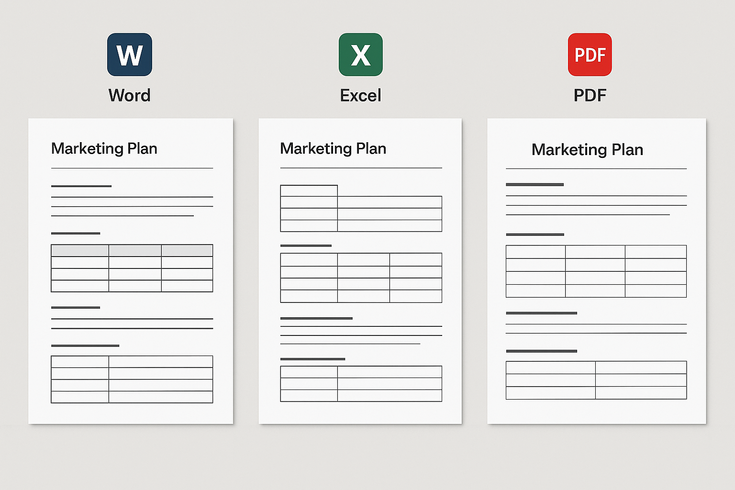
Different template formats serve different purposes and work styles. Understanding the strengths of each format helps you select the one that best matches your needs and technical comfort level.
Word Templates for Easy Editing
Word-based templates excel at narrative planning and collaborative editing. Their familiar interface makes them accessible to virtually any user, regardless of technical expertise. These templates typically feature styled headings, pre-formatted tables, and text placeholders that guide you through each section of your plan.
The flexibility of Word templates allows for easy customization. You can add or remove sections, adjust formatting to match your brand guidelines, and incorporate images or charts as needed. Many businesses appreciate the ability to track changes and add comments, making Word templates ideal for plans that require multiple reviewers or approval processes.
Word templates work particularly well for marketing plans that emphasize strategy description, messaging frameworks, and content calendars. Their strength lies in organizing text-heavy information in a readable, professional format that stakeholders can easily review and understand. For a closer look at getting a simple plan set up specifically in Word, see our dedicated walkthrough.
Excel Templates for Data Analysis
Excel-based marketing plan templates bring analytical power to your planning process. These templates transform raw numbers into meaningful insights through built-in formulas, conditional formatting, and chart generation capabilities. For businesses that need to track metrics, manage budgets, or project ROI, Excel templates provide unmatched functionality.
The structured nature of Excel encourages systematic thinking about your marketing activities. Tabs can separate different aspects of your plan—budget, timeline, metrics, channel performance—while maintaining connections between related data. This organization makes it easy to see how changes in one area affect your overall plan.
Marketing teams particularly value Excel templates for their ability to create dynamic dashboards. As you update actual performance data, charts and summaries automatically reflect these changes, providing real-time visibility into your marketing effectiveness. Our step-by-step Excel template guide walks through building these dashboards from a blank spreadsheet.
PDF Templates for Quick Reference
PDF Templates serve a unique role in marketing planning, particularly for visual learners and those who prefer working with printed materials. These templates often feature professional designs with visual elements that make information easy to scan and digest. While less flexible than Word or Excel formats, print-friendly format templates excel at providing structure and inspiration.
Many marketers use print-friendly format templates as reference guides or frameworks, transferring the structure to their preferred working format. The fixed layout of PDFs ensures consistent presentation across devices and platforms, making them ideal for sharing finalized plans with stakeholders or team members.
Print-friendly print-friendly format templates also support offline planning sessions, workshops, or brainstorming meetings where digital devices might prove distracting. Their visual appeal and professional appearance can enhance buy-in from executives or investors reviewing your marketing strategy.
How to Choose the Right Template Format
Selecting the appropriate template format requires considering your business context, team capabilities, and planning objectives. The right choice can significantly impact both the planning process and the plan’s ultimate effectiveness.
Matching Templates to Business Size
Small businesses and solopreneurs typically benefit from streamlined templates that focus on essential elements without overwhelming detail. A one-page marketing plan template or simple Word document often provides sufficient structure for businesses with limited resources or straightforward marketing needs. These formats allow for quick updates and easy sharing without requiring specialized software skills.
Growing businesses with multiple team members might prefer Excel templates that support collaborative data entry and performance tracking. The ability to assign different tabs or sections to various team members while maintaining a unified view of the overall plan proves valuable as marketing efforts become more complex.
Established businesses with dedicated marketing teams often use a combination of template formats. They might employ Excel for budget tracking and performance metrics, Word for strategy documentation and content planning, and print-friendly format summaries for executive presentations. This multi-format approach leverages each template type’s strengths while accommodating diverse stakeholder needs.
Industry-Specific Considerations
Different industries have unique marketing requirements that influence template selection. E-commerce businesses need templates with robust digital marketing sections, including space for SEO strategies, email marketing campaigns, and social media advertising plans. These businesses often prefer Excel templates that can track multiple online channels and calculate digital marketing ROI.
Service-based businesses might prioritize templates with strong sections on relationship marketing, referral programs, and local marketing tactics. Word templates work well for these businesses, allowing detailed description of service offerings and customer journey mapping.
B2B companies often require templates that accommodate longer sales cycles and account-based marketing strategies. Their templates need sections for lead nurturing sequences, trade show planning, and partnership development. Many B2B marketers combine Excel templates for pipeline tracking with Word templates for strategic planning.
Step-by-Step Guide to Using Templates
Successfully implementing one requires a systematic approach. Following these steps ensures you extract maximum value from your chosen template while avoiding common pitfalls.

Filling Out Your First Template
Begin by gathering essential information before opening your template. Collect data on your current marketing performance, budget constraints, team capabilities, and business objectives. Having this information readily available prevents interruptions during the planning process and ensures more accurate entries.
Start with the foundational sections of your template: business overview, target audience, and marketing objectives. These sections inform all subsequent planning decisions. Be specific when defining your target audience—instead of “small businesses,” specify “technology startups with 10-50 employees in urban markets.” This precision guides more effective marketing tactics.
Move systematically through each template section, resisting the urge to jump ahead. Many templates build upon previous sections, so completing them in order ensures coherent planning. If you encounter sections that don’t apply to your business, note them as “Not Applicable” rather than deleting them—you might find them useful as your business evolves.
For those ready to dive deeper into the planning process, our comprehensive guide on creating one provides additional strategies and best practices for maximizing your template’s effectiveness.
Customizing for Your Business Needs
While templates provide valuable structure, customization ensures relevance to your specific situation. Begin by evaluating each template section against your business model and marketing priorities. Add sections for unique aspects of your business while removing or minimizing areas that don’t apply.
Adjust terminology throughout the template to match your industry language and company culture. If your business uses specific metrics or KPIs not included in the template, add them to relevant sections. This customization makes the plan more meaningful to your team and easier to implement.
Consider your planning timeline when customizing templates. Quarterly planning might require different sections than annual planning. Add date fields, milestone markers, or review checkpoints that align with your business rhythms. This temporal customization ensures your plan remains a living document rather than a one-time exercise.
Template Examples by Industry
Understanding how different businesses apply this approach provides valuable context for your own planning efforts. These examples demonstrate the flexibility of templates across various business contexts.
Small Business Templates
Small business marketing plan templates prioritize efficiency and cost-effectiveness. A typical template for a local restaurant might include sections for community event participation, social media content calendars, and customer loyalty programs. The budget section would focus on low-cost, high-impact activities like email marketing and local SEO optimization.
Retail businesses often use templates that emphasize seasonal planning and promotional calendars. Their templates include detailed sections for inventory-based promotions, visual merchandising schedules, and customer traffic analysis. Simple Excel templates help these businesses track which promotions drive the most foot traffic and sales.
Professional service providers like consultants or accountants benefit from templates focused on thought leadership and referral generation. Their plans typically include content marketing schedules, speaking engagement tracking, and professional network development activities. Word templates work well for these businesses, allowing detailed description of expertise positioning and client case studies.
Digital Marketing Templates
Digital marketing plan templates require sections dedicated to online channels and metrics. These templates include detailed breakdowns for SEO strategies, paid advertising campaigns, social media marketing, and email automation sequences. Excel templates excel here, providing dashboards for tracking website traffic, conversion rates, and customer acquisition costs.
E-learning businesses and online course creators use templates with sections for content marketing funnels, webinar schedules, and affiliate program management. Their templates often include visual representations of customer journeys from awareness through purchase and retention.
Software companies employ templates that accommodate product launch timelines, feature announcement strategies, and user onboarding campaigns. These templates balance technical product information with accessible marketing messages, often including sections for developer relations and community building.
One-Page Marketing Plans
One-page marketing plan templates distill strategy to its absolute essentials. These ultra-simple templates typically use a grid or canvas format, with sections for target market, value proposition, marketing channels, key activities, and success metrics. The constraint of a single page forces clarity and prioritization.
Startups frequently use one-page templates during early stages when flexibility and rapid iteration matter more than detailed documentation. These templates facilitate quick strategy pivots and make it easy to share plans with advisors or potential investors.
Even established businesses find value in one-page summary templates that complement more detailed plans. These summaries ensure team alignment on core strategies and provide quick reference during meetings or decision-making moments. Many businesses create these summaries quarterly to maintain focus on priority initiatives. If you want to build one from scratch, our one-page marketing plan template guide walks through exactly what to fit on that single page.
Best Practices for Template Implementation
Maximizing the value of your plan requires thoughtful implementation and ongoing management. These best practices ensure your plan drives real business results rather than gathering dust on a digital shelf.
Setting Realistic Goals
Effective goal setting within your template begins with understanding your current baseline. Before setting ambitious targets, document your current marketing performance across key metrics. This baseline provides context for realistic goal setting and helps measure true progress.
Apply the SMART framework when entering goals into your template: Specific, Measurable, Achievable, Relevant, and Time-bound. Instead of “increase social media presence,” specify “grow Instagram followers from 500 to 2,000 within six months through daily posting and community engagement.” This specificity transforms vague intentions into actionable plans.
Consider your resource constraints when setting goals. Your plan should reflect what you can realistically accomplish with your available time, budget, and team. Setting overly ambitious goals leads to frustration and plan abandonment. Start with modest, achievable targets that build momentum and confidence.
Tracking Progress and Results
Build review cycles into your template implementation from the start. Monthly reviews for tactical elements and quarterly reviews for strategic components maintain plan relevance without creating excessive overhead. During reviews, update actual results against planned targets and adjust future activities based on learnings.
Create simple tracking mechanisms that don’t require extensive data analysis. Many Excel templates include basic dashboard features that automatically visualize progress through charts or color-coded cells. For Word-based templates, consider adding a simple table at the beginning of your document to track key metrics over time.
Document lessons learned directly within your template. Add a section for “what worked” and “what didn’t work” observations. These insights prove invaluable when creating future plans and help your marketing effectiveness improve over time. Regular documentation also helps onboard new team members and maintain institutional knowledge.
Making Your Simple Marketing Plan Template Work
This approach serves as your roadmap to marketing success, but its true value emerges through consistent use and refinement. Choose the format that matches your working style, customize sections to reflect your business reality, and commit to regular updates that keep your plan relevant and actionable.
Remember that the best template is the one you’ll actually use. Whether you prefer the narrative flow of Word, the analytical power of Excel, or the visual appeal of print-friendly format formats, your chosen template should facilitate rather than complicate your marketing planning process. Start with the basics, build momentum through small wins, and expand your planning sophistication as your comfort and success grow.
The journey from marketing chaos to clarity begins with that first template use and initial planning session. By following the guidance in this article and leveraging the power of simple marketing plan templates, you’ll transform marketing from an overwhelming challenge into a manageable, measurable driver of business growth. If you’d rather follow a complete guided walkthrough from start to finish, our free step-by-step marketing plan template guide takes you through the entire process. Your future successful self will thank you for taking this crucial first step today.