



Digital Marketing Plan Template Word – Creating a comprehensive digital marketing strategy doesn’t have to start from scratch. A well-structured digital marketing plan template in Microsoft Word provides the framework you need to develop, organize, and execute your marketing initiatives effectively. Whether you’re a small business owner, marketing manager, or consultant, having a customizable template saves time and ensures you cover all critical elements of your strategy.
What Is a Digital Marketing Plan Template for Word?
A digital marketing plan template for Word is a pre-formatted document that provides a structured framework for developing your online marketing strategy. This editable document includes all the essential sections, prompts, and formatting needed to create a professional marketing plan without starting from a blank page. Think of it as your marketing strategy blueprint that guides you through the planning process step by step.
Unlike rigid print-friendly format templates or complex software solutions, a Word-based template offers the flexibility to customize every aspect according to your specific business needs. You can add sections, remove irrelevant parts, adjust formatting, and incorporate your brand elements seamlessly. This adaptability makes it particularly valuable for businesses of all sizes and industries.
Key Components of an Effective Template
An effective digital marketing plan template encompasses several critical components that work together to create a comprehensive strategy. The executive summary section provides a high-level overview of your marketing objectives and key strategies. This is followed by a detailed situation analysis that examines your current market position, competitive landscape, and internal capabilities.
The target audience section helps you define and understand your ideal customers through detailed buyer personas. Your template should include space for demographic information, psychographic characteristics, pain points, and preferred communication channels. The marketing objectives section outlines specific, measurable goals aligned with your business objectives.
Channel strategy components detail your approach to various digital marketing channels including social media, email marketing, content marketing, search engine optimization, and paid advertising. Each channel section should include tactics, content types, posting schedules, and performance metrics. The budget allocation section helps you plan and track marketing investments across different channels and campaigns.
Finally, the measurement and analytics section establishes key performance indicators, reporting schedules, and processes for tracking progress toward your goals. This ensures your marketing efforts remain data-driven and results-oriented.
Benefits of Using a Word-Based Template
Microsoft Word remains one of the most accessible and user-friendly platforms for creating marketing documents. Nearly every business professional has access to Word and knows how to use its basic features. This universal familiarity eliminates learning curves and technical barriers that might arise with specialized marketing planning software.
The collaborative features in Word make it easy to share your marketing plan with team members, stakeholders, and external partners. Track changes, comments, and version history features enable smooth collaboration and feedback incorporation. You can easily export your plan to print-friendly format for professional presentations or convert it to other formats as needed.
Cost-effectiveness is another significant advantage. Unlike expensive marketing planning software with recurring subscription fees, a Word template requires no additional investment beyond your existing Microsoft Office suite. This makes it particularly attractive for small businesses and startups operating on tight budgets.
The flexibility to customize formatting, fonts, colors, and layout ensures your marketing plan aligns with your brand identity. You can incorporate your logo, use brand colors, and maintain consistent styling throughout the document. This professional appearance enhances credibility when presenting your plan to executives, investors, or clients.
Essential Sections of Your Digital Marketing Plan Template
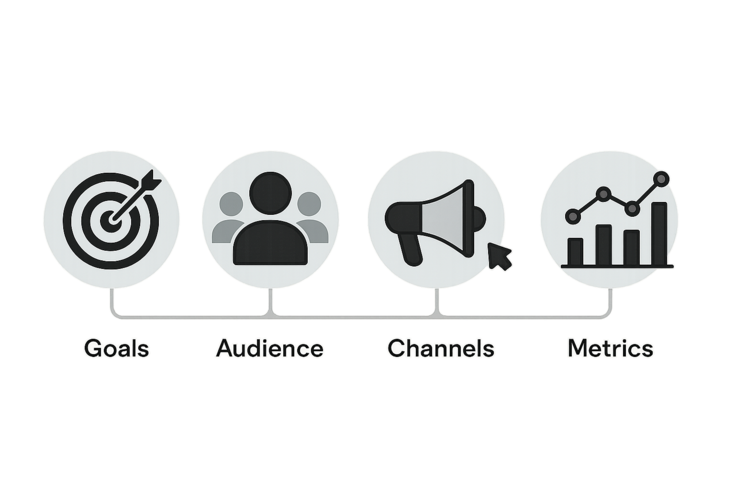
A comprehensive digital marketing plan template includes several interconnected sections that build upon each other to create a cohesive strategy. Understanding how to properly structure and populate each section ensures your final plan is both thorough and actionable.
Executive Summary and Goals
The executive summary serves as your marketing plan’s elevator pitch. Although it appears first in your document, write it last after completing all other sections. This section should concisely communicate your primary marketing objectives, key strategies, expected outcomes, and required resources. Keep it to one or two pages maximum, focusing on the most critical information decision-makers need to understand and approve your plan.
Your goals section translates broad business objectives into specific marketing targets. Start by identifying your organization’s overarching business goals, then determine how marketing initiatives will support these objectives. Common marketing goals include increasing brand awareness, generating qualified leads, improving customer retention, expanding market share, or launching new products successfully.
Structure your goals using the SMART framework: Specific, Measurable, Achievable, Relevant, and Time-bound. Instead of vague objectives like “increase website traffic,” specify “increase organic website traffic by 40% within six months through targeted SEO and content marketing initiatives.” This clarity provides direction for your tactical planning and enables accurate performance measurement.
Include both short-term goals (3-6 months) and long-term objectives (12-24 months). This dual focus ensures immediate progress while building toward sustainable growth. Prioritize goals based on business impact and resource requirements, focusing your efforts on high-value objectives that align with available capabilities.
Target Audience and Buyer Personas
Understanding your target audience forms the foundation of effective digital marketing. Your template should include detailed buyer persona profiles that go beyond basic demographics to explore motivations, challenges, preferences, and behaviors. Create separate personas for each major customer segment, typically three to five personas for most businesses.
Start each persona with demographic information including age range, gender, income level, education, job title, and geographic location. Then dive deeper into psychographic characteristics such as values, interests, lifestyle choices, and personality traits. Understanding these psychological factors helps you craft messaging that resonates emotionally with your audience.
Document the typical customer journey for each persona, identifying touchpoints where they interact with your brand. Map out their awareness, consideration, and decision-making processes. What triggers their initial interest? What information do they seek during research? What factors influence their purchase decisions? This journey mapping informs your content strategy and channel selection.
Include pain points and challenges each persona faces that your products or services address. Understanding these frustrations enables you to position your offerings as solutions and create content that addresses specific concerns. Also document their preferred communication channels, content formats, and times they’re most likely to engage with marketing messages.
Marketing Channels and Tactics
Your channel strategy section outlines how you’ll reach and engage your target audience across various digital platforms. Begin with an audit of your current channel performance, identifying which platforms drive the most valuable results. This analysis helps you allocate resources effectively and identify opportunities for improvement or expansion.
For each marketing channel, detail specific tactics, content types, posting frequencies, and engagement strategies. Your social media section might include platform-specific strategies for Facebook, Instagram, LinkedIn, and Twitter, outlining unique content approaches for each. Email marketing tactics could encompass welcome series, newsletters, promotional campaigns, and automated workflows.
Content marketing deserves its own subsection, detailing your blog strategy, video content plans, infographics, podcasts, and other content formats. Include a content calendar framework that aligns content production with campaign schedules and seasonal trends. Specify content themes, target keywords, and distribution strategies for maximum reach and engagement.
Search engine optimization tactics should cover both on-page and off-page strategies. Detail your approach to keyword research, content optimization, technical SEO improvements, and link-building initiatives. Include paid advertising strategies for search engines and social media platforms, outlining budget allocation, targeting parameters, and performance benchmarks.
How to Customize Your Digital Marketing Plan Template
Customizing your digital marketing plan template transforms a generic framework into a powerful strategic tool tailored to your unique business needs. The customization process involves adapting each section to reflect your industry, market position, resources, and objectives while maintaining the template’s organizational structure.
Setting SMART Marketing Objectives
Begin customization by translating your business vision into concrete marketing objectives. SMART goals provide clarity and accountability throughout your marketing efforts. Specific objectives clearly define what you want to achieve, eliminating ambiguity that can derail implementation. Instead of “improve social media presence,” specify “increase Instagram follower count from 5,000 to 15,000.”
Measurable components ensure you can track progress objectively. Establish baseline metrics for each objective and define how you’ll measure success. This might involve website analytics, social media metrics, email performance indicators, or sales data. Create a measurement framework that captures both leading indicators (early warning signs) and lagging indicators (final results).
Achievable goals stretch your capabilities without setting unrealistic expectations. Consider your current resources, market conditions, and historical performance when setting targets. Ambitious goals motivate teams, but impossible objectives lead to frustration and disengagement. Balance aspiration with practicality.
Relevance ensures your marketing objectives directly support broader business goals. Each objective should clearly connect to revenue growth, market expansion, customer satisfaction, or other strategic priorities. This alignment helps secure stakeholder buy-in and resource allocation.
Time-bound objectives create urgency and enable periodic evaluation. Set specific deadlines for each goal, breaking larger objectives into quarterly or monthly milestones. This temporal structure facilitates regular progress reviews and strategy adjustments based on performance data.
Budgeting and Resource Allocation
Effective budget customization requires balancing available resources with marketing ambitions. Start by determining your total marketing budget, typically calculated as a percentage of revenue or based on specific growth targets. Industry benchmarks provide guidance, but your unique situation should drive final decisions.
Allocate budget across channels based on historical performance, audience preferences, and strategic priorities. A data-driven approach examines cost per acquisition, return on investment, and lifetime customer value for each channel. However, also reserve budget for testing new channels and tactics that might offer growth opportunities.
Beyond monetary budgets, consider human resources required for plan execution. Document team member responsibilities, time allocations, and skill gaps that might require training or outsourcing. Include contingency plans for resource constraints and identify areas where automation or tools might improve efficiency.
Create separate budgets for different categories: paid advertising, content creation, marketing technology, professional development, and agency partnerships. This granular approach enables better cost control and helps identify optimization opportunities. Build in flexibility to shift resources based on performance data and emerging opportunities.
Timeline and Milestones
A detailed timeline transforms your marketing plan from static document to dynamic action plan. Begin with major campaign launches and work backward to identify all required preparation steps. This reverse engineering ensures adequate lead time for creative development, approvals, and technical implementation.
Establish milestone checkpoints throughout your timeline for progress evaluation and strategy adjustment. Monthly reviews might focus on tactical performance metrics, while quarterly assessments examine strategic progress and resource allocation. Annual planning sessions revisit fundamental assumptions and market conditions.
Coordinate your marketing timeline with other business activities such as product launches, seasonal variations, and industry events. This integration ensures marketing efforts amplify other business initiatives rather than competing for attention. Include buffer time for unexpected delays or opportunities that arise during implementation.
Create dependencies between related activities to ensure proper sequencing. For example, content creation must precede distribution, and audience research should inform campaign messaging. Visualize these dependencies through Gantt charts or project timelines that clearly show task relationships and critical paths.
Best Practices for Using Your Marketing Plan Template
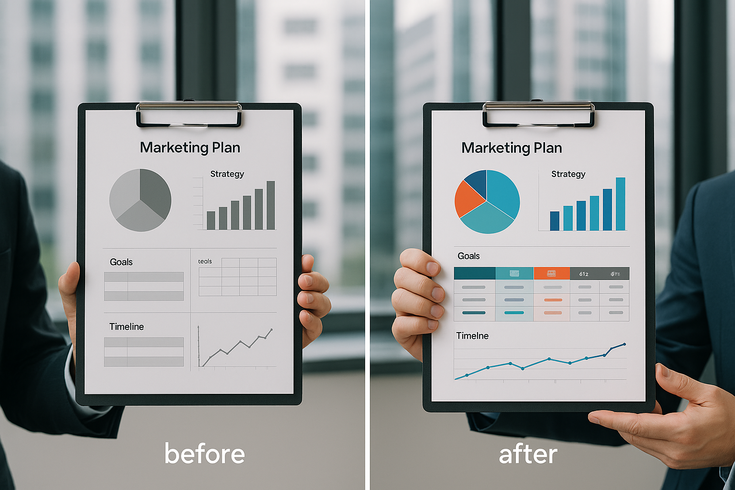
Maximizing the value of your digital marketing plan template requires more than initial setup. Successful implementation depends on establishing processes for ongoing use, updates, and optimization. These best practices ensure your marketing plan remains a living document that drives real business results.
Regular Updates and Reviews
Schedule monthly review sessions to assess progress against your marketing objectives. During these reviews, examine key performance metrics, identify trends, and spot early warning signs of underperformance. Use data to inform decisions rather than relying on assumptions or gut feelings.
Quarterly strategic reviews dive deeper into market changes, competitive moves, and internal capability shifts. These sessions might result in tactical adjustments or strategic pivots based on new information. Document all changes within your template, maintaining a change log that tracks evolution over time.
Annual planning cycles provide opportunities for comprehensive updates. Revisit buyer personas based on customer research, adjust channel strategies based on platform changes, and realign objectives with evolving business goals. This annual refresh prevents your marketing plan from becoming outdated or irrelevant.
Create a feedback loop between marketing execution and plan updates. Campaign results, customer feedback, and team insights should continuously inform plan refinements. This iterative approach ensures your marketing plan reflects real-world learning rather than theoretical assumptions.
Team Collaboration Features
Leverage Word’s collaboration features to facilitate team input and maintain document integrity. Assign specific sections to team members with relevant expertise, using comments to provide context and guidance. Track changes features enable transparent editing while preserving the ability to review and approve modifications.
Establish clear roles and responsibilities for plan maintenance and updates. Designate a primary owner who maintains the master version while allowing controlled access for contributors. Create a review and approval process that ensures changes align with strategic objectives and maintain document quality.
Use your template as a communication tool during team meetings and stakeholder presentations. The structured format facilitates focused discussions and helps maintain strategic alignment across diverse team members. Create a comprehensive marketing plan that serves as a single source of truth for all marketing activities.
Consider creating simplified versions or executive summaries for different audiences. While the complete template contains detailed tactical information, executives might only need high-level strategies and performance metrics. This targeted communication improves engagement and decision-making efficiency.
Tracking Progress and KPIs
Build robust tracking mechanisms into your marketing plan template from the beginning. Define key performance indicators for each marketing objective and channel strategy. These KPIs should ladder up to business objectives while providing actionable insights for optimization.
Create dashboard templates within your document that visualize performance trends. While Word isn’t a data visualization tool, simple tables and charts can effectively communicate progress. Link to more detailed analytics platforms for deep-dive analysis while maintaining high-level summaries within your plan.
Establish benchmark metrics based on historical performance, industry standards, and competitive analysis. These benchmarks provide context for evaluating success and identifying improvement opportunities. Regular benchmark updates ensure your expectations remain realistic and relevant.
Document learning and insights alongside performance data. Understanding why certain tactics succeeded or failed provides valuable intelligence for future planning. Create a lessons learned section that captures these insights for easy reference during future planning cycles.
Real-World Examples and Applications
Understanding how different organizations adapt digital marketing plan templates provides valuable insights for your own customization efforts. These examples demonstrate the flexibility of Word-based templates across various business contexts and marketing objectives.
B2B Marketing Plan Example
Business-to-business companies face unique marketing challenges that require specialized template adaptations. A software company targeting enterprise clients might structure their template around account-based marketing principles. Their buyer personas focus on decision-making committees rather than individuals, documenting roles like economic buyers, technical evaluators, and end users.
The channel strategy for B2B companies often emphasizes LinkedIn, industry publications, and email marketing over consumer-focused platforms. Content marketing sections detail whitepapers, case studies, webinars, and thought leadership articles that demonstrate expertise and build trust with professional audiences. Lead nurturing workflows span months or years, reflecting longer B2B sales cycles.
Budget allocations in B2B templates typically favor content creation and lead generation over brand awareness campaigns. Trade show participation, professional association sponsorships, and industry analyst relations might appear as distinct sections. Performance metrics focus on lead quality, pipeline velocity, and customer lifetime value rather than volume metrics.
B2B templates also include detailed sections on sales and marketing alignment. They document lead handoff processes, qualification criteria, and feedback loops between teams. This integration ensures marketing efforts directly support sales objectives and revenue goals.
B2C Marketing Plan Example
Business-to-consumer companies adapt their templates to reflect faster purchase cycles and emotional decision-making. A retail fashion brand might organize their template around seasonal collections and trend cycles. Their buyer personas explore lifestyle aspirations, fashion influences, and shopping behaviors across different demographic segments.
Social media strategies for B2C companies often span multiple visual platforms like Instagram, Pinterest, and TikTok. User-generated content campaigns, influencer partnerships, and social commerce features prominently. Email marketing sections detail segmentation strategies based on purchase history, browsing behavior, and engagement levels.
B2C templates typically include robust sections on customer experience and journey optimization. They map touchpoints from awareness through post-purchase advocacy, identifying opportunities to enhance satisfaction and encourage repeat purchases. Loyalty program strategies and customer retention initiatives receive dedicated attention.
Performance metrics for B2C plans balance acquisition costs with customer lifetime value. They track social media engagement rates, email open rates, conversion rates, and average order values. Real-time analytics and rapid testing cycles enable quick pivots based on consumer response.
Small Business Adaptation
Small businesses require templates that balance comprehensive planning with resource constraints. A local restaurant might streamline their template to focus on high-impact, low-cost tactics. Their plan emphasizes local SEO, Google My Business optimization, and community engagement over national advertising campaigns.
Channel strategies for small businesses often prioritize owned media and organic reach over paid advertising. Content calendars might detail daily social media posts, weekly blog articles, and monthly email newsletters—all created in-house. Partnerships with complementary local businesses provide mutual marketing benefits without significant costs.
Budget sections in small business templates focus on maximizing return from limited resources. They might allocate small amounts across multiple channels for testing before committing larger investments. Free and low-cost marketing tools feature prominently, with detailed comparisons of options and implementation guides.
Small business templates also include sections on time management and prioritization. With limited staff handling multiple responsibilities, the plan must clearly identify highest-priority activities and quick-win opportunities. Automation strategies help maximize efficiency, while outsourcing decisions focus on specialized skills the team lacks internally.
The Marketing and sales | U.S. Small Business Administration provides additional resources and guidance specifically tailored to small business marketing needs.
Conclusion
A well-crafted digital marketing plan template in Word provides the foundation for marketing success across organizations of all sizes and industries. By combining structured frameworks with customization flexibility, these templates enable efficient planning while accommodating unique business needs. The key lies in selecting quality templates that include all essential components, then thoughtfully adapting each section to reflect your specific objectives, audience, and resources.
Remember that your marketing plan template is a living document that should evolve with your business and market conditions. Regular updates, team collaboration, and performance tracking transform static plans into dynamic tools that drive real results. Whether you’re launching a startup, scaling an enterprise, or revitalizing an established brand, a comprehensive digital marketing plan template in Word equips you with the structure and guidance needed to achieve your marketing objectives systematically and successfully.

Juan is a Digital Advertising / SEM Specialist with over 10 years of experience with Google AdWords, Bing Ad Center, Facebook, LinkedIn, Google Analytics, HTML, and WordPress. He is a co-founder of Sheaf Media Group and has work in several online advertising projects for retail, automotive, and service industries. Additionally, Juan holds a bachelor’s degree in Psychology and has a deep interest in the science of human behavior which he attributes as the key factor for his success in the advertising world.