
Why Is Google Ads So Complicated? – If you’ve ever tried to run a Google ad for your business and thought, “Wait… what is happening right now?” — you are not alone. Google Ads is so complicated that even experienced marketers scratch their heads sometimes. But don’t worry! In this article, we’ll break it all down in a simple, friendly way so you can understand what’s going on — and what to do about it.
What Is Google Ads, Anyway?
Google Ads is a tool that lets businesses pay to show up on Google when people search for things. For example, if someone types “best pizza near me” into Google, a pizza shop could pay to appear at the top of those results.
Sounds simple, right? But here’s the thing — the platform behind those ads is anything but simple. Google Ads has dozens of campaign types, hundreds of settings, and changes constantly. In fact, advertisers can expect meaningful updates every one to two weeks, and those changes cover everything from how bids work to how your ads look.
That’s a lot to keep up with!
Why Google Ads Is So Complicated Right Now
1. AI Is Now Running the Show
A few years ago, running Google Ads meant picking your keywords, setting your budget, and writing your ad. You were in control. Today, things are very different.
Google Ads has moved beyond adding AI as a helpful feature — it has completely re-built its products around artificial intelligence. AI now decides who sees your ads, when they see them, what your ad says, and how much you pay for each click. The platform has gone from a tool you control to a system you guide.
Think of it like this: before, you were the driver. Now, you’re more like a passenger who gives directions — and the AI does the actual driving.
2. There Are Too Many Campaign Types
Google Ads used to have a few simple campaign options. Now there are many different types, and they each work differently:
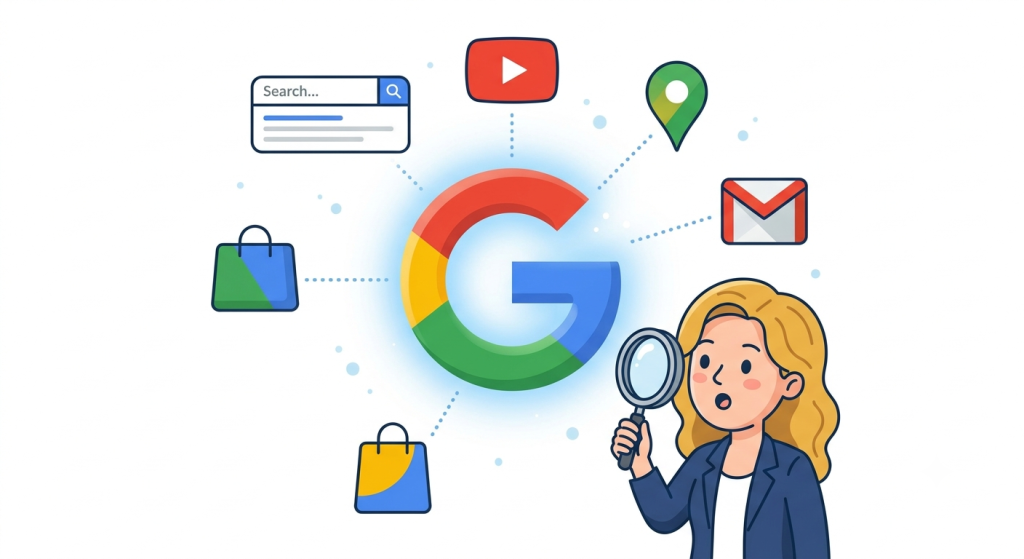
Performance Max (PMax) is one of the biggest ones right now. It runs your ads across six Google platforms at the same time — Search, YouTube, Gmail, Maps, Display, and Discover — all from one campaign. It sounds amazing, but the challenge is that you often can’t see exactly where your money is going or why your ads are showing up in certain places. Think of it like putting your money in a vending machine that picks the snack for you. You might get something great… or something you didn’t want.
AI Max for Search launched in 2025 and changed how search ads work. Instead of targeting exact keywords you choose, it uses AI to figure out what people mean when they search — and shows your ad to them. Google says this leads to about 14% more conversions, but it also means you have less control over exactly when your ad appears.
Demand Gen is Google’s answer to social media advertising. It runs visual, video-based ads on YouTube Shorts, Gmail, and other Google platforms to create interest in your product before people even go searching for it.
Each of these campaign types has its own rules, its own settings, and its own learning curve. No wonder Google Ads is so complicated!
3. Search Clicks Are Dropping Because of AI Overviews
Here’s something that’s making advertisers nervous: when Google shows an AI-generated answer at the top of search results (called an AI Overview), both organic and paid clicks have dropped significantly. People get their answer right there on the page without clicking on anything.
The good news? Ads that appear inside the AI Overview get more attention than ads that appear below it. The bad news? You can’t specifically bid to appear in that spot yet — Google is still figuring that part out. If you’ve noticed your own click numbers slipping and aren’t sure whether that’s normal or a real problem, what counts as a good CTR for Google Ads gives you a real benchmark to compare against instead of guessing.
4. Keyword Strategy Has Flipped Upside Down
Not long ago, the smartest strategy was to target very specific, exact keywords. That still matters, but now Broad Match keywords — where you give Google more freedom to match your ad to related searches — are often outperforming the more restricted options.
This means you need to be more careful than ever about negative keywords (words that tell Google not to show your ad). If you sell high-end furniture, you don’t want your ad popping up for “cheap used furniture.” Without the right negative keywords in place, you could be wasting a lot of money.
The Latest Google Ads Updates (June 2026)
Google Ads never stops changing. Here’s what’s happening right now:
Big Deadline: August 17, 2026
Google announced a major bidding change that takes effect on August 17, 2026. If your campaigns have been getting better results than your target goal (for example, your Target ROAS was set to 300% but you were actually getting 400%), Google will automatically pull performance back toward your stated target. Starting July 6, Google will send alerts to help advertisers review and update their settings before the deadline.
New Promotion Mode (Beta)
A new feature called Promotion Mode lets advertisers set up a temporary boost in budget and flexibility during busy periods like holiday sales, product launches, or flash sales. This is currently in beta testing for Search and Performance Max campaigns.
Dynamic Search Ads Are Going Away
Starting in September 2026, older Dynamic Search Ads will automatically upgrade to the newer AI Max format. If you’re still using the old format, change is coming whether you’re ready or not.
Real-Time Ad Reviews
Google now reviews new Responsive Search Ads in seconds instead of hours. This is a welcome update that makes testing new ads much faster and easier.
Privacy Tracking Changes (June 15, 2026)
This one is big and flew under the radar for many advertisers. On June 15, Google changed how it collects data from your website. The old system had a kind of safety net — if your cookie banner wasn’t set up perfectly, Google’s Analytics settings would help fill in the gaps. That safety net is gone now. Your consent and tracking setup needs to be correct on your own website, or your ad reporting and audience data could be affected without any warning in your dashboard.
What Can Small Businesses Do?
Google Ads is so complicated partly because it was built for large companies with big teams and big budgets. But small businesses can still win — they just need the right approach.
Here are a few key things to keep in mind:
Feed the machine good information. AI-powered campaigns work best when they have accurate conversion data, strong landing pages, and clear business goals. The better the information you give Google, the better it performs.
Don’t “set it and forget it.” Automation is not the same as hands-off. You still need to check in regularly, review your search term reports, update your negative keywords, and adjust your targets as your business changes.
Start simple if you’re on a small budget. If you’re spending less than $2,000 a month or getting fewer than 15 conversions per month, you may be better off with Manual CPC bidding rather than handing full control to Google’s AI, which needs data to learn. If the word “conversion” itself feels a little fuzzy, what conversion actually means in Google Ads clears that up in plain terms, and what counts as a good conversion rate tells you whether the number you’re already seeing is actually fine or genuinely needs work.
Get expert help. The platform is simply too complex and changes too fast for most business owners to manage alone. Working with a team that specializes in search engine marketing for small business can save you time, money, and a lot of frustration.
What If You Just Want to Stop?
Here’s an honest truth: sometimes, after weighing the time, complexity, and cost, the right answer for a business isn’t to keep fighting through the learning curve — it’s to walk away, at least for now. That’s a completely valid decision, and there’s a right way and a wrong way to do it. Simply letting your budget run to zero can leave campaigns, billing, and account settings in a messy half-off state. If you’ve decided Google Ads isn’t the right channel for your business right now, our guide on how to stop Google Ads permanently walks through doing it cleanly, without lingering charges or loose ends.
The Bottom Line
Google Ads is so complicated right now because it’s going through the biggest changes in its history. AI has taken over the day-to-day decisions, new campaign types are replacing old ones, and the rules keep changing — sometimes every few weeks.
But here’s the encouraging truth: you don’t have to understand every detail to succeed. What you need is a clear goal, good tracking, quality creative assets, and a smart strategy. The businesses winning on Google Ads today aren’t necessarily the ones who understand every technical setting. They’re the ones who give the AI the right signals and stay on top of the major changes as they come.
If managing all of this sounds like a lot, you’re right — it is. That’s why many smart business owners turn to professionals who live and breathe this stuff every day. Investing in expert PPC Management For Small Business can be the difference between wasting your budget and actually growing your business through Google Ads.
Want to go deeper on how Google Ads works and where the whole paid search industry is heading? Search Engine Land is one of the best free resources on the web for staying current.
Last updated: June 2026